
Beef Heart vs. Premium Pellets: What to Feed Discus?
The eternal debate among discus keepers: homemade beef heart or premium pellets? We weigh up the pros, the cons and the ideal combination of both.

Beef heart vs. premium pellets
Feeding is one of the most hotly debated topics in the discus-keeping community. There are two camps: the devotees of homemade beef heart, and those who feed premium pellets exclusively. The truth, as usual, lies somewhere in the middle.
Beef heart — advantages
Superior nutrition
Beef heart is an excellent source of lean protein, with an amino-acid profile well suited to discus. It contains:
- 70–80% protein (on a dry-matter basis)
- Minimal fat (when trimmed properly)
- Natural B-group vitamins
Faster growth
Professional breeders raising fry use beef heart almost exclusively. The reason: the growth rate is noticeably higher than with any commercial pellet.
Total ingredient control
You make your own mix, so you know exactly what's in it. You can add:
- Spirulina (for colour)
- Garlic (a natural antiparasitic)
- Vitamins (A, D, E)
- Shrimp or krill (for astaxanthin)
Beef heart — drawbacks
- Fouls the water quickly — requires more frequent water changes
- Prep time — 1–2 hours for a batch that lasts 2–3 weeks
- Contamination risk if it isn't stored properly in the freezer
- Unpleasant smell in the house while preparing it
Premium pellets — advantages
Convenience
Open the tub, drop it in the tank, done. Ideal for keepers who don't have time to prepare food.
Cleaner water
Quality pellets don't break down as fast, producing less waste.
Balanced formula
Premium manufacturers (Sera, Hikari, Tropical) invest in research. Their formulas contain vitamins, minerals and immune-support additives that are hard to replicate at home.
Consistency
Every pellet has the same composition — there's no variation between batches.
Premium pellets — drawbacks
- Higher price — good pellets cost roughly $18–35 per tub
- Slower growth rate — the difference is most visible in fry
- Not all pellets are equal — cheap ones are worse than beef heart
The ideal combination
Most experienced keepers use a mix:
| Stage | Beef heart | Pellets | Live food |
|---|---|---|---|
| Fry (3–5 cm / 1.2–2 in) | 60% | 20% | 20% brine shrimp |
| Juveniles (5–12 cm / 2–4.7 in) | 40% | 40% | 20% |
| Adults (12 cm+ / 4.7 in+) | 30% | 50% | 20% |
Recommended daily schedule
- Morning: Pellets (they dissolve more slowly — ideal for when you leave for work)
- Evening: Beef heart (you can watch them eat and clean up the leftovers)
- 2× per week: Frozen or live brine shrimp (as a supplement)
A simple beef heart recipe
- Buy fresh beef heart
- Trim away all fat and sinew
- Cut into pieces and blend
- Add: 2 tablespoons spirulina, 2 cloves of garlic, 1 grated carrot
- Spread onto cling film in a thin layer (2–3 mm)
- Freeze for at least 24 hours
- Break off small pieces and feed straight from the freezer
Tip: Whatever you choose, water quality remains factor #1. The best beef heart in the world won't make up for dirty water. Change the water regularly, especially when feeding beef heart.
💡 Did you know?
There's no single "best" discus food — there's the best routine. Healthy discus thrive on variety: pellets for convenience and balanced nutrition, beef heart for growth, and frozen or live brine shrimp for enrichment. Rotating these keeps appetites strong and avoids the nutritional gaps that come from feeding one thing forever.
❓ Frequently asked questions
Is beef heart or premium pellets better for discus?
Neither is strictly better — they're complementary. Beef heart drives faster growth (favoured for fry), while premium pellets are convenient, foul the water less and deliver a consistent, research-backed formula. Most experienced keepers combine both.
Does beef heart make discus grow faster?
Yes. Professional breeders raising fry rely on beef heart almost exclusively because the growth rate is noticeably higher than with commercial pellets — at the cost of more water changes.
How often should I feed discus?
Adults do well on 2–3 feedings a day; growing fry need 4–6 small feedings. A common routine is pellets in the morning, beef heart in the evening, and frozen or live brine shrimp twice a week.
Does beef heart foul the water?
Yes — it breaks down quickly and increases waste, so feeding beef heart means more frequent water changes. Feed small amounts, remove uneaten pieces, and keep up your water-change routine.
Whatever you decide, remember that consistency beats any single "perfect" food. Pick a balanced routine you can stick to, and let clean water do the rest. 🐟
Recommended products based on this article
Mentioned equipment, available in the discus.ro shop
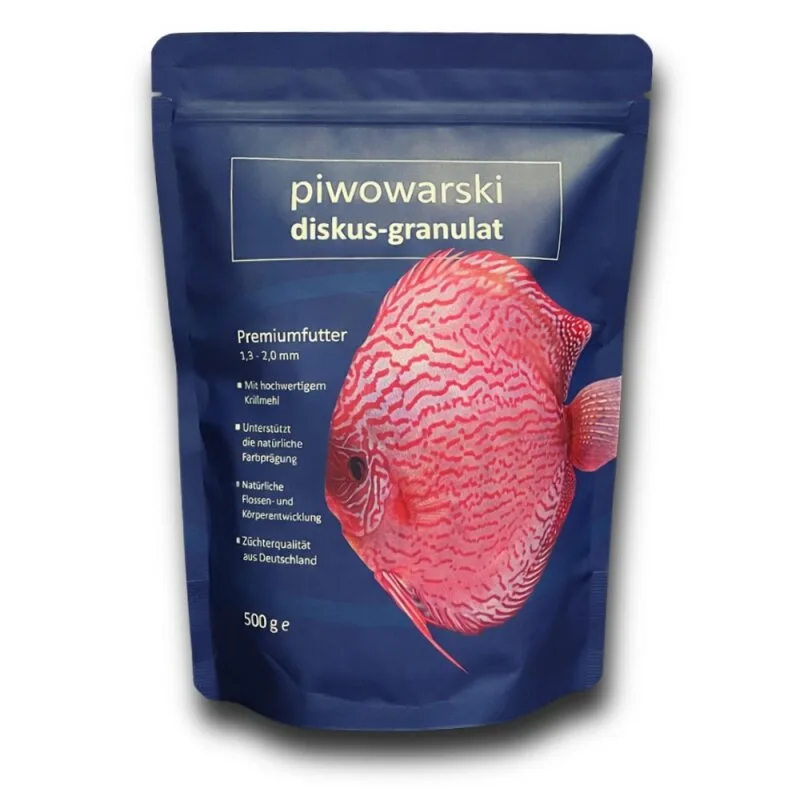
The selection is automatic, based on the equipment and products mentioned in the article. Prices and availability may vary.