Monthly cost of a discus aquarium: a realistic breakdown
How much a discus aquarium really costs per month — a category-by-category breakdown (electricity, food, water, tests) with 3 scenarios (budget, balanced, premium) and 6 ways to cut the bill.

Quick summary
- A realistic monthly running cost for a 250 L (~66 US gal) tank with 6 discus is moderate, with food and electricity as the two biggest items.
- Food is usually the largest recurring expense, followed by electricity (mostly the heater).
- Three real-world scenarios: budget, balanced (recommended) and premium (breeding) — each spends differently.
- Startup cost is separate and much larger than the monthly cost — budget for it independently.
- Keep an emergency fund for treatments or equipment replacements.
Quick summary
- A realistic monthly running cost for a 250 L (~66 US gal) tank with 6 discus is moderate — the exact figure depends heavily on your electricity tariff, water source and feeding style.
- The biggest recurring expense is usually food, followed by electricity (the heater dominates).
- Three real-world budgets: budget, balanced (recommended) and premium (breeding) — they differ mainly in water source, food variety and treatments.
- The startup cost (tank + equipment + 6 discus) is a separate, one-time outlay and is far larger than the monthly cost.
- Keep an emergency fund for disease treatments or equipment failures.
💱 This guide focuses on the categories and proportions of cost, which travel well across countries. We don't publish fixed international prices because energy, water, food and livestock prices vary enormously by region. Where Romania-specific figures appear, they are clearly labelled as a Romania estimate — replace them with your own local prices.
What you'll learn
What does a discus aquarium actually cost to run each month? This guide breaks down every cost category (electricity, food, water, tests, supplements, consumables), gives 3 real scenarios (budget, balanced, premium) and shows exactly where you can cut the bill without compromising fish health. To get a number for your tank, use your local electricity tariff and food prices rather than ours.
Cost categories, ranked by impact (250 L / ~66 US gal, 6 discus)
| Category | Typical share of the monthly bill | What drives it |
|---|---|---|
| Food | Largest | Pellets + frozen food, feeding frequency |
| Electricity | 2nd largest | Heater runtime, then filter + lighting |
| Water + conditioner | Moderate | Water-change volume, dechlorinator dosing |
| Water tests (amortized) | Small | Test kit spread over 12–18 months |
| Filter consumables | Small | Filter floss, sponges |
| Supplements | Small | Vitamins, spirulina |
| Misc + occasional treatments | Small–variable | Catappa leaves, meds |
🧮 Get a personalized figure with the monthly cost calculator — enter your volume, fish count and your own electricity tariff.
Monthly costs — category by category
1. Electricity — usually the 2nd biggest item
To get your own number, multiply each device's power draw by its daily runtime, then by your local price per kWh (check your utility bill).
Heater (the biggest consumer):
- A 200–250 L (~53–66 US gal) tank typically uses a ~200 W heater.
- It only runs 25–40% of the time — the thermostat switches off once the target temperature is reached.
- Effective consumption: roughly 35–60 kWh/month.
External canister filter:
- Draws about 10–20 W continuously (e.g. Eheim 2215, Fluval 307).
- Roughly ~10 kWh/month.
LED lighting:
- ~40 W × 8 hours/day ≈ 0.32 kWh/day → ~10 kWh/month.
Air pump (optional):
- 3–5 W continuous → ~3 kWh/month.
💡 Winter raises the bill by roughly 15–25% (the heater runs longer). Summer lowers it.
2. Water + conditioner — moderate
Tap water:
- Example schedule: 25% × 250 L × twice a week ≈ 500 L/month (~132 US gal).
- Tap water is cheap almost everywhere; the cost is usually a small part of the bill.
Conditioner (dechlorinator):
- A concentrated dechlorinator (e.g. Seachem Prime) goes a long way — typical dosing is about 1 ml per 40 L (~10.5 US gal) of new water, so a 500 ml bottle lasts several months.
- This is a steady, modest monthly cost.
RO (reverse-osmosis) water — only if your tap water is very hard (high TDS):
- Option A — own RO unit (better long term): a larger one-time investment, then replacement filters roughly once a year.
- Option B — buying RO water: a recurring cost, used selectively for top-ups.
For most keepers, tap water + a quality conditioner + occasional remineralization is enough. RO only becomes necessary for breeding or genuinely hard water.
3. Food — usually the largest item
Premium pellets (the dietary base):
- A discus-specific pellet (e.g. Sera Discus Granules, Tetra Discus) is the staple.
- For 6 discus eating roughly 2 g/day, a 250 g tub lasts about 3 months.
Frozen food (brine shrimp, bloodworms, mysis) — 2–3 times a week:
- Sold in 100 g blister packs; a realistic consumption is about 1 blister/week.
Homemade beef heart (optional — cuts cost a lot):
- A homemade mix (beef heart + shrimp + spinach) is cheaper per gram than commercial frozen food and lasts 6–8 weeks for 6 discus.
💡 Reality check: 6 adult discus eat only about 12–15 g of food a day in total. More than that means overfeeding → dirty water and digestive problems. Many guides inflate the food budget artificially.
4. Water tests — small (amortized)
- A liquid master kit (e.g. API Freshwater Master Kit, JBL Test Combi Set) lasts 12–18 months, so the monthly cost is small.
- Quick test strips (e.g. 6-in-1) can be used as a supplementary weekly check.
5. Supplements — small
- A vitamin supplement (e.g. JBL Atvitol) lasts 6–8 months.
- Spirulina powder lasts 8+ months.
- Fresh garlic (a feeding additive) is negligible — it comes from your kitchen.
6. Filter consumables — small
- Filter floss (perlon): replaced gradually; you use ~50 g/month.
- Filter sponges: replaced roughly every 6 months.
- Ceramic / bio media: partial annual replacement only.
Important: never replace all the filter floss at once. Rinse it in old tank water at each water change and replace it only when it's clogged — every 1–2 months.
7. Miscellaneous — small to variable
- Catappa (Indian almond) leaves: a pack lasts 3–4 months.
- Occasional treatments (e.g. praziquantel, metronidazole): amortized, a small monthly figure.
- Accessories (hoses, tweezers): negligible amortized.
- See Essential aquarium medicine cabinet.
3 real-world scenarios — budget by keeping style
Budget scenario
Profile: 250 L (~66 US gal), 6 locally bred discus, a beginner on a tight budget.
- Tap water + a quality conditioner.
- Food: ~60% pellets + ~40% homemade beef heart.
- Frozen food once a week.
- No RO water (tap TDS is moderate).
- Minimal supplements.
Balanced scenario (recommended)
Profile: 250 L (~66 US gal), 6 Stendker/Asian discus, an intermediate keeper.
- Tap water + conditioner (or occasional RO).
- Varied food: pellets + frozen 2–3×/week + beef heart.
- Basic supplements (vitamins, spirulina).
- Full weekly water tests.
Premium scenario
Profile: 350 L+ (~92 US gal+), 8+ discus, breeding or a select collection.
- RO water + a premium remineralizer.
- Fresh food weekly (live brine shrimp, mysis, blackworms).
- Complete vitamins and supplements.
- Prophylactic treatments (new quarantine).
- Large water changes (up to 40%/day).
How to cut costs — 6 proven methods
- Invest in your own RO unit (only if you need it) — it pays back over time vs. repeatedly buying RO water. See Reverse osmosis (RO) for discus.
- Make homemade beef heart — cheaper than commercial frozen food and often more nutritious.
- Buy food in bulk — 500 g–1 kg packs cost noticeably less per gram.
- Use efficient LED lighting — a modern LED draws far less than old T5/T8 tubes.
- Insulate the tank thermally — a thick background and a snug lid cut heater costs by roughly 15–20%.
- Use a pump for water changes — an electric gravel vacuum saves 30+ minutes a week.
Hidden costs — the emergency fund
⚠️ Equipment replacement (amortize it mentally):
- Heater: every 2–3 years.
- External filter: every 5–7 years.
- LED lighting: every 5+ years.
⚠️ Unexpected situations:
- A disease treatment per incident.
- Replacing a lost discus.
- Repairs (a cracked lid or pane).
Recommended: keep a permanent emergency fund so a single bad month doesn't force shortcuts that hurt the fish.
False economies (they cost you more)
❌ Cheap food — leads to digestive problems; treatment costs exceed the saving. ❌ No water tests — problems caught late mean lost fish worth far more than the kit. ❌ An undersized filter — chronic poor water quality = compromised health. ❌ A cheap heater without an accurate thermostat — overheating risk = total colony loss.
🇷🇴 Romania estimate (for local readers)
For readers in Romania, a realistic monthly running cost for a 250 L tank with 6 discus is roughly 150–300 RON/month (budget ~160 RON, balanced ~220 RON, premium ~350 RON), calculated at an electricity tariff of 0.70 RON/kWh (ANRE 2026). The separate one-time startup is around 6,000–10,000 RON, and a recommended emergency fund is 500–1,000 RON. These are Romania-specific figures — treat them as a local example, not an international benchmark, and re-check current tariffs and prices.
Final checklist — financially ready?
Tick these before buying your first discus:
- ☐ A monthly budget set aside for ongoing running costs over the next 3–5 years
- ☐ A separate emergency fund for treatments and replacements
- ☐ A realistic startup budget for the full setup
- ☐ You've checked your electricity bill and know your exact price per kWh
- ☐ You've tested your tap water (TDS, pH) — you know whether you need RO
- ☐ You've read Essential equipment — you know the recommended brands
- ☐ You understand discus are a hobby, not a financial investment
What to do next
📚 Learn more: Essential discus aquarium equipment — a complete list with models and budgets.
🧮 Calculate: Volume, stocking and monthly cost calculators — tailored to your setup.
🛒 Buy: Discus from verified breeders — a fair price and proof of origin.
Want a clear schedule for your tank?
Generate a personalized plan for water changes, feeding, testing and maintenance — in just 2-3 minutes.
Generate care planSave your tank, log water parameters and get email reminders for care tasks — for free.
Best value-for-money products
Picked from the shop based on what you just read
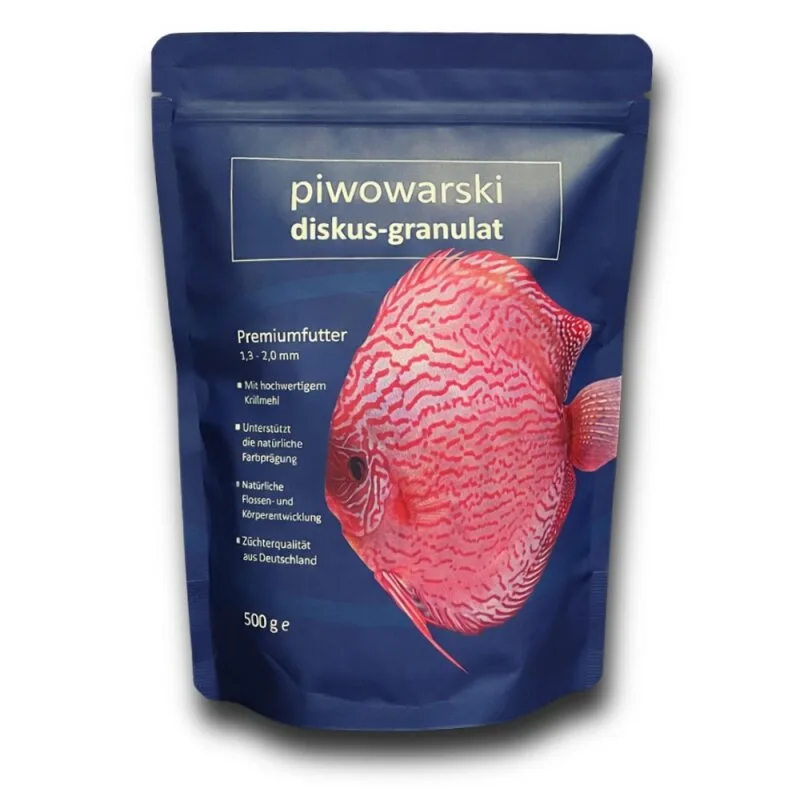
Recommendations are selected from the discus.ro shop based on this guide's topic. Availability and prices may vary.