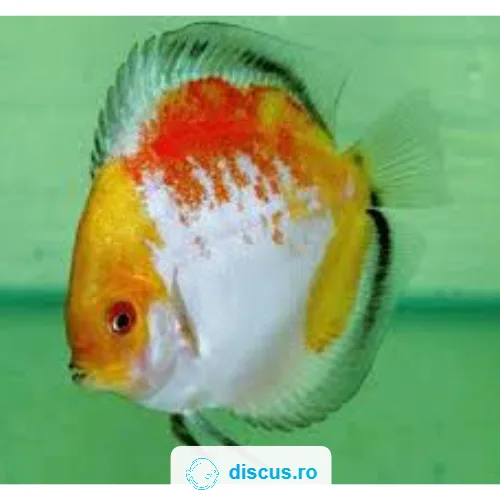
Calico
Symphysodon sp.
Description
The Calico Discus is a spectacular polychromatic variant, appreciated for its mosaic-like appearance where spots of various colors overlap on a bright background. This variety does not have a fixed pattern, making each specimen a unique piece in the aquarium. Although not as common as solid varieties, these fish attract attention through the vibrant contrast between pigmented spots and the creamy shades of the body. They are fish with active social behavior, ideal for experienced aquarists looking for aesthetic diversity.
🌍 Origin & History
The Calico variety was developed through complex selective breeding, derived from lines showing significant genetic color variations. Although there is no geographical origin, this variety is the result of careful selection by professional breeders who aimed to obtain a variegated appearance, similar to the pattern found in calico cats. These genetic lines have been refined over several generations, resulting in a bred fish that combines traits from parents with irregular patterns and multiple colors.
Appearance
The body features a yellow-white or cream background, covered with irregular orange, red, or brown-black spots distributed across the body and fins. Unlike classic varieties, Calico does not possess uniform vertical bars, these being often faded or absent. The eyes are usually orange or reddish, adding a pleasant contrast to the face. The body shape is round, typical of the species, but their visual elegance is given by the random distribution of colors, offering a natural 'mosaic' aesthetic highly appreciated in specialized competitions.
🧬 Genetic background
Calico originates from crosses between lines such as Pigeon Blood, Golden, and other complex pattern varieties. The genes responsible for irregular pigmentation interact with the yellow-white background, generating a tricolor or polychromatic appearance. The distribution of orange, red, and brown-black spots is dictated by the expression of pigment dispersion genes, which in this case are not uniformed, maintaining the characteristic 'mosaic' appearance.
Recommended water parameters
Care
Care requires water with a pH between 6 and 7 and constant temperatures of 28-30°C. They are sensitive fish that require regular water changes (20-30% weekly) and effective filtration to maintain impeccable water quality. Food must be varied, including quality granules, brine shrimp, and mixtures rich in carotenoids to support colors. They are peaceful but shy fish that prefer to be kept in groups of at least 6 individuals to reduce stress. Ideal tank mates are peaceful tetras or corydoras, maintaining a quiet environment.
Breeding
Breeding is difficult and unpredictable because the fry show high genetic variability. Not all offspring will inherit the parents' calico pattern, and rigorous selection of specimens is necessary to maintain the quality of the line. Breeding conditions include very soft and slightly acidic water, along with a stimulation diet. The breeder must be prepared for a high rate of fry that will show standard coloring, with success being determined by experience in the phenotypic selection of mature specimens.
💡 Practical tips
- →Each specimen is unique
- →Ensure strong biological filtration
- →Feed with a rich variety
- →Constantly monitor water quality
- →Avoid stress and noise
- →Buy only healthy specimens
Related guides
Articles relevant to you
Useful tools
Quick aquarium calculators
Other varieties in the Golden / Beige group
Products for this variety
Filters, food, tests and treatments for discus

Granulated Probiotic Food for Freshwater Fish, Tropical ProDefence M, 44g/100 ml

Granulated Food for Discus, Tropical, Discus Gran D-50 Plus, 44 g/100 ml
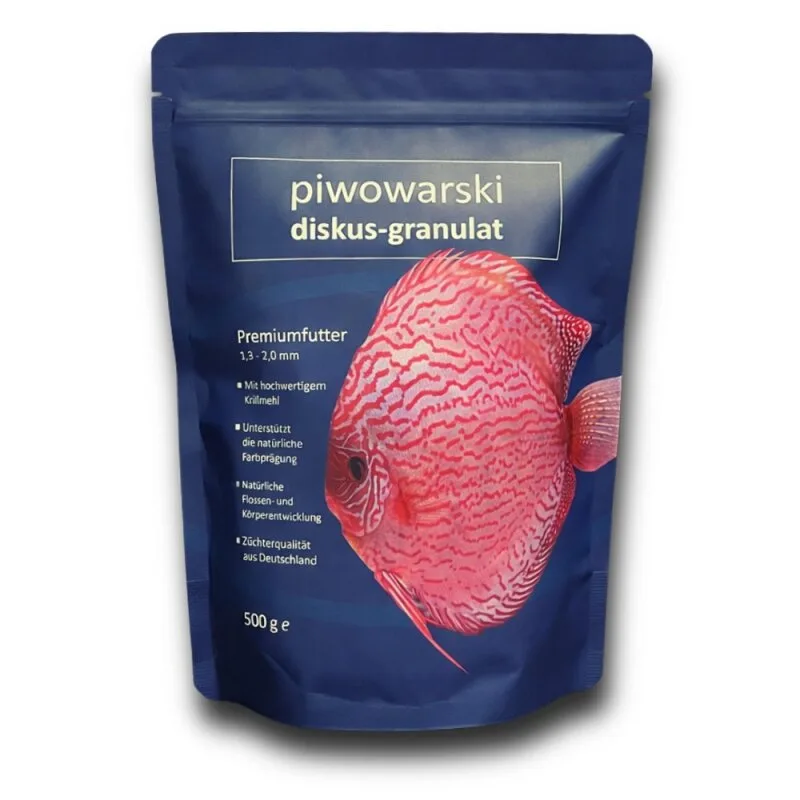
Discus Fish Granules - Piwo - granules 1.3–2 mm - 500g

Hikari Discus Bio Gold 80 g

Catappa Leaves, Sera Catappa Leaves - M

Bacteria Culture Additive, Seachem Stability, 1 L

Aqua Medic Premium Line Reverse Osmosis System

ARKA AQUATICS myAQUA 1900 Reverse Osmosis System

ARKA myAqua380 Reverse Osmosis System

Seachem Stability - Aquarium Biological Stabilizer 250 ml