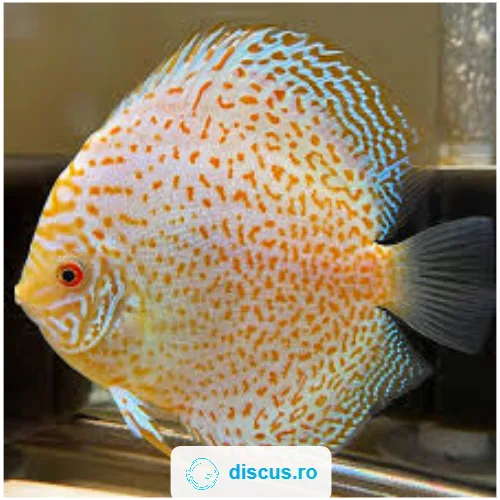
Golden Leopard Snake
Symphysodon sp.
Description
The Golden Leopard Snake is a spectacular variety of the Symphysodon genus, resulting from the selective breeding of Golden, Leopard, and Snakeskin genetic lines. This selection brings together base traits, such as a bright golden background, with complex Leopard-like spots and the fine striations typical of the Snakeskin variety. The result is a unique specimen, highly sought after by aquarists for its brilliant appearance and the density of the pattern across its entire body. These fish require careful attention to maintain color intensity, providing a remarkable visual contrast in any aquarium dedicated to larger species.
🌍 Origin & History
This variety is a complex hybrid resulting from intensive selection programs in specialized hatcheries. Its heritage combines the genetic background of Golden fish with the dominant genes of Leopard and Snakeskin varieties. It is not a wild species, but an artificial creation developed to achieve a perfect balance between golden pigment and complex patterns. Its origin reflects the success of modern breeding techniques, consolidated over successive generations to ensure the stability of the golden phenotype combined with specific spotted and striped patterns.
Appearance
The body of this discus features an intense golden hue, serving as a canvas for a dense pattern made of Leopard spots and fine Snakeskin-like lines. The pattern is evenly distributed across the flanks, providing a highly sophisticated visual aspect. The eyes are usually a bright reddish-orange, creating an excellent visual contrast. The fins are often decorated with fine lines that continue the pattern from the body, and the overall shape is round, typical for a healthy and well-maintained discus, with an imposing presence in the aquarium.
🧬 Genetic background
The genetics of the Golden Leopard Snake are defined by the triple inheritance of Golden-type recessive genes, the spotted Leopard pattern, and the Snakeskin genes that produce fine striations. The interaction between the Golden gene, which inhibits melanin, and the genes responsible for complex patterns allows for maximum visibility of spots and stripes against the golden background. This combination requires careful selection to maintain the purity of the golden background and the clarity of the pattern.
Recommended water parameters
Care
Care requires an aquarium of at least 250 liters, with a temperature of 28-30°C and a pH between 6-7. Water quality is vital, requiring weekly 30% changes and strong biological filtration. They are social fish that should be kept in groups of at least 5-6 individuals. Feeding must be varied: high-quality pellets, frozen food (artemia, bloodworms), and occasionally live food. They are compatible with calm, small or medium-sized fish, such as tetras or corydoras, as long as water parameters are kept consistent.
Breeding
Breeding is considered relatively accessible for experienced hobbyists, although it requires a dedicated tank for spawning. The pair will clean a vertical surface where they will deposit the eggs, with careful monitoring of the parents required afterwards. Water quality during the breeding period must be impeccable, with low conductivity. The fry require micro-food (freshly hatched artemia) immediately after they start free-swimming, ensuring a better survival rate and optimal coloration as they develop.
💡 Practical tips
- →Ensure dietary diversity to enhance the golden color.
- →Constantly monitor water quality to avoid stress.
- →Keep a group of at least 6 individuals for harmony.
- →Each specimen has a unique and unrepeatable spot pattern.
- →Avoid overcrowding the tank to prevent diseases.
- →Use natural decorations that highlight the coloration.
Related guides
Articles relevant to you
Useful tools
Quick aquarium calculators
Other varieties in the Golden / Beige group
Products for this variety
Filters, food, tests and treatments for discus

Granulated Probiotic Food for Freshwater Fish, Tropical ProDefence M, 44g/100 ml
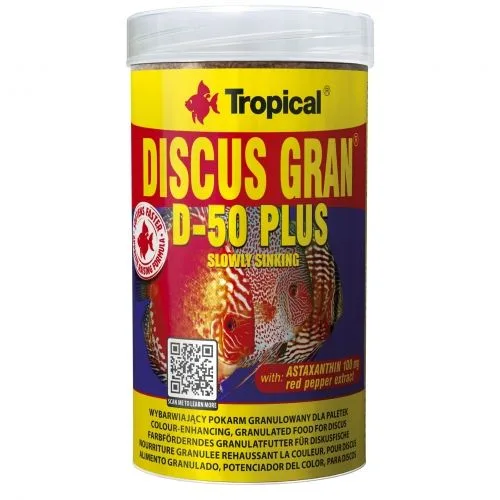
Granulated Food for Discus, Tropical, Discus Gran D-50 Plus, 44 g/100 ml
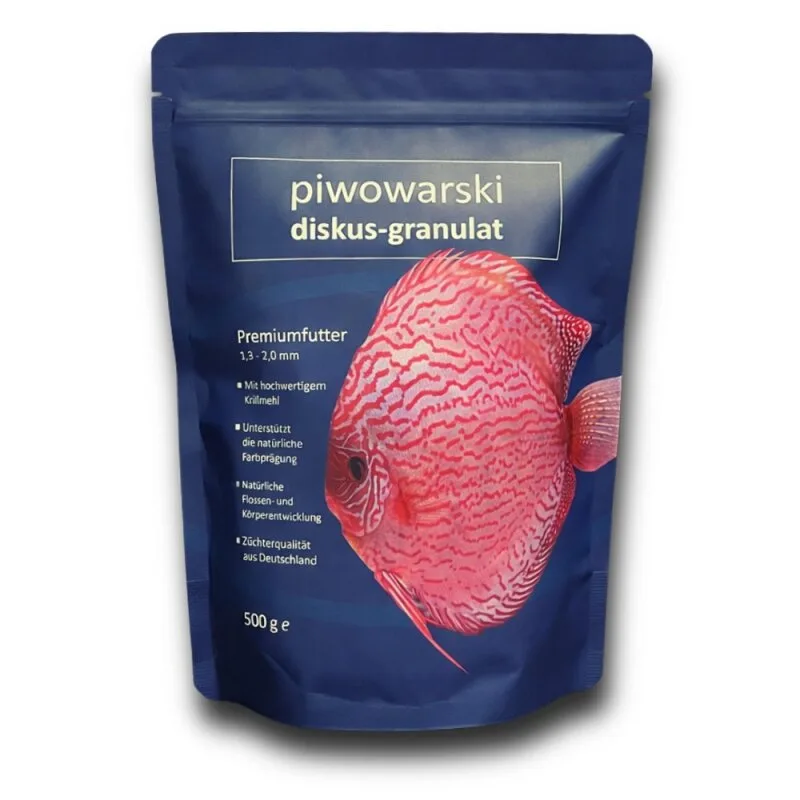
Discus Fish Granules - Piwo - granules 1.3–2 mm - 500g

Hikari Discus Bio Gold 80 g
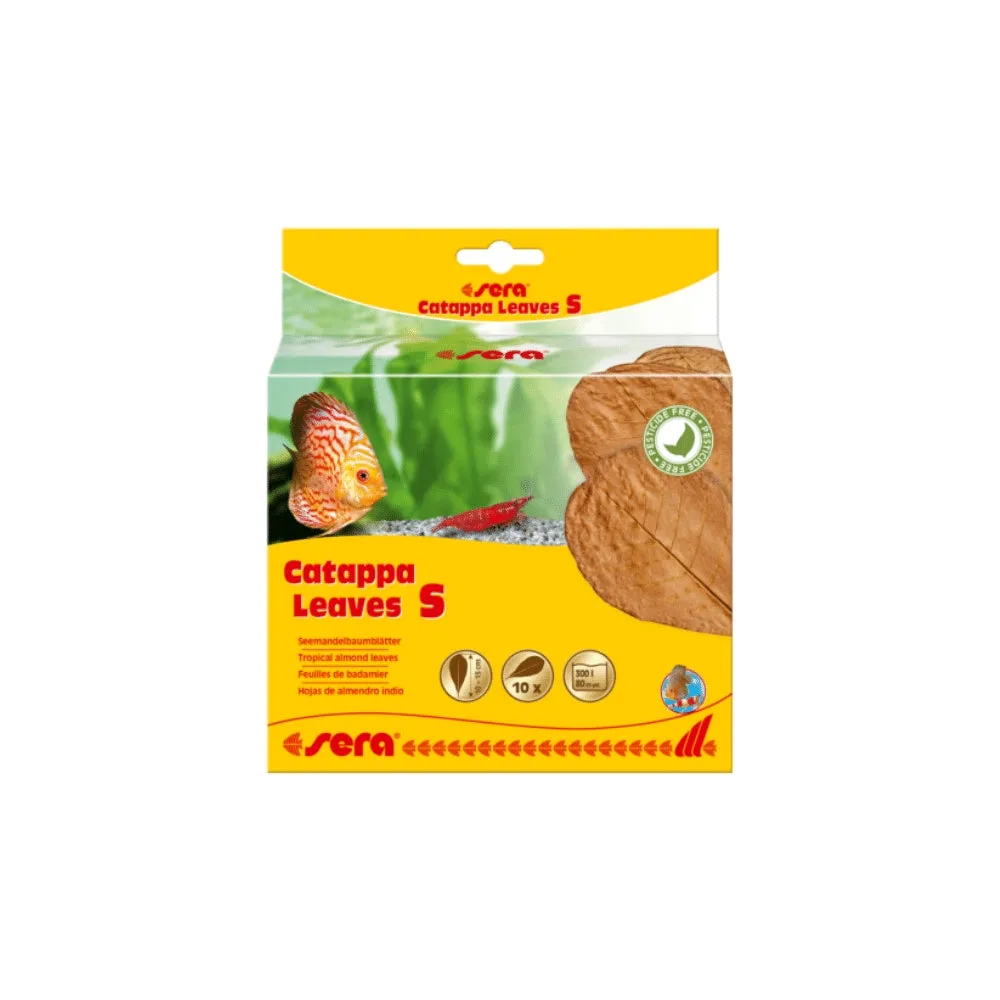
Catappa Leaves, Sera Catappa Leaves - M

Bacteria Culture Additive, Seachem Stability, 1 L

Aqua Medic Premium Line Reverse Osmosis System

ARKA AQUATICS myAQUA 1900 Reverse Osmosis System

ARKA myAqua380 Reverse Osmosis System

Seachem Stability - Aquarium Biological Stabilizer 250 ml