Discus aquarium substrate: sand, bare-bottom or active
The substrate affects water parameters, maintenance and discus health. A complete guide comparing 4 options: bare-bottom, fine sand, gravel (to avoid) and active aqua-soil.

Quick summary
- Bare-bottom (no substrate) = recommended for breeders and breeding tanks (maximum hygiene, easy diagnosis).
- Fine sand 0.5–1 mm (~0.02–0.04 in) = the aesthetic choice + plants. A 2–3 cm (~1 in) layer at most.
- Gravel = to avoid for discus (traps waste, raises nitrate).
- Active aqua-soil (ADA Amazonia, Tropica Aquasoil, JBL ProScape) = for densely planted tanks; lowers pH naturally to ~6.0–6.5.
- Universal rules: a layer max 3–4 cm (~1.5 in), vacuum at every water change, a dark background for bare-bottom.
- Never use crushed coral or aragonite with discus — they raise KH and pH, the opposite of what discus need.
In short
- Bare-bottom (no substrate) = recommended for breeders and breeding tanks (maximum hygiene, easy diagnosis).
- Fine sand 0.5–1 mm (~0.02–0.04 in) = the aesthetic choice + plants. A 2–3 cm (~1 in) layer at most.
- Gravel = ❌ to avoid for discus (traps waste, raises nitrate).
- Active aqua-soil (ADA Amazonia, Tropica Aquasoil, JBL ProScape) = for densely planted tanks; lowers pH naturally to ~6.0–6.5.
- Universal rules: a layer max 3–4 cm (~1.5 in), vacuum at every water change, a dark background for bare-bottom.
- Never use crushed coral or aragonite with discus — they raise KH and pH, the opposite of what discus need.
💱 The substrate choice itself applies everywhere. Prices vary a lot by country, so we don't publish fixed international prices. Where a Romania figure appears (budget), it's clearly labelled as a EU estimate.
What you'll learn
Choosing the substrate for a discus tank (Symphysodon) directly affects water parameters (pH, KH, nitrate), ease of maintenance and the fish's long-term health. Discus produce a lot of waste — the wrong substrate traps organic waste and can become a source of ammonia and parasites. This guide compares the 4 main options, the impact of each on the water, the mistakes to avoid, and how to decide based on your goal (breeding, décor, planted).
Quick comparison table
| Criterion | Bare-bottom | Fine sand | Gravel | Active aqua-soil |
|---|---|---|---|---|
| For breeders/breeding | ⭐ Yes | OK | ❌ | ❌ |
| For a planted tank | ❌ | OK | ❌ | ⭐ Yes |
| For beginners | ⭐ Yes | OK | ❌ | ❌ |
| Hygiene | Excellent | Good | Poor | Medium |
| Disease diagnosis | Very easy | Medium | Hard | Hard |
| pH impact | Neutral | Neutral | Neutral | Lowers pH 0.5–1.0 |
| Lifespan | ∞ | ∞ | 2–3 years | 1–2 years |
| Aesthetics | Low | Good | Medium | Very good |
| Anaerobic-bacteria risk | Zero | Low | ⚠️ High | Low |
The 4 options explained
1. Bare-bottom (no substrate) ⭐ RECOMMENDED for breeders
Why it's the professionals' choice:
- You spot any problem immediately (abnormal feces, a parasite, leftover food)
- You vacuum completely at every water change (5 minutes, no gravel to disturb)
- Zero pathogenic bacteria in anaerobic layers
- Discus tend to grow larger (less stress, cleaner water)
How to compensate for aesthetics:
- A black or dark-brown background (a self-adhesive vinyl)
- Malaysian driftwood and catappa leaves on the bottom for a natural look
- Diffuse lighting (a dimmable LED) — discus look striking against a clean base
Drawbacks:
- ❌ You can't plant rooted plants (Echinodorus, Vallisneria) — only attached plants (Anubias, Microsorum)
- ❌ Discus may see their reflection in the glass bottom → stress → fix: a matte background or black self-adhesive film
2. Fine sand (0.5–1 mm / ~0.02–0.04 in) — the aesthetic choice
Who it's for: decorative tanks or an Amazonian biotope, when you want a natural look without a big investment.
Recommended types: aquarium-grade white quartz sand, black sand (basalt or coated quartz), CaribSea Sunset Gold (natural beige), Tropica Sand (natural grey).
Mandatory rules:
- A layer of 2–3 cm (~1 in) maximum (over 4 cm / 1.5 in = anaerobic zones → toxic H₂S)
- Grain size 0.5–1 mm (below 0.5 mm it compacts; over 1 mm it traps waste)
- Rinse before use (about 10 minutes under the tap)
- Weekly vacuuming with a gravel cleaner — be careful not to suck up the sand
❌ Don't use:
- Beach sand (salty, with calcareous shells)
- Construction sand (uneven grain, dusty)
- Uncalibrated river sand (may contain parasites)
3. Gravel — ❌ TO AVOID
Why it doesn't work for discus:
| Problem | Explanation |
|---|---|
| Large gaps between stones | Organic waste (feces, food) falls in and decomposes → local ammonia |
| Impossible to vacuum fully | A gravel cleaner only lifts the surface; waste stays between the stones |
| Raises nitrate | Chronic buildup = nitrate >40 ppm even with regular water changes |
| Injury risk | Sharp edges can injure the skin of bottom fish (discus aren't bottom dwellers) |
An acceptable exception: fine, rounded gravel (1–2 mm), very well rinsed, in a very thin layer (1–2 cm / ~0.5 in), for a heavily planted tank. Even then, fine sand or active aqua-soil are better choices.
4. Active aqua-soil — for densely planted tanks
Who it's for: experienced keepers who want a heavily planted tank with a natural pH of ~6.0–6.5.
How it works:
- Granules of clay/laterite fired at high temperatures
- Releases humic acids and CEC (cation exchange capacity) → lowers pH naturally
- Contains N, P, K, Fe for plants (no extra fertilizing for 6–12 months)
Trusted brands and their pH-lowering range:
| Brand | Model | pH-lowering range |
|---|---|---|
| ADA | Amazonia v2 | -0.5 to -1.0 |
| Tropica | Aquasoil Powder | -0.3 to -0.7 |
| JBL | ProScape PlantSoil | -0.3 to -0.5 |
| Dennerle | Scaper's Soil | -0.3 to -0.5 |
| Prodibio | Aqua'Terra Soil | -0.4 to -0.8 |
Application rules:
- A layer of 4–6 cm (~1.5–2.5 in) (thicker than sand — for plant roots)
- ⚠️ Releases ammonia for the first 2–3 weeks → cycling is mandatory before stocking
- Don't rinse before use (it damages the structure)
- Add water very slowly (place a bowl on the substrate and pour over it)
The first 30 days with discus calendar
One day per row: what to do, what to check and what to avoid in the first month. No theory, just the right order.
Drawbacks:
- ❌ A higher cost
- ❌ A limited lifespan (1–2 years, then it "exhausts")
- ❌ Can't be vacuumed at the bottom (you damage the substrate)
Substrate impact on water parameters
| Substrate | pH | KH | Nitrate | H₂S risk |
|---|---|---|---|---|
| Bare-bottom | Neutral | Neutral | Low | Zero |
| Fine sand (2–3 cm) | Neutral | Neutral | Medium | Low |
| Gravel | Neutral | Neutral | ⚠️ High | ⚠️ High |
| Active aqua-soil | -0.5 to -1.0 | -1 to -2 dKH | Medium (first months) | Low |
| Crushed coral | +0.5 to +1.5 | +3 to +5 dKH | Low | Zero |
⚠️ Don't use crushed coral or aragonite with discus — they raise KH and pH, exactly the opposite of their needs.
Substrate maintenance — the correct schedule
Bare-bottom
- At every water change: a full vacuum with a gravel cleaner (5 min)
- Monthly: wipe the bottom with a soft sponge for biofilm
Fine sand
- Weekly: vacuum the surface with a gravel cleaner (hold it 1–2 cm above the sand)
- Monthly: gently stir the sand with a stick to release gas bubbles (prevents H₂S)
- Yearly: check the layer depth — add sand if it drops below 2 cm
Active aqua-soil
- Don't vacuum at the bottom (you damage the granule structure)
- Clean only the surface with a gravel cleaner held 3–4 cm above
- Every 1–2 years: replace 30–50% with fresh substrate (to refresh the CEC)
Common substrate mistakes
❌ "I'll put an 8 cm (~3 in) sand layer for looks" — over 4 cm anaerobic zones form → H₂S (a toxic gas, smells of rotten eggs) → mass mortality.
❌ "I'll use colored decorative gravel from the shop" — colored gravel can release toxic dyes and has sharp edges.
❌ "I'll put active aqua-soil straight into a tank with fish" — it releases ammonia for 2–3 weeks. Likely mortality without cycling.
❌ "I'll mix in crushed coral for calcium" — it raises KH/pH dramatically, incompatible with discus. Never in a discus tank.
❌ "I never vacuum the substrate, what could go wrong?" — nitrate climbs to 60–80 ppm within 2–3 months → chronic poisoning.
❌ "I'll use gravel + rooted plants" — plants can't anchor their roots well and die within 2–3 months.
How to decide — 3 simple questions
1. The tank's purpose?
- Breeding / juveniles → Bare-bottom
- Decorative / show / moderately planted → Fine sand
- A densely planted aquascape → Active aqua-soil
2. Your experience?
- Beginner → Bare-bottom or fine sand
- Advanced (2+ years) → any option
3. Your budget?
- Low → Bare-bottom or quartz sand
- Medium → Premium sand (Tropica, CaribSea)
- Higher → Active aqua-soil (ADA, Tropica)
Final checklist — substrate ready?
Tick before you fill with water:
- ☐ Substrate type chosen (bare-bottom / sand / active aqua-soil)
- ☐ Quantity calculated: ~5 kg of sand per 100 L (~26 US gal) for a 2–3 cm layer
- ☐ Substrate rinsed (sand) or left intact (active aqua-soil)
- ☐ Layer under 4 cm (~1.5 in) (anti-H₂S)
- ☐ Background applied (essential for bare-bottom)
- ☐ For active aqua-soil: cycling 2–3 weeks before stocking
- ☐ A gravel cleaner bought (in the shop)
- ☐ A weekly cleaning plan set
What to do next
📚 Learn more: Plants compatible with discus — choose the right plants for your substrate.
🧮 Calculate: Aquarium volume calculator — how many liters you need to work out the substrate quantity.
🛒 Buy: See the whole Discus.ro shop — gravel cleaners, dechlorinator, water tests and more.
Save your tank, log water parameters and get email reminders for care tasks — for free.
Recommended products
Picked from the shop based on what you just read


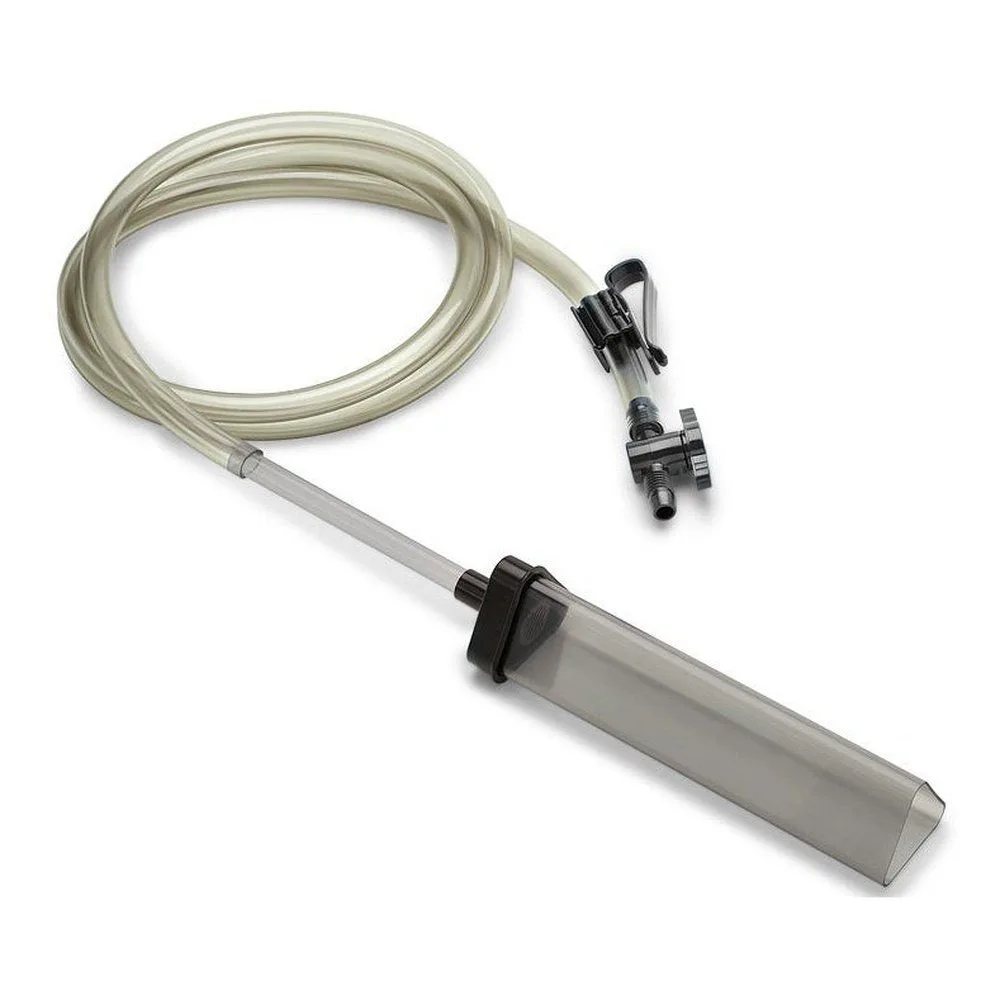
Recommendations are selected from the discus.ro shop based on this guide's topic. Availability and prices may vary.
Frequently asked questions
Put what you just read into practice
One account brings together everything you need to keep your tank on track:
Water parameters, inhabitants, photos and the full history of every change — our most used tool.
Water changes, cleaning and feeding, on your own dates.
See at a glance which values fall outside the safe discus range.
The guides, products and listings you follow, saved in one place.