Keeping Discus in Winter: Maintaining 28–30°C and Safe Water Changes
During winter, the danger to discus isn't just the cold, but sudden temperature drops. Learn about heating, water changes, and power outage safety.
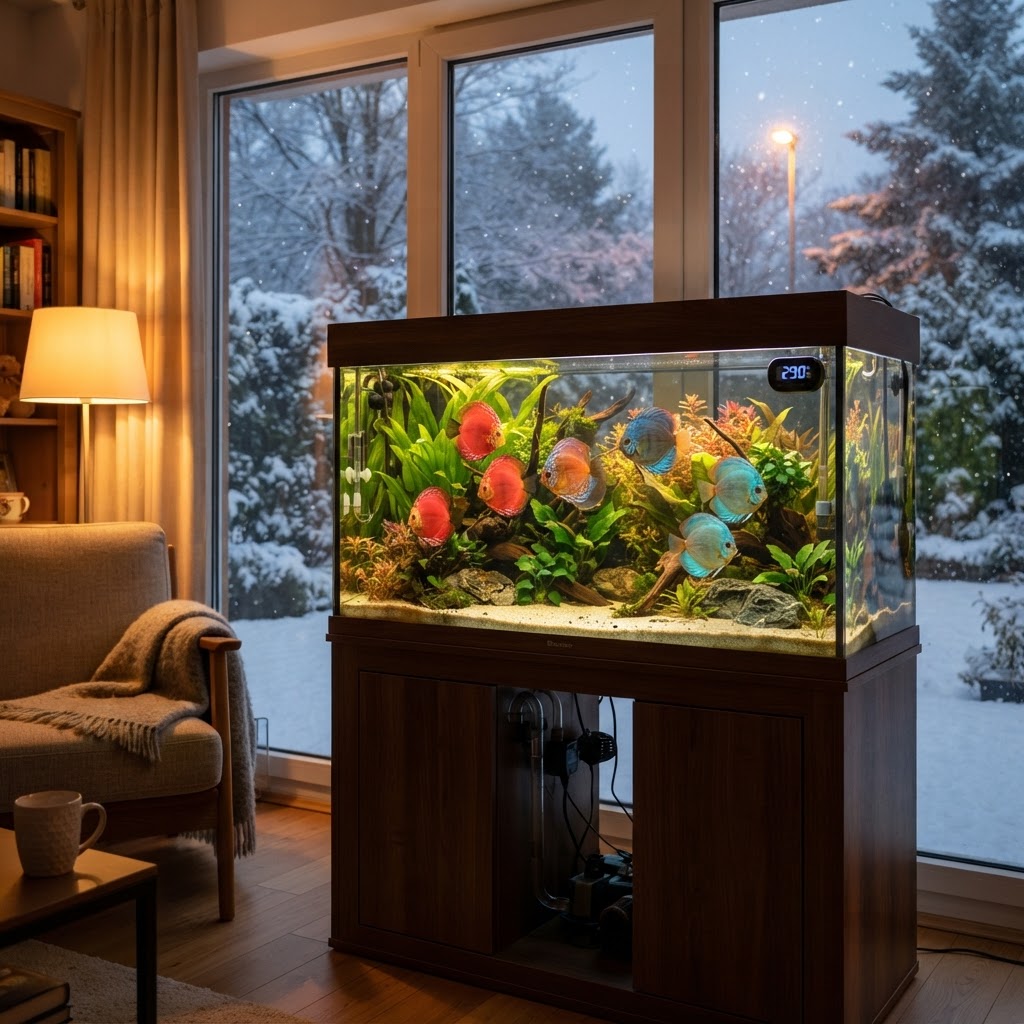
Quick summary
- Aim for 28–30°C; the real danger is sudden temperature fluctuations.
- In cold rooms, calculate roughly 1 W/L, split across two smaller heaters.
- New water must be within ±1°C of the tank; prepare it 24 hours in advance with a heater and aeration.
- Tap water can be 4–8°C in winter; never perform large water changes without temperature matching.
- During power outages: use blankets or foam insulation, battery-powered air pumps, and stop feeding.
In short
- The target remains 28–30°C (82–86°F) even in winter. The risk is not the cold itself, but sudden drops: rooms at 16–19°C (61–66°F), tap water at 4–8°C (39–46°F), and power outages.
- Heating: approximately 1 W/L (approx. 4 W per gallon) in a cold room, divided between 2 smaller heaters. If one fails, the other maintains the temperature; if one gets stuck in the 'on' position, it will not overheat the water.
- Water changes in cold weather: new water must be within ±1°C (±1.8°F) of the aquarium temperature. The safest method is a container with a heater and aeration, prepared 24 hours in advance.
- Power outage: insulate the aquarium with a blanket, do not feed, and provide oxygen with a battery-powered pump. A large, insulated aquarium loses heat slowly.
Why is winter the riskiest period?
In summer, the problem is too much heat. In winter, three risks appear simultaneously:
- The room cools down, especially at night or in homes where temperatures vary significantly throughout the day.
- Tap water drops to 4–8°C (39–46°F). A water change done "by eye" can drop the aquarium temperature by several degrees in just a few minutes.
- Power outages are more frequent during snow and wind.
Discus react poorly to sudden drops: they darken in color, stop eating, and their immunity decreases. Winter increases the risk of Ich (white spot disease), typically triggered by thermal shock. See Ich in discus.
What heater power do you need in winter?
General rule: 0.5 W/L (approx. 2 W per gallon) in a warm room (21–23°C / 70–73°F) and approximately 1 W/L (approx. 4 W per gallon) in a cold room (below 18°C / 64°F).
| Aquarium volume | Warm room | Cold room (below 18°C / 64°F) | Recommended setup |
|---|---|---|---|
| 200 L (53 gal) | 100–150 W | 200 W | 2 × 100 W |
| 300 L (79 gal) | 150–200 W | 300 W | 2 × 150 W |
| 450 L (119 gal) | 250 W | 400–450 W | 2 × 200 W |
Why two heaters? One large one that breaks leaves you without heat, and one large one stuck on can "cook" your fish. Two smaller ones, set to the same temperature, share the risk. Details about models and placement in heating the aquarium for discus.
How to reduce heat loss?
- Closed lid. Most heat is lost through the water surface via evaporation.
- Polystyrene on the back and sides (2–3 cm / approx. 1 inch), especially if the aquarium is next to an exterior wall.
- Keep away from windows, balcony doors, or cold hallways.
- Digital thermometer with alarm, so you find out about a problem before the fish do.
- Keep the temperature stable, not just "perfect." An aquarium constant at 28.5°C (83°F) is better than one that oscillates between 27 and 30°C (80–86°F). See ideal temperature for discus.
How to perform safe water changes in the cold?
- Prepare the water 24 hours in advance in a food-grade container or barrel (60–200 L / 15–53 gallons).
- Place a heater in the container, set to the aquarium temperature.
- Add an air stone. Aeration removes some chlorine, stabilizes pH, and oxygenates the water.
- Use a water conditioner dosed for the volume of new water.
- Check with a thermometer before the change: the maximum difference is ±1°C (±1.8°F) compared to the aquarium.
- Test pH and TDS of winter water occasionally. Municipal water can change its parameters from one season to another.
The first 30 days with discus calendar
One day per row: what to do, what to check and what to avoid in the first month. No theory, just the right order.
⚠️ Do not mix hot and cold water "by feel" directly from the tap for a large water change. In cold weather, hot water may come from a boiler with different chemistry, and the final temperature is hard to guess.
The complete storage method is described in storing and preparing water for changes, and the basic steps in water changes for beginners.
What to do during a power outage?
| Duration | What to do |
|---|---|
| Up to 2 hours | Nothing special. Keep the lid closed and do not feed. |
| 2–6 hours | Cover the aquarium with a blanket or polystyrene. Oxygenate with a battery-powered air pump. |
| Over 6 hours | PET bottles with warm (not hot) water floating in the aquarium, changed periodically. Do not feed. |
| When power returns | Check the filter and temperature. Do not force heating: let the heaters return to temperature gradually. |
An insulated 300 L (79 gallon) aquarium loses heat slowly, usually less than one degree per hour. A small, uninsulated one cools down much faster.
How much does electricity cost in winter?
In winter, heaters run more, so consumption increases. Insulation and a lid can noticeably reduce the bill. Calculate your real cost with the monthly aquarium cost calculator.
Common mistakes in winter
- A single, undersized heater that runs non-stop and cannot keep up.
- Changes with cold tap water.
- Placing the aquarium near a window or balcony door.
- Setting the heater above 31°C (88°F) "to be safe."
- Lack of a thermometer separate from the heater's built-in one.
Winter checklist
- ☐ I have calculated the required power (approx. 1 W/L in a cold room)
- ☐ I have two heaters, set to the same temperature
- ☐ I have a digital thermometer with an alarm
- ☐ The aquarium has a lid and polystyrene on the back
- ☐ I have a water container with a heater and aeration
- ☐ I have a battery-powered air pump and a blanket for power outages
- ☐ I test the pH and TDS of winter water at least once
Keep reading
Save your tank, log water parameters and get email reminders for care tasks — for free.
Recommended products
Picked from the shop based on what you just read


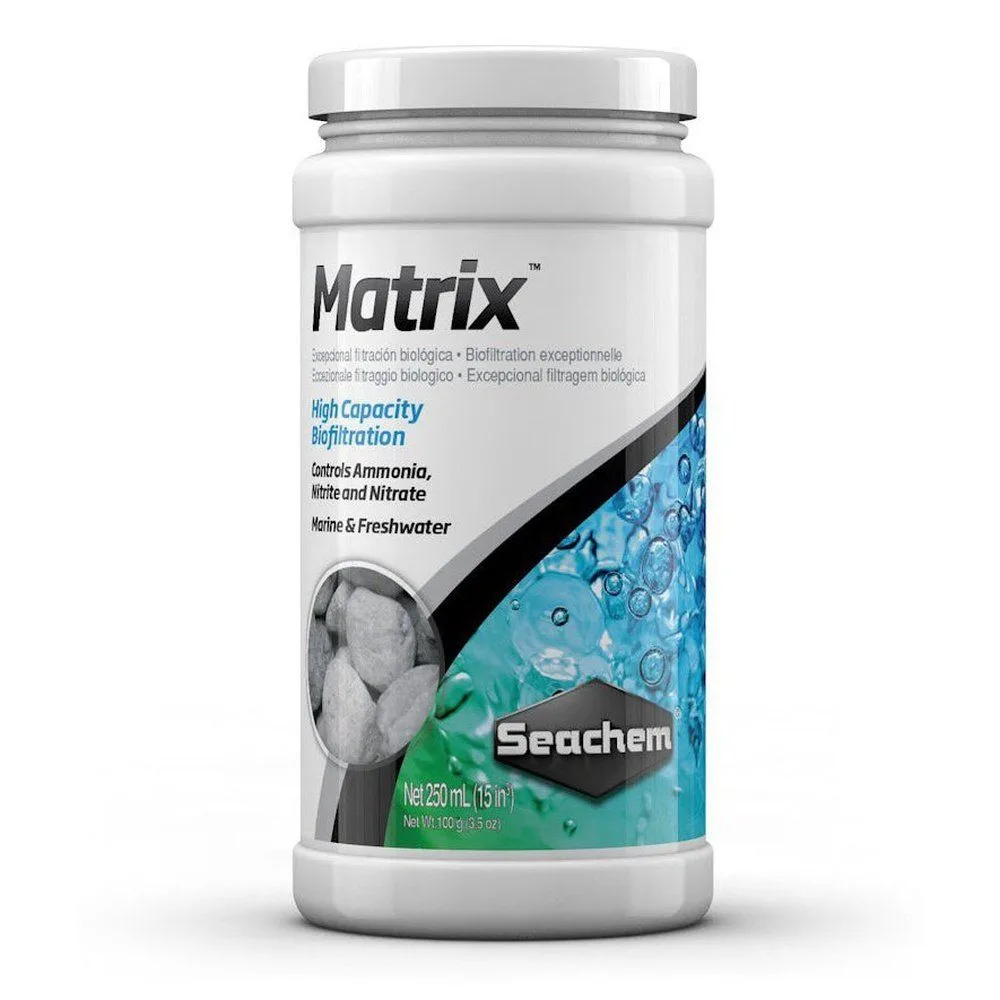

Recommendations are selected from the discus.ro shop based on this guide's topic. Availability and prices may vary.
Frequently asked questions
Put what you just read into practice
One account brings together everything you need to keep your tank on track:
Water parameters, inhabitants, photos and the full history of every change — our most used tool.
Water changes, cleaning and feeding, on your own dates.
See at a glance which values fall outside the safe discus range.
The guides, products and listings you follow, saved in one place.