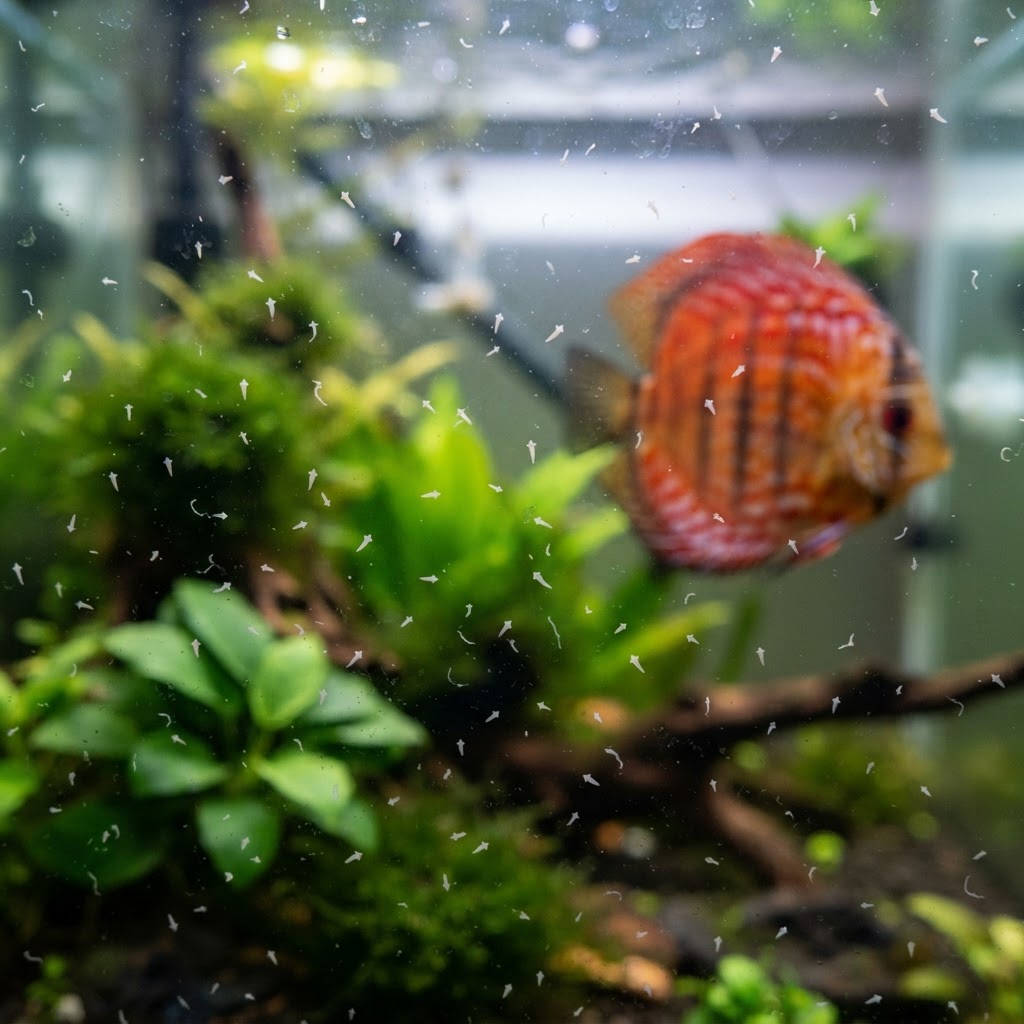
Planaria and tiny white worms on the glass of a discus aquarium: causes and what to do
Tiny white worms on the glass usually come from excess food and are not discus parasites. Learn how to tell harmless nematodes from planaria, what to check first and why treating the whole tank is not an automatic fix.
In short
- Tiny white worms on the glass are usually not discus parasites. They are free-living organisms that feed on leftover food and mulm.
- The most common cause is overfeeding, especially with beef heart and frozen food. Leftovers stay on the bottom or in the filter.
- It helps to tell free-living nematodes (generally harmless) from planaria (a nuisance in breeding tanks because they can attack eggs).
- The main fix is less food and thorough siphoning. Chemical treatment of the tank is not an automatic answer, because it also exposes your discus to the substance.
- Worms on the glass are not the same thing as intestinal worms in fish. Those live inside the fish and are diagnosed differently.
How to identify them
| Nematodes (thread worms) | Planaria | Detritus worms (annelids) | |
|---|---|---|---|
| Shape | Very thin white thread, 1–5 mm | Flat, triangular head with "eyes" | Segmented, reddish/white, in substrate |
| Movement | Wriggle in an "S" shape in the water | Glide smoothly on glass, like a snail | Come out of the substrate at night |
| Dangerous? | Generally no | Can eat eggs and tiny fry (hobby observation) | Generally no |
For adult discus, these free-living organisms are not considered directly dangerous. They matter in two situations:
- in breeding tanks, where planaria can attack eggs and newly hatched fry
- as a sign of water loaded with organic matter. Excess organic matter and poor water quality are factors that favour disease in fish.
What to check first
- Water parameters: ammonia, nitrite and nitrate. Large worm numbers usually mean a lot of decaying food.
- How much you feed: how much food is still on the bottom after 2–3 minutes.
- Filter and substrate: whether they hold thick mulm and debris.
- The discus themselves: appetite, colour, breathing, feces and body condition. If the fish look normal, worms on the glass are a maintenance issue, not a disease.
Worms on the glass or worms in the fish?
What you see on the glass and what may be inside a fish's gut are different things:
| You observe | What it may mean | Next step |
|---|---|---|
| Small white worms on the glass or in the water, fish normal | Free-living organisms feeding on leftovers | Feed less, siphon |
| Red worms protruding from the fish's vent | Possibly Camallanus, an intestinal nematode | Confirmation, internal worms guide, fish vet |
| Weight loss, poor growth, abnormal feces | Several causes: intestinal nematodes (e.g. Capillaria, common in discus), flagellates, other diseases | Microscopic exam of feces or intestinal contents |
An observed sign only raises a suspicion. Internal parasites are confirmed by microscopy of feces or intestinal contents, and dead fish can be examined by necropsy. Don't treat discus for internal worms just because you saw worms on the glass.
Why they appear
- Excess food: beef heart or frozen worms left on the bottom feed the population.
- Infrequent siphoning or deep substrate where mulm builds up.
- A dirty filter full of sludge and debris.
- Accidental introduction with plants, fish or live food.
What you can safely do right away, step by step
- Feed less: only what discus eat in 2–3 minutes (see the feeding schedule). Remove leftovers after every beef heart feeding.
- Siphon the bottom daily for several days, including behind decor.
- Do a large water change (30–50%) with water at the same temperature (28–30 °C) and similar parameters.
- Clean the filter of sludge (see weekly maintenance), rinsing media in tank water, not under the tap, to keep the nitrifying bacteria. Don't clean all media at once.
- For planaria, use a trap: a piece of meat placed in the evening and removed in the morning with the worms on it. Repeat for a few nights.
- If the population is still large after a few weeks of correct feeding and siphoning, consider the options below.
Treatment options (persistent planaria only)
Anti-planaria products are used in the hobby, and some are based on fenbendazole, a veterinary dewormer (for example Panacur). Not every anti-planaria product contains fenbendazole, so check the active ingredient on the label. Before using them, keep in mind:
- For fish, fenbendazole is described as an in-feed treatment against intestinal nematodes. Used as a bath, it caused high mortality and is not recommended. Treating the whole tank is effectively a bath for your discus, so it cannot be considered safe for them.
- Praziquantel acts on flatworms and has no effect on nematodes. No product "wipes them all out at once".
- Anti-planaria products can kill snails and shrimp. Remove them before any treatment.
- If you still choose a commercial product, follow the label of the product you actually bought. It is better to treat a tank without fish, for example a breeding tank emptied temporarily. If discus must stay in the water, ask a fish vet first.
- Dead worms decompose. Siphon, do a 30–50% water change and check ammonia and nitrite over the following days.
- Don't combine medicines and don't treat "preventively".
Avoid improvised salt treatments or strong medications just for worms on the glass. The stress for discus can be worse than the problem.
When you need a vet
- Your discus lose weight, stop eating, have abnormal feces or worms protruding from the vent.
- Fish are dying. Dead fish can be examined by necropsy.
- You want to use a dewormer in a tank where discus will stay.
Prevention and relapse
- Feed small portions several times a day instead of one large meal.
- Siphon at every water change; for discus, ideally weekly or more often.
- Use a bare-bottom tank for fry and breeding: leftovers are visible and removed immediately.
- Rinse new plants before adding them and buy live food from reliable sources.
- Quarantine new fish for at least 30 days, longer if signs or suspicion appear or on veterinary advice. Use a separate tank with dedicated equipment and handle it last. Mature the quarantine filter beforehand in an established healthy tank. Monitor ammonia, nitrite, behaviour, breathing, appetite and feces. Treat only based on clinical signs and a probable or confirmed diagnosis. At the end, disinfect the equipment and store it dry.
Sources
Save your tank, log water parameters and get email reminders for care tasks — for free.
Recommended products
Picked from the shop based on what you just read
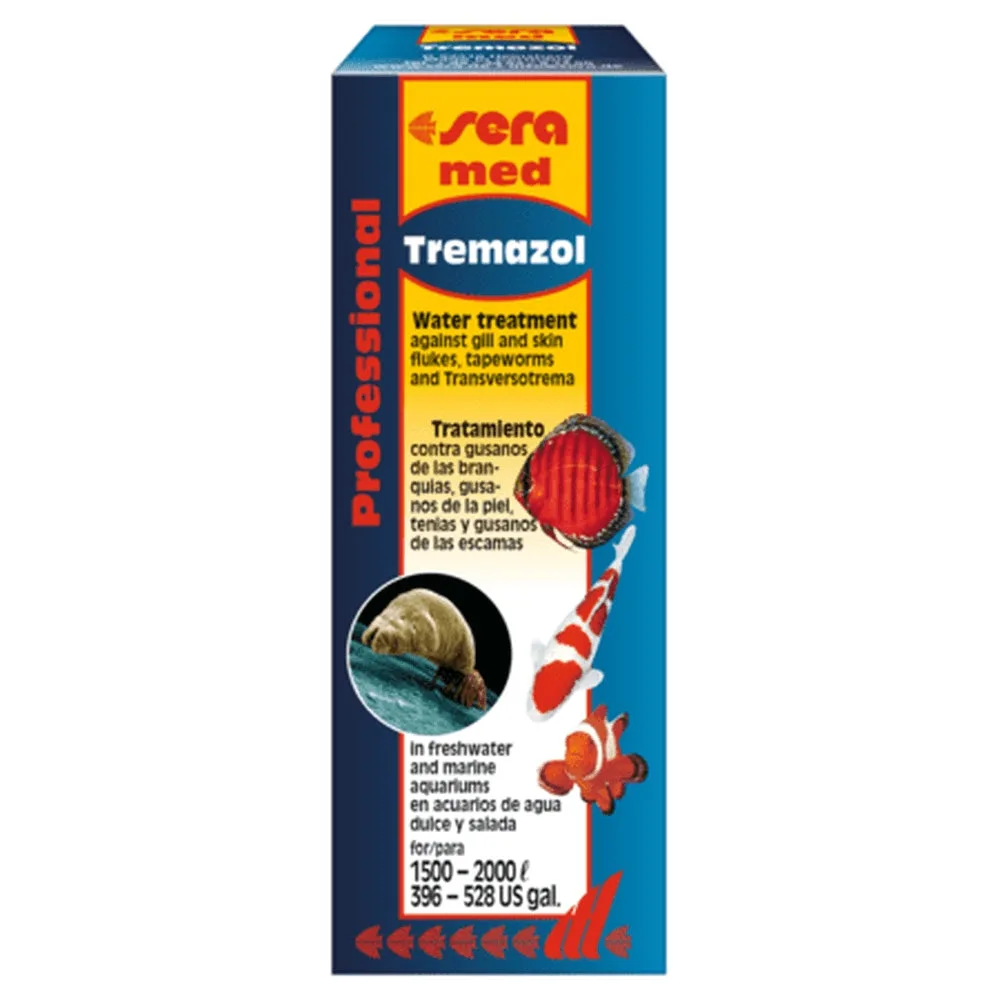
Recommendations are selected from the discus.ro shop based on this guide's topic. Availability and prices may vary.
Frequently asked questions
Put what you just read into practice
One account brings together everything you need to keep your tank on track:
Water parameters, inhabitants, photos and the full history of every change — our most used tool.
Water changes, cleaning and feeding, on your own dates.
See at a glance which values fall outside the safe discus range.
The guides, products and listings you follow, saved in one place.