Discus Breeding
Complete guides to breeding discus: pair formation, sexing, breeding tank setup, egg laying, hatching and raising the fry up to juveniles.
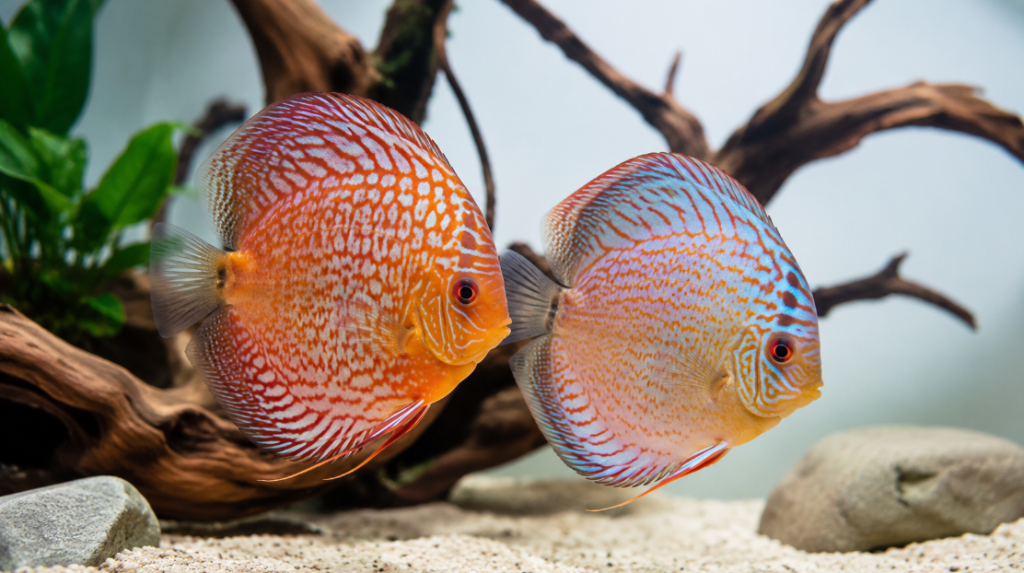
Selecting the discus breeding pair: 7 criteria and fatal mistakes
How to consciously choose a discus pair for breeding — 7 criteria (age, health, variety, conformation, genetics, behavior, size), avoiding…
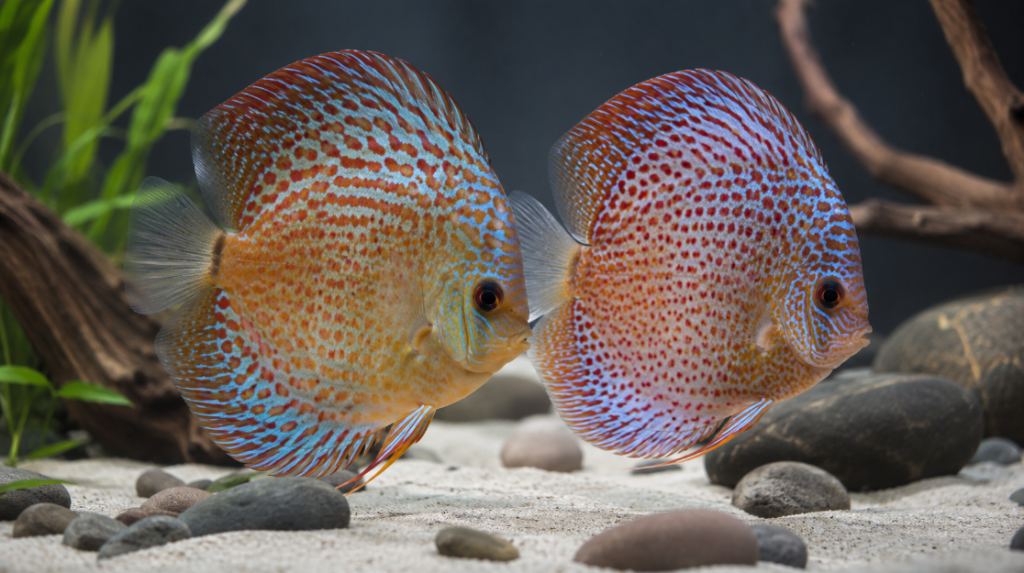
Sexing discus: 5 methods for male vs female
Sexing discus (Symphysodon) is notoriously difficult — they have no obvious sexual dimorphism. A guide with 5 methods (genital papilla,…
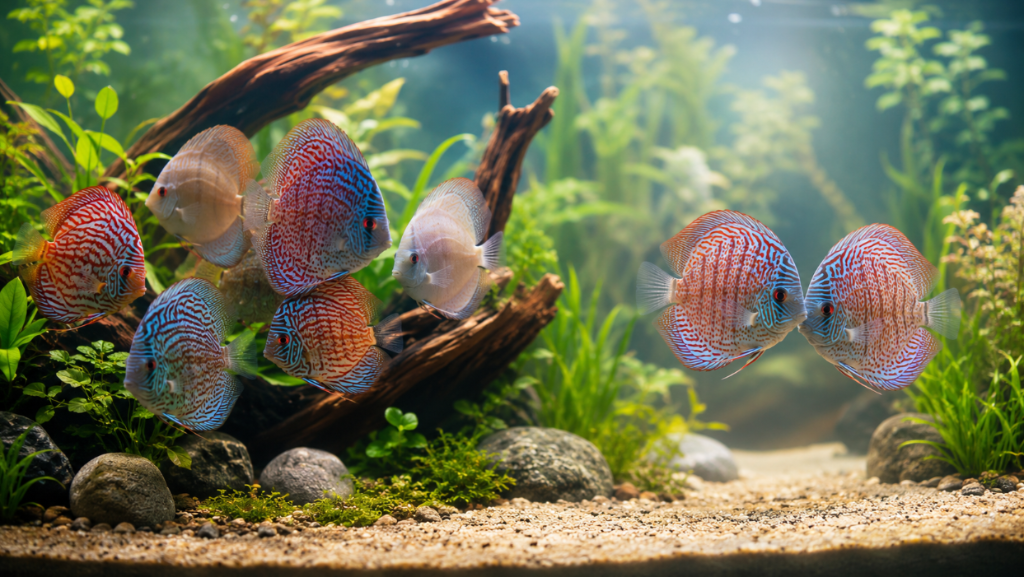
How discus pairs form: the complete guide
Discus can't be forced to pair — they choose each other. A guide to the group-of-8–12 method, 4 sure pairing signs, sexing and moving the…
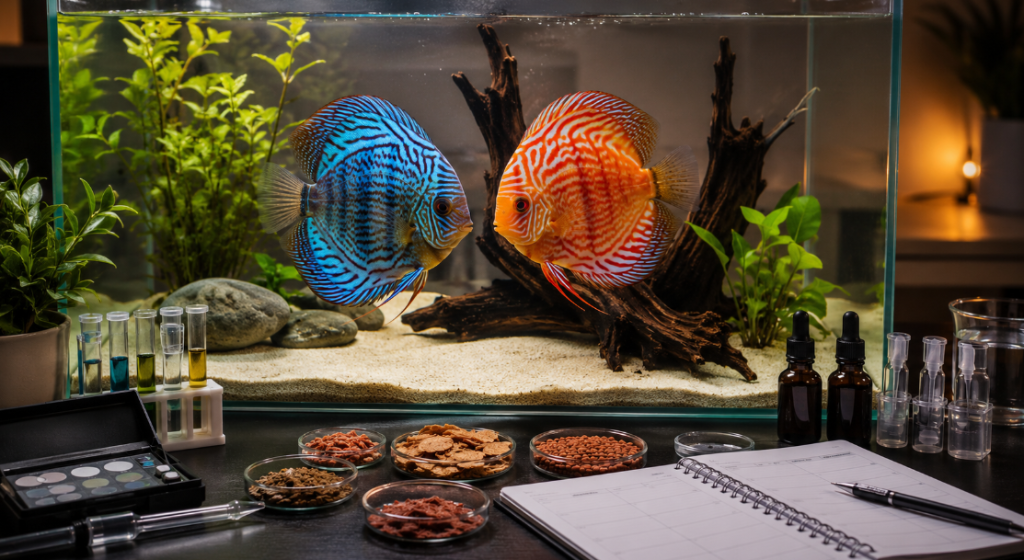
Conditioning the breeding pair: the complete 28-day protocol
Conditioning a discus pair — a 28-day protocol with a high-protein diet (beef heart + vitamin E + spirulina), simulating the rainy season…
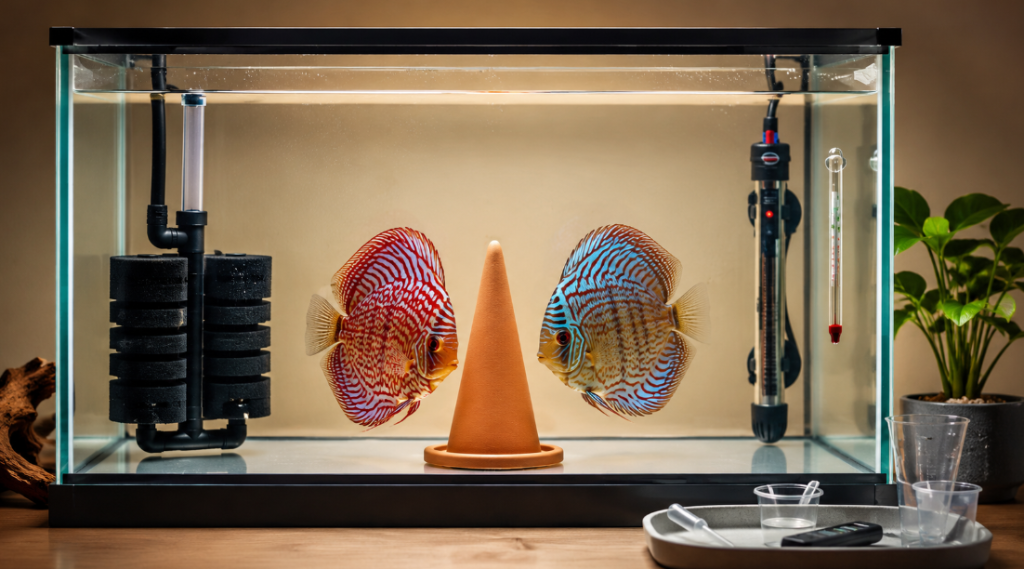
Discus breeding tank: complete setup and a €600–1000 budget
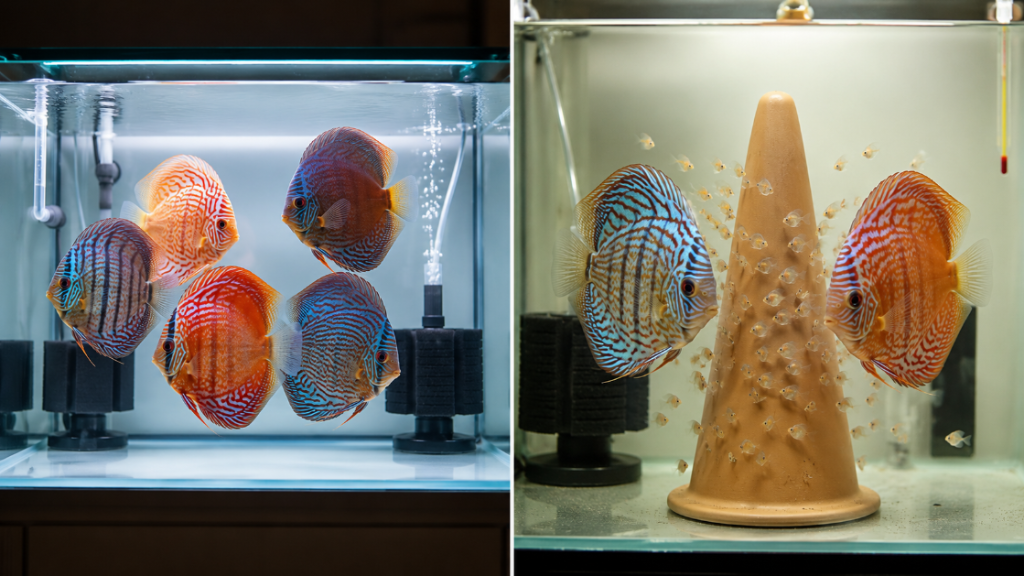
A step-by-step breeding tank setup for discus — 180L bare-bottom dimensions, a ceramic cone, a sponge filter, remineralized RO water at TDS…
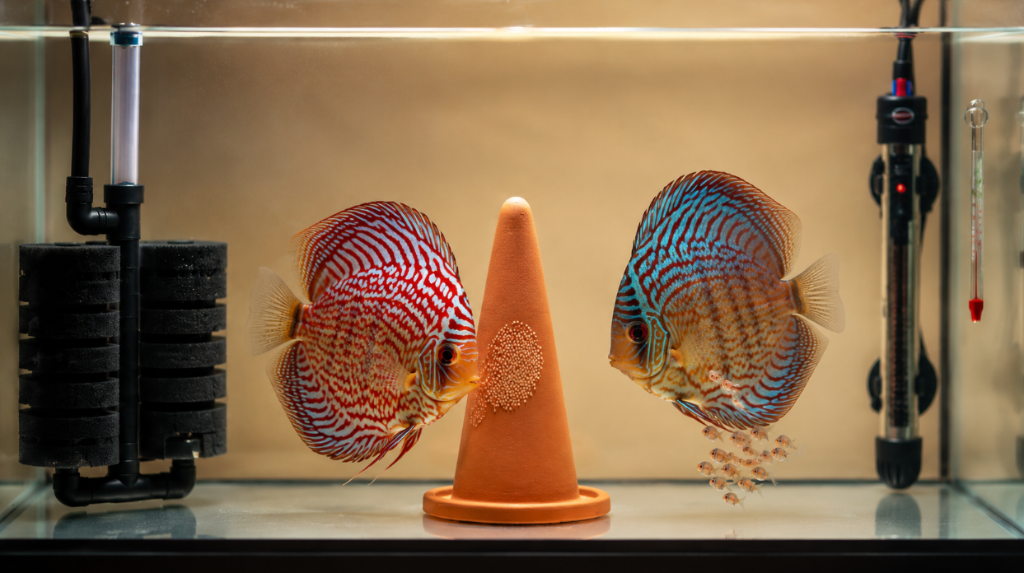
The discus breeding process: 6 complete phases (day by day)
The discus breeding process takes 6–7 days and actively involves both parents. A guide to the 6 phases (courtship, laying 80–300 eggs,…
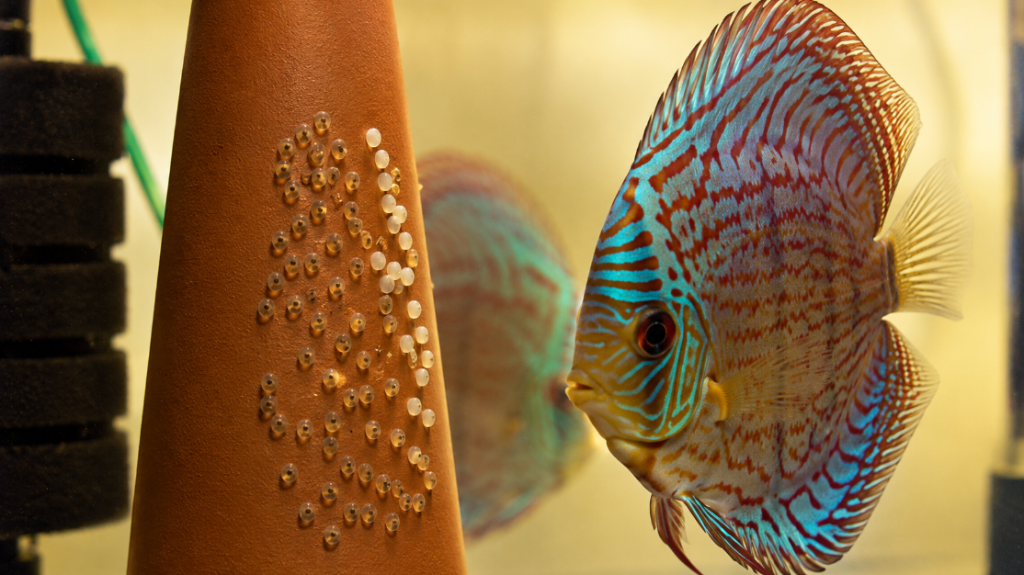
White discus eggs: 5 causes and treatment (Saprolegnia, infertility)
White discus eggs indicate dead, unfertilized or Saprolegnia-infected eggs. A guide with 5 causes (infertility, fungus, wrong parameters,…
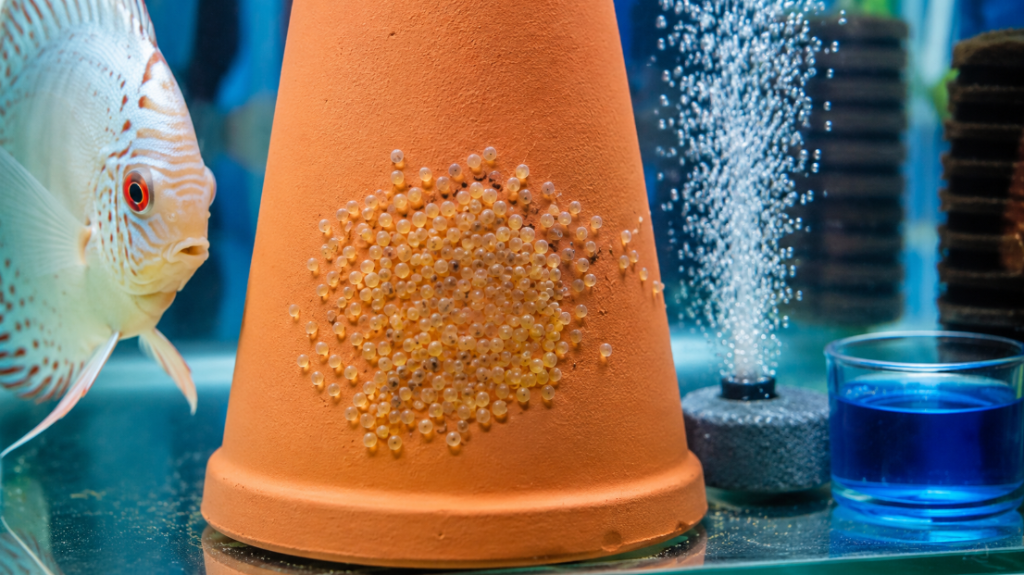
Caring for the eggs: D0–D3 incubation + methylene blue
The 72 hours from spawning to hatching are critical — a complete guide to caring for discus eggs, methylene blue dosing, when the parents…
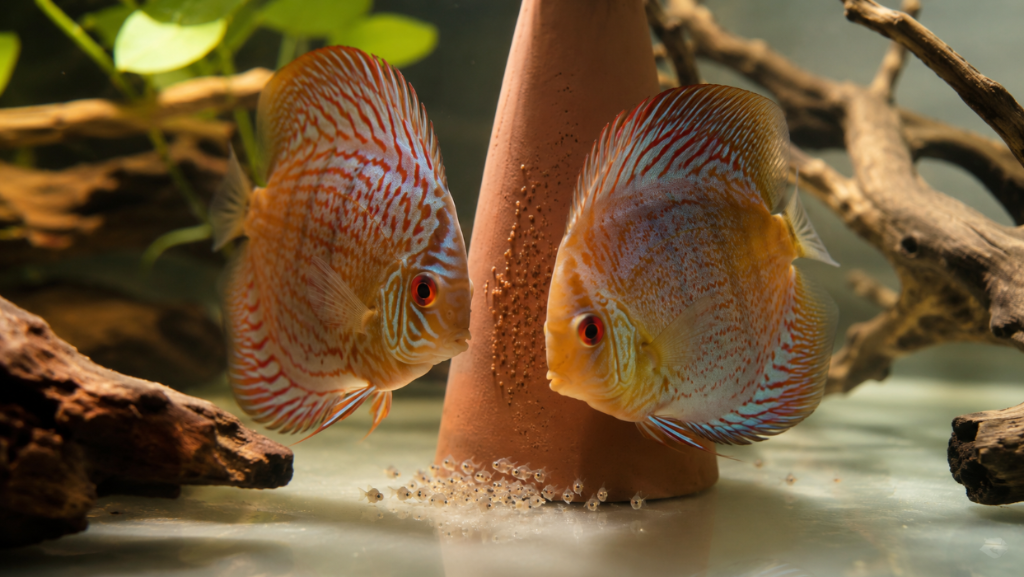
Discus parents eating the eggs/fry: 8 causes and solutions
The most frustrating experience — the pair lays, then eats everything. 8 causes (from young pairs to poor nutrition), 3 saving strategies…
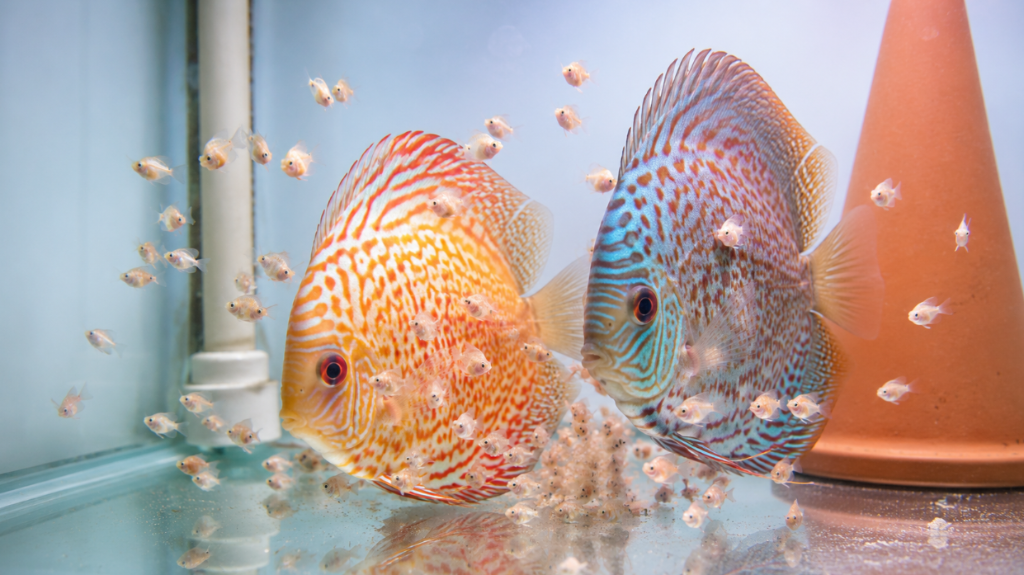
Raising discus fry: 12 weeks step by step
Raising discus fry from hatching to sellable juveniles (5–7 cm / 2–2.8 in) takes 8–12 weeks. A week-by-week guide with feeding, water…
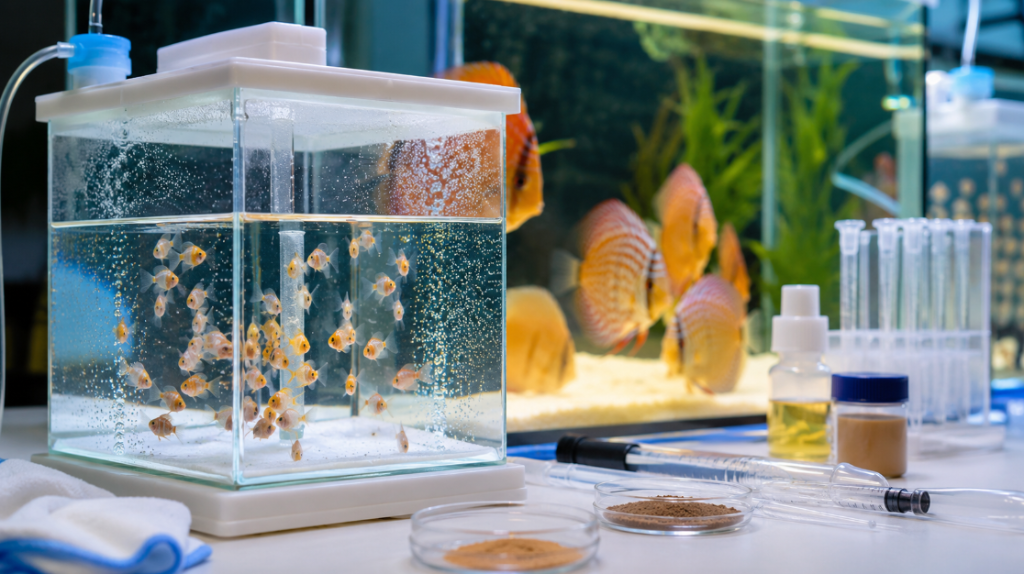
Artificial discus fry raising: incubator + a 14-day protocol
A complete protocol for artificially raising discus fry when the parents eat, abandon or fail them — an improvised incubator, a…
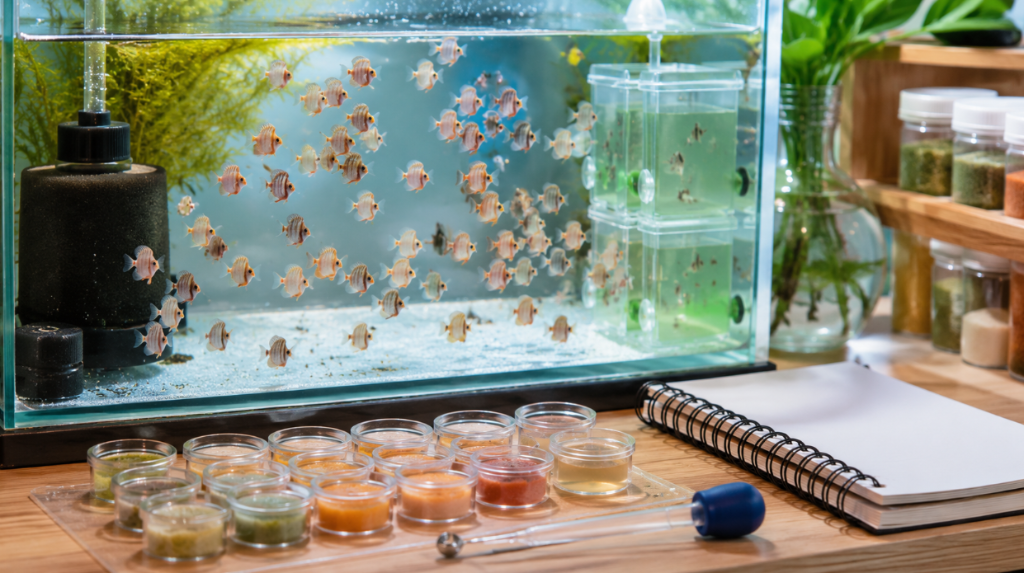
Daily discus fry feeding: hourly schedule weeks 0–12 and amounts
A concrete hourly schedule for feeding discus fry — from parental mucus (days 1–4) to brine shrimp nauplii (6x/day in weeks 1–2),…
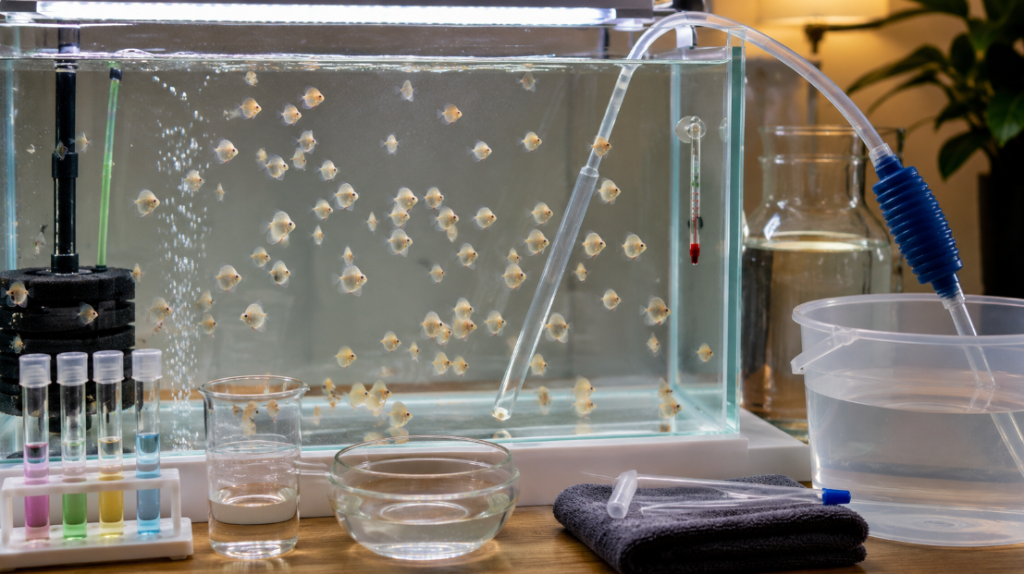
Discus fry water quality: parameters and 30–50% daily changes
A complete guide to water quality for discus fry in the first 3 months — specific parameters (temp 30–31°C, 30–50% daily changes), ammonia…
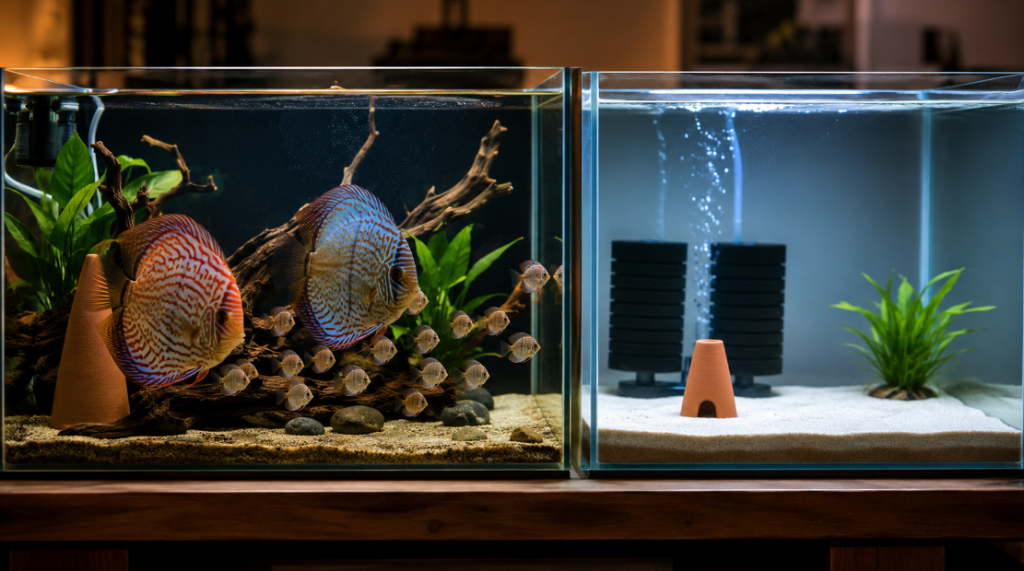
When to separate discus fry from the parents: 3–4 vs 6–8 weeks
When to separate discus fry from the parents — 2 options (3–4 weeks for fast growth, 6–8 weeks for survival). A stress-free procedure,…
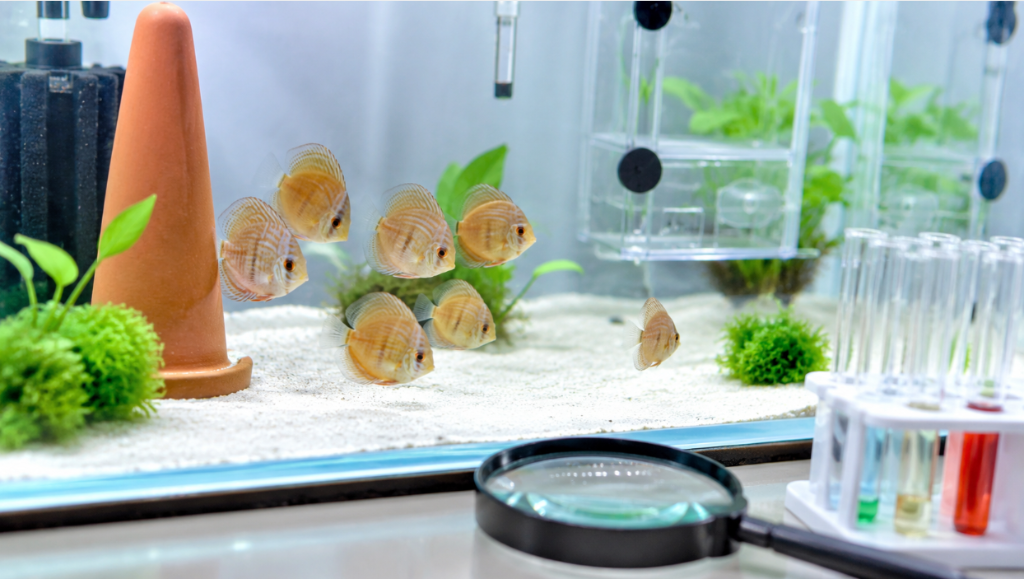
Common discus fry diseases: 7 conditions in the first 3 months
Discus fry have different sensitivities from adults. A complete guide to 7 common diseases (gill flukes, Velvet, Ich, bacterial gill…
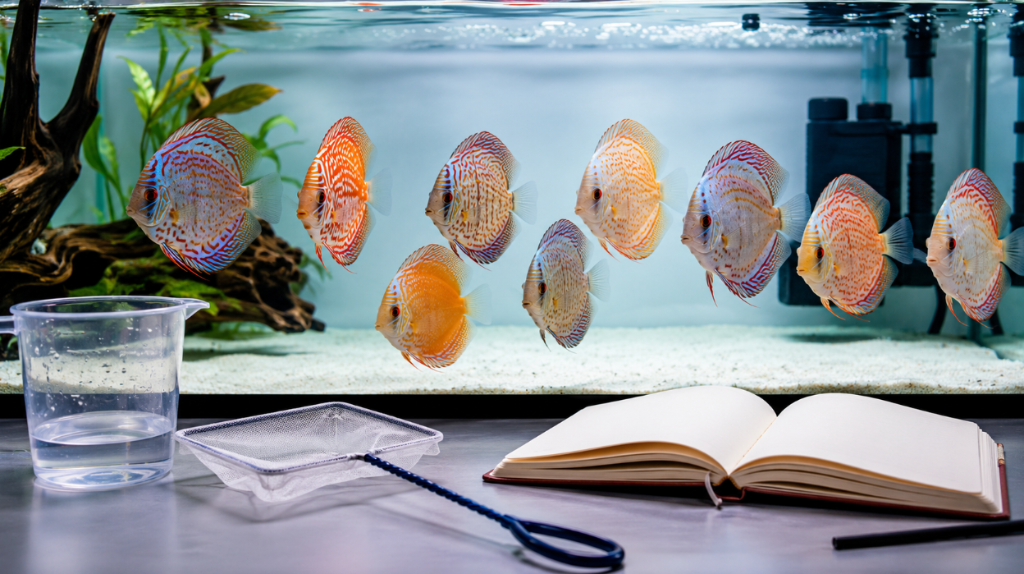
Sorting and culling discus fry: responsible genetic selection
A taboo but essential topic for serious breeders — sorting fry in 4 stages, visible criteria (body, colors, deformities), humane culling…
Stendker vs your own breeding for discus: cost-benefit and decision
Want to breed? Before you buy 12 fry, weigh it up: a Stendker formed pair (€1,000, 6-month ROI) vs a group of fry raised yourself (€3,000 +…
Frequently Asked Questions — Breeding
Quick answers to the most common questions about this category
Food & nutrition
What is the best food for discus?
A combination of 40% premium pellets (Tropical D-50/D-Allio Plus, Hikari Discus Bio-Gold, Tetra Discus, Sera Discus Granules) + 30-40% homemade beef heart mix + 20-30% frozen food (brine shrimp, krill, bloodworms). No single product — variety makes the difference.
Read the full guideCan I feed beef heart to fry?
Under 5 weeks: NO. Only brine shrimp nauplii + micro-pellets. From 5-8 weeks: only a very fine paste, alongside brine shrimp. Normal-sized pieces = lethal intestinal blockage.
Read the full guideHow do I hatch brine shrimp at home for fry?
2L warm water (28°C) + 60g coarse non-iodized salt (30g/L) + 1 teaspoon of brine shrimp eggs, strong aeration + 24h light. Harvest with a 100 micron net. Cost ~3-5 €/month for 50 fry.
Read the full guideWhy should I avoid live tubifex?
Live tubifex = the #1 source of Hexamita outbreaks, flukes and heavy-metal contamination. 30-60% mortality within 2-4 weeks. Use frozen bloodworms or culture white worms (Enchytraeus) at home.
Read the full guideHow much does food cost per month for 6 adult discus?
~140 RON/month for a complete diet: premium pellets (~30), 1kg homemade beef heart (~40), 200g frozen brine shrimp (~25), 100g krill (~20), 100g bloodworms (~15), amortized supplements (~10).
Read the full guideHow do I intensify discus colors through food?
Natural astaxanthin from Antarctic krill (~300-500 mg/kg dry) + spirulina + carotenoids (paprika, red pepper). 1-2 meals/week with krill + spirulina integrated into the beef heart mix gives a visible boost in 4-6 weeks.
Read the full guideMy Stendker discus refuse pellets — what do I do?
Stendkers are used to Stendker Original Granulat + frozen GoodHeart at the farm. A 4-8 week protocol: order Stendker Original Granulat (~43-89 RON), then a slow transition to Tropical D-50 or Hikari. Tricks: soaking in beef heart juice, a 24h fast, 30°C temperature.
Read the full guideShould I fast my discus one day a week?
Yes, it's mandatory. A 24h fast (Sunday recommended) cleans the digestive tract, prevents fatty liver, stimulates autophagy. Strict — not a single cube. Exceptions: fry under 3 months, breeders in conditioning, sick fish.
Read the full guideCan I combine frozen food with live food or pellets?
Yes. The ideal weekly combination: 40% pellets + 30-40% beef heart mix + 20% frozen (brine shrimp, krill, mysis) + 10% live food occasionally. In the same meal: frozen + pellets OK. On different days: live food or beef heart. Avoid mixing multiple frozen types at once — discus become picky.
Read the full guideHow do I correctly thaw frozen food?
Put the cube in a glass of aquarium water (28-30°C), wait 3-5 min, drain the red liquid (it pollutes the water), then feed. NEVER: microwave, hot water, thawing on the counter, or refreezing.
Read the full guideHow long can I store discus food: pellets, beef heart, frozen?
Opened pellets: max 6 months cool + dry (then 40-60% vitamin oxidation). Frozen beef heart mix: max 3-6 months at -18°C airtight (beyond = rancid fats). Commercial frozen food (blisters): 12-18 months sealed, max 60 days after opening. Liquid supplements: 6 months refrigerated after opening. Optimal storage: airtight Tupperware containers, a cool dry place, darkness, date labeling.
Read the full guideWhat vitamins and supplements should I give discus?
MANDATORY with homemade beef heart: JBL Atvitol (~35-50 RON, 3-5 drops/100g, 2×/week) + spirulina powder (~50-120 RON/250g, 1 tablespoon/kg of mix). OPTIONAL: fresh garlic (appetite stimulant + antiparasitic), astaxanthin/krill (red intensification), vitamins D3+E (breeders). NEVER: human vitamins (Centrum etc.) — TOXIC copper/zinc. Budget: ~50-80 RON/year for a complete setup.
Read the full guideHow do I correctly store pellets and supplements to preserve the vitamins?
Pellets: airtight Tupperware container + silica gel, a cool place (15-22°C), DARKNESS, away from perfumes. NOT in the fridge (condensation). Liquid supplements: fridge at 4°C after opening, sealed lid, darkness. Powder supplements: airtight container, darkness, dry, cool place. Monthly check: smell (rancid = throw out), color (changed = throw out), visible mold (throw out). Oxidized vitamins (invisible) = zero effect on the fish.
Read the full guide