Amazon biotope for discus: the complete Rio Negro recipe
An Amazon biotope for discus — the authentic Rio Negro recipe with blackwater (pH 5.8–6.5, TDS 50–100 ppm), Malaysian driftwood, catappa leaves, Echinodorus plants and warm dim lighting. Full step-by-step setup.

Quick summary
- Target habitat: Rio Negro / Rio Tefé — blackwater, pH 4.5–6.0, TDS 10–30 ppm
- Aquarium biotope parameters: pH 5.8–6.5, TDS 50–100 ppm, 28–30°C (82–86°F)
- Essentials: fine light sand + substantial driftwood + leaf litter + minimal plants
- Lighting: warm and dim — 3000–5000 K, low intensity, 6–8 h/day
- Filtration: external with a gentle, diffuse output, 4–5× volume/h
- Benefits: calmer discus, more vivid colors, tannin support, stimulated breeding
In short
- Target habitat: Rio Negro / Rio Tefé (Amazon) — blackwater, pH 4.5–6.0, TDS 10–30 ppm, 28–32°C (82–90°F), dim light filtered through the canopy.
- Aquarium biotope parameters: pH 5.8–6.5, TDS 50–100 ppm, KH 0–2 dKH, GH 1–3 dGH, 28–30°C (82–86°F), amber water color.
- Essential elements: fine light sand (2–4 cm / 0.8–1.6 in) + substantial driftwood (Malaysian/Mopani) + catappa leaves and alder cones (leaf litter) + minimal plants (Echinodorus + floating).
- Lighting: dim and warm — 3000–5000 K, low intensity, 6–8 hours/day (mimics the limited light through the forest canopy).
- Filtration: external with a diffuse output, 4–5× volume/h (lower than standard — calm water).
- Real benefits: calmer discus, more vivid colors, an immune system supported by tannins, stimulated breeding.
What you'll learn
An Amazon biotope for discus (Symphysodon) is a faithful recreation of the natural habitat of the Amazon basin, especially the Rio Negro and Rio Tefé tributaries — the characteristic blackwater stained by tannins released from decomposing leaves. Wild discus (Symphysodon aequifasciatus, S. discus Heckel) live in shaded areas under the roots of fallen trees. This guide gives you the complete recipe for an authentic biotope — substrate, hardscape, leaves, plants, lighting, filtration and parameters.
The natural habitat
Rio Negro — tea-colored blackwater
Rio Negro waters are stained by the humic and fulvic acids released by decomposing leaves in the flooded forest (várzea / igapó).
| Natural parameter | Value |
|---|---|
| pH | 4.5–6.0 |
| TDS | 10–30 ppm |
| KH | 0–1 dKH |
| Temperature | 28–32°C (82–90°F) |
| Water color | dark amber (tea / black tea) |
| Lighting | dimly filtered through the canopy |
The discus's actual habitat
- Shaded areas under the large roots of fallen trees
- Calm water, no strong current
- A substrate of dead leaves and fine organic sediment
- No large aquatic plants — the light doesn't allow it
- Natural company: cardinal tetra, rummynose, cory, apistogramma
Why build an Amazon biotope
| Benefit | Explanation |
|---|---|
| Calmer discus | The environment "brings them home" — natural posture, calm swimming |
| More vivid colors | Contrast with the dark background intensifies the hues |
| Natural behavior | They come to the glass, explore, pair up more easily |
| Immune support | Tannins have a documented antibacterial and antifungal effect |
| Unique aesthetics | An authentic "wild" look, much appreciated in the aquascaping community |
| Stimulated breeding | Soft water + tannins = a natural trigger for spawning |
The biotope recipe — 8 elements
1. The aquarium
- Recommended dimensions: minimum 120×50×50 cm (47×20×20 in) — 300L (≈79 US gal)
- Shape: long and wide, NOT tall (the natural habitat is shallow)
- Lid: partial — humidity, jump prevention
- Background: black or dark-brown vinyl (NOT mirror, NOT green)
2. Substrate — fine sand
Fine sand 0.3–0.8 mm, light color (beige, pale yellow) — mimics the sand deposited by the Amazon's periodic floods.
✅ Recommended: natural quartz sand (Dennerle, JBL Sansibar Light), a 2–4 cm (0.8–1.6 in) layer
❌ Avoid: colored gravel, pure white carbonate sand (raises KH), active substrate like Amazonia (alters the look and chemistry)
For details see Discus aquarium substrate.
3. Hardscape — substantial driftwood
The central element of the biotope. Perfect choices:
| Wood type | Why it's perfect for the biotope |
|---|---|
| Malaysian driftwood | Dark, substantial, releases tannins for months–years |
| Mopani wood | Two-tone brown/tan, spectacular contrast |
| Spider wood (azalea) | Branched, a "submerged roots" shape |
| Mangrove root | Premium, sculptural, perfect Rio Negro |
Biotope layout: create "submerged forests" — vertical roots + crossing horizontal branches. Leave open swimming spaces.
See the dedicated guide: Driftwood and hardscape for discus.
4. Leaf litter — leaves and cones
Essential for authenticity. They release tannins gradually, lower the pH naturally and have an antibacterial effect.
| Element | Quantity (300L / 79 US gal tank) | Replacement |
|---|---|---|
| Catappa leaves (Terminalia catappa) | 10–15 leaves | 3–4 weeks |
| Dried oak leaves | 8–10 leaves | 4–6 weeks |
| Dried beech leaves | 5–8 leaves | 4–6 weeks |
| Alder cones | 15–20 pcs | 6–8 weeks |
| Jacaranda / Savannah pods | 2–3 pcs | as needed |
Procedure: rinse the leaves under water, weigh them down with a stone for 1–2 days if they float. Let them decompose naturally — the resulting biofilm feeds fry and shrimp.
RO estimate (2026): ≈€5–10 for 10 A-grade catappa leaves, ≈€10–20 for a full set (catappa + alder + Jacaranda). Prices vary widely by country — check your local market.
For the detailed chemistry see Blackwater for discus.
5. Plants — minimal and shade-tolerant
The natural habitat has very few plants — light doesn't penetrate blackwater. For an authentic biotope:
| Plant | Role |
|---|---|
| Echinodorus tenellus | Low plant, the lit zone |
| Echinodorus bleheri / amazonicus | Large, Amazon-native (authentic) |
| Amazon frogbit (Limnobium laevigatum) | Floating, provides shade |
| Pistia stratiotes (water lettuce) | Floating, filters the water |
| Ceratopteris (Indian water fern) | Floating or submerged |
❌ Avoid for a pure biotope: Anubias (Africa), Java fern (Asia), Vallisneria (Eurasia), Cryptocoryne (Asia) — not Amazon-native.
💡 An acceptable compromise: if you want more plants than a pure biotope allows, add Anubias attached to the driftwood — it doesn't spoil the look and tolerates the high temperatures discus need. See Discus-compatible plants.
6. Lighting — dim and warm
Mimics the limited light penetration through the forest canopy.
| Parameter | Biotope value |
|---|---|
| Kelvin | 3000–5000 K (warm yellowish light) |
| Intensity | Low |
| PAR | 15–30 µmol/m²/s |
| Hours/day | 6–8 |
| Function | gradual sunrise/sunset |
Recommended models (widely available): warm dimmable LED fixtures such as the Chihiros A-Series (set to 30–40% intensity), Fluval AquaSky 2.0, or Aquael Leddy Slim Sunny (warm ~3500 K). Check availability and pricing in your region.
See Lighting for a planted discus aquarium for details and alternatives.
7. Filtration and flow
External (canister) filter with a diffuse output (a spray bar covered with floating plants) — calm water, mimicking the "igarapé" (small tributaries).
- Flow: 4–5× volume/h (lower than the standard 6–8×)
- Output: aimed at the surface or covered with floating vegetation — NO direct jet
- Filter media: sponge + bioballs + optional filter peat (naturally acidifies)
- Activated carbon: ❌ NOT in the biotope — it absorbs the tannins that give the character
8. Target parameters
| Parameter | Biotope value | How to achieve it |
|---|---|---|
| Temperature | 28–30°C (82–86°F) | Heater ~1W/L |
| pH | 5.8–6.5 | Tannins + RO + peat |
| TDS | 50–100 ppm | RO water + remineralizer |
| KH | 0–2 dKH | RO + leaf litter |
| GH | 1–3 dGH | Dosed remineralizer |
| Ammonia/Nitrite | 0 ppm | Mature biological filtration |
To get soft water: see Reverse osmosis (RO) and Remineralizing RO water.
Species compatible with the Amazon biotope
For 100% authenticity, choose species that live in the same habitat:
| Species | Origin | Compatibility |
|---|---|---|
| Cardinal tetra (Paracheirodon axelrodi) | Rio Negro | ⭐⭐⭐⭐⭐ Perfect |
| Rummynose tetra (Hemigrammus bleheri) | Rio Negro | ⭐⭐⭐⭐⭐ Perfect |
| Corydoras sterbai | Rio Guaporé (Amazon) | ⭐⭐⭐⭐⭐ Perfect |
| L-numbers (L134, L201) | Amazon | ⭐⭐⭐⭐⭐ Perfect |
| Apistogramma (cacatuoides, agassizii) | Amazon | ⭐⭐⭐⭐ Very good |
| Hatchetfish (Carnegiella) | Amazon | ⭐⭐⭐⭐ Good (surface) |
Complete biotope budget (300L / 79 US gal) — RO estimate
Costs vary widely by country and supplier — the figures below are an RO estimate (2026), for orientation only. Check your local market.
| Element | Cost (€, RO estimate) |
|---|---|
| Fine quartz sand (15–20 kg) | €16–30 |
| Large Malaysian driftwood | €30–60 |
| Spider wood accent driftwood | €16–40 |
| Catappa leaves (pack of 25) | €10–20 |
| Alder cones (50 pcs) | €6–12 |
| Echinodorus + floating plants | €30–60 |
| Warm lighting (Chihiros/Aquael) | €40–90 |
| RO system (optional) | €80–160 |
| Remineralizer | €10–20 |
| Total biotope (without RO) | €148–312 |
| Total with RO system | €228–472 |
Maintaining the biotope
| Task | Frequency |
|---|---|
| Replace decomposed leaves | 3–6 weeks |
| Water changes 20–30% | Weekly with prepared water (RO + remineralizer) |
| Clean driftwood | Surface only, soft brush — do NOT remove it |
| Vacuum substrate | Lightly, avoid disturbing the sediment |
| Test parameters | Weekly (pH, TDS, NO3) |
| Add extra tannins | If the water gets too clear |
Common mistakes
❌ "I'll use black substrate, it looks better" — unsuitable for a natural biotope. Rio Negro waters have pale yellow sand (flood-deposited sediment), not a black bottom.
❌ "I'll add lots of colorful plants" — the natural habitat is dominated by wood and leaves, NOT plants. Dutch style doesn't exist in the Amazon.
❌ "I'll use Seiryu stones / decorative ceramics" — they break the biotope illusion. For an authentic biotope: only wood + leaves, no artificial stones.
❌ "Cool white 6500K lighting" — blackwater needs warm light (3500–4500K) to recreate the "flooded forest" atmosphere. Cool light makes blackwater look gray.
❌ "I'll change the water as soon as it turns brown" — brown (tea-colored) water is EXACTLY what you want. It reduces stress, has an antibacterial effect and recreates the authentic look.
❌ "I'll add 30 catappa leaves at once to blacken the water fast" — overdosing → pH drops suddenly → discus stress. Add gradually, 5–10 leaves per week.
❌ "I'll put activated carbon in the filter for clear water" — carbon absorbs ALL the tannins. You destroy the whole biotope. Use activated carbon only if you want to temporarily strip it (after a treatment).
❌ "I'll use tap water directly, it's simpler" — hard tap water (often TDS 200–400 ppm, KH 4–8) is incompatible with the biotope (target TDS 50–100, KH 0–2). It needs an RO system or at least an RO+tap mix.
Did you know?
The Rio Negro is the largest blackwater river in the world — its dark, tea-like color comes from humic and fulvic acids leached from decomposing leaf litter in the flooded igapó forests, not from sediment. This naturally acidic, nutrient-poor water is also why the Rio Negro has remarkably few mosquitoes compared with nearby whitewater rivers — the same tannin-rich conditions that suit wild discus are hostile to mosquito larvae.
Inspiration and resources
YouTube creators who cover blackwater and biotope-style tanks: Oliver Knott (DE), Filipe Oliveira (PT), MD Fish Tanks (UK), Serpa Design (wood-focused aquascape).
Where to find leaves, cones and driftwood: specialist aquascaping shops carry premium leaf litter and natural tannin sources — search for "catappa leaves", "alder cones" and "aquarium driftwood" from a reputable local or EU supplier.
Instagram hashtags for inspiration: #blackwateraquarium · #discusbiotope · #rionegrobiotope · #amazoniabiotope
Final checklist — Amazon biotope
- ☐ Aquarium min. 120×50×50 cm (47×20×20 in) with a black/brown vinyl background
- ☐ Fine light sand (beige/pale yellow), a 2–4 cm (0.8–1.6 in) layer
- ☐ At least 1 substantial driftwood piece (Malaysian/Mopani) + 1–2 accents
- ☐ 10–15 catappa leaves + 15–20 alder cones
- ☐ Minimal plants: Echinodorus + Amazon frogbit (floating)
- ☐ Warm 3000–5000K lighting, low intensity, 6–8 h/day
- ☐ External filter with a diffuse output, 4–5× volume/h flow
- ☐ Parameters: 28–30°C (82–86°F), pH 5.8–6.5, TDS 50–100 ppm
- ☐ RO system or RO+tap mix for soft water
- ☐ NO activated carbon in the filter (it absorbs the tannins)
- ☐ Compatible species: cardinals + rummynose + sterbai + Ancistrus
What to do next
📚 Learn more: Driftwood and hardscape for discus — choosing and preparing the wood correctly.
💧 Soft water for the biotope: Reverse osmosis (RO) and Remineralizing RO water.
🛒 Buy leaves and cones: See the full discus.ro shop — catappa, alder, water treatments.
Recommended products
Picked from the shop based on what you just read
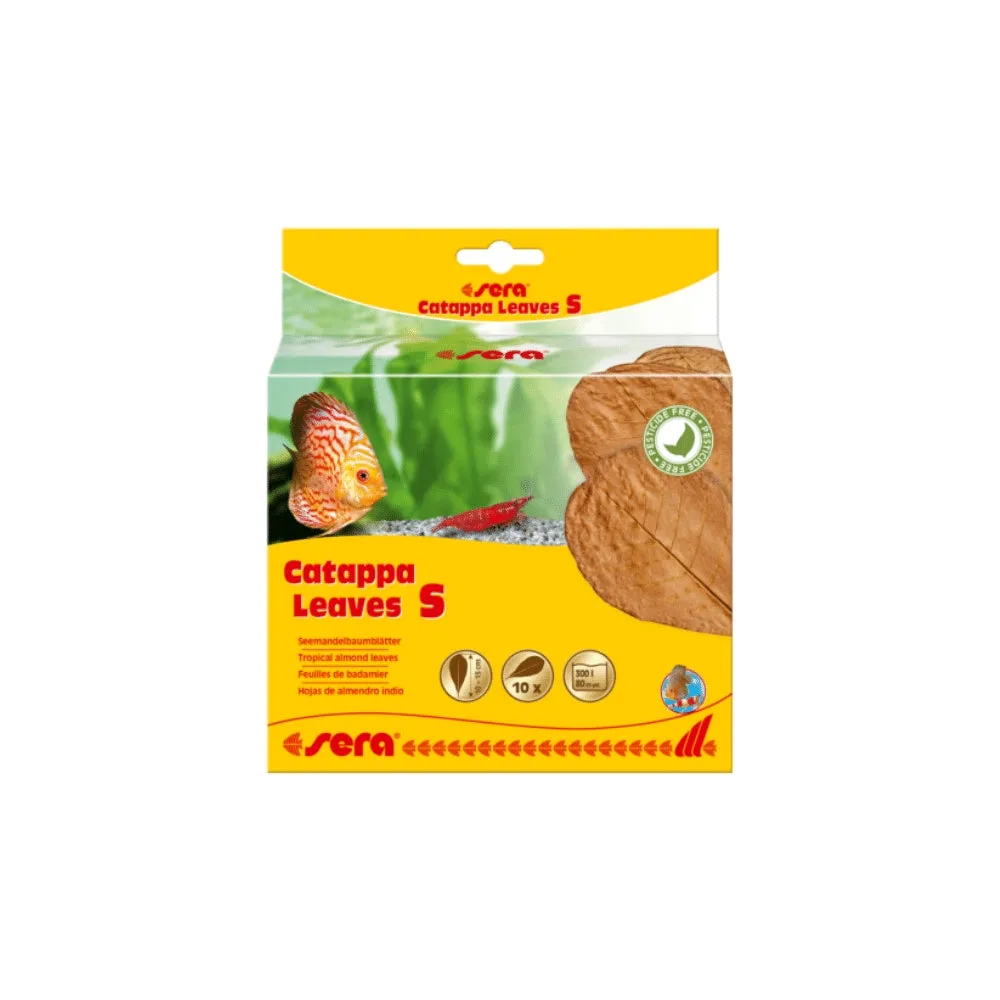


Recommendations are selected from the discus.ro shop based on this guide's topic. Availability and prices may vary.
Frequently asked questions
Put what you just read into practice
One account brings together everything you need to keep your tank on track:
Water parameters, inhabitants, photos and the full history of every change — our most used tool.
Water changes, cleaning and feeding, on your own dates.
See at a glance which values fall outside the safe discus range.
The guides, products and listings you follow, saved in one place.