Discus not eating: 7 causes and an hour-by-hour action plan
A discus refusing food can be normal (acclimation 2–5 days) or an emergency (Hexamita, toxic parameters). A guide with 7 causes, an hour-by-hour action plan and when to worry.

Quick summary
- Normal: new discus may refuse food for 2–5 days after transport — don't panic.
- Common causes: acclimation stress, temperature under 28°C (82°F), Hexamita, positive ammonia/nitrite, group bullying, sudden food change, early gill infection.
- First 24h plan: test water → check temperature 29°C (84°F) → dim the lights → offer favorite food (frozen brine shrimp/bloodworms).
- 48–72h plan: if it refuses + other symptoms (white feces, fast breathing, darkening) → targeted treatment.
- Alarm: 7+ days without food OR refusal + other symptoms = act immediately.
- Natural appetite booster #1: fresh crushed garlic on the food (3 cloves / 100g).
In short
- Normal: new discus may refuse food for 2–5 days after transport — don't panic.
- Common causes: acclimation stress • temperature under 28°C (82°F) • Hexamita • positive ammonia/nitrite • group bullying • sudden food change • early gill infection.
- First 24h plan: test the water (NH₃, NO₂, NO₃, pH, T°) → check temperature 29°C (84°F) → dim the lights → offer favorite food (frozen brine shrimp/bloodworms).
- 48–72h plan: if it refuses + other symptoms (white feces, fast breathing, darkening) → targeted treatment.
- Alarm: 7+ days without food or refusal + other symptoms = act immediately.
- Natural appetite booster #1: fresh crushed garlic on the food (3 cloves / 100g).
What you'll learn from this guide
Food refusal in discus (Symphysodon) is one of the first and most important clinical signals — healthy discus are always interested in food. But not every refusal is an emergency: a newly bought discus that refuses for 2–5 days is completely normal, while a discus from established stock that suddenly stops eating for 24h indicates a serious problem. This guide shows you 7 common causes, the hour-by-hour action plan (first 24h, 48–72h, after 1 week) and when to genuinely worry.
Normal vs alarming refusal
| Situation | Refusal | Action |
|---|---|---|
| New discus (transport) | 2–5 days | Wait, don't intervene |
| Stable discus refuses suddenly | <24h | Check parameters |
| Recent food change | 3–7 days | Gradual transition |
| Refusal + other symptoms | Any duration | Emergency |
| Refusal >7 days, no cause | – | Emergency |
| The whole group refuses | Any duration | Emergency — water |
The 7 common causes
1. Transport / acclimation stress ⭐⭐⭐⭐⭐
The most common and completely normal.
- Duration: 2–5 days, sometimes up to 7 days
- Fish appearance: slightly pale / darkened colors, sits in a corner, swims hesitantly
- Action: Wait. Dim lights, quiet, stable parameters.
2. Temperature under 28°C (82°F) ⭐⭐⭐⭐⭐
Below 28°C (82°F) the discus metabolism slows dramatically.
- Check: a digital thermometer (not the stick-on type — inaccurate)
- Target: 29°C (84°F) stable
- Action: adjust the thermostat; if the heater is faulty → replace it
3. Hexamita (internal parasites) ⭐⭐⭐⭐⭐
The #1 cause of prolonged refusal with weight loss.
- Associated symptoms: long white feces, visible weight loss (a sharp spine), holes in the head (HITH)
- Action: Metronidazole 400 mg / 100L, 10 days — see the full Hexamita protocol
4. Positive ammonia / nitrite ⭐⭐⭐⭐⭐
Even 0.25 ppm ammonia = food refusal in discus.
- Check: a liquid test kit (NOT strips)
- Action: 50% water change + Seachem Prime double dose + check the filter
5. Group bullying ⭐⭐⭐⭐
Dominant discus can block access to food for the weaker ones.
- Signs: one discus always stays away, eats last, has bite marks on its fins
- Action: feed from 3–4 points at once, possibly rearrange the hardscape
6. Sudden food change ⭐⭐⭐
Discus are conservative with their diet.
- Action: gradual introduction over 7 days (75% old + 25% new → 50/50 → 25/75 → 100%)
7. Early gill infection ⭐⭐⭐
An affected gill = a weakened fish = food refusal.
- Associated symptoms: rapid breathing, gasping at the surface, a stuck operculum
- Action: eSHa 2000 + maximum aeration
The hour-by-hour action plan
First 24 hours — quick diagnosis
| Step | Action | Target |
|---|---|---|
| 1 | Full water test (NH₃, NO₂, NO₃, pH, T°) | 0 / 0 / <20 / 6.0–7.0 / 29°C (84°F) |
| 2 | Observe the group's behavior | All refuse or just one? |
| 3 | Check for other symptoms | Feces, breathing, color |
| 4 | Reduce lights 50% | Less stress |
| 5 | Offer favorite food | Frozen brine shrimp / bloodworms |
| 6 | Do NOT force-feed | More stress = less appetite |
24–72 hours — targeted intervention
| Symptoms | Probable cause | Treatment |
|---|---|---|
| White feces + weight loss | Hexamita | Metronidazole 400mg/100L |
| Fast breathing | Gill infection | eSHa 2000 + aeration |
| The whole group refuses | Toxic water | 50% change + Prime |
| Darkened + hiding | Stress | Dim lights, catappa leaves |
| Only one refuses + bullied | Bullying | Multi-point feeding |
After 7 days — emergency
If the fish eats nothing at all for 7 days and there's no improvement:
- Isolate in a hospital tank
- Empirical treatment: Metronidazole + Levamisole combo (see the essential aquarist's pharmacy)
- Syringe force-feeding in extreme cases (specialists only)
Tricks to restart the appetite
✅ Fresh crushed garlic — 2–3 cloves / 100g of food, left for 5 min before feeding (an almost guaranteed effect)
✅ Live brine shrimp (hatched at home) — the movement triggers the hunting instinct
✅ Frozen bloodworms — visually attractive (red) and by smell
✅ A vitamin supplement (e.g. a liquid fish multivitamin) dripped directly onto the food — vitamins + a pleasant smell
✅ Food at the right temperature — beef heart thawed in warm tank water, NOT cold from the freezer
✅ Feeding in the morning after the lights come on (peak natural appetite)
✅ Reduce the light to 30% — more relaxed fish
Common mistakes
❌ Overfeeding when it isn't eating — the water turns toxic quickly, worsening the problem
❌ Switching between several food types at once — the discus shut down even more
❌ Adding medication preventively without a diagnosis — risk of making it worse
❌ Raising the temperature to 32°C (90°F) thinking it helps — correct only for Ich, dangerous for other diseases
❌ Stopping water changes "to avoid stress" — exactly the opposite of correct
❌ Force-feeding with a syringe without experience — risk of physical injury
Final checklist — discus refusing food
- ☐ Tested the water fully (NH₃, NO₂, NO₃, pH, T°)
- ☐ Checked the temperature 29°C (84°F)
- ☐ Checked the feces (normal / white / absent)
- ☐ Checked the breathing (normal / fast)
- ☐ Checked the colors (vivid / pale / darkened)
- ☐ Checked whether the whole group or just one
- ☐ Checked the recent history (transport, food change, interventions)
- ☐ Reduced lights by 50%
- ☐ Offered favorite food with garlic
- ☐ Decided: wait (normal) vs intervene (emergency)
What to do next
📚 Continue learning:
- Hexamita and HITH — the #1 cause of prolonged refusal
- Discus with white feces — a correlated symptom
- Bacterial gill infections — another cause of refusal
- The aquarist's pharmacy — a kit for treatments
🔧 Practical resources:
- Visual diagnosis — quick answers to symptoms
- Treatments — shop
- Premium food — shop
🐠 Final tip: Food refusal is just a symptom, not a disease — focus on finding the cause. With a good water test kit and careful observation, you'll identify the problem within 24–48 hours in 90% of cases. Don't panic in the first days with new discus, but don't ignore a stable discus that suddenly refuses — the difference between normal and emergency is, again, in the details.
Want a clear schedule for your tank?
Generate a personalized plan for water changes, feeding, testing and maintenance — in just 2-3 minutes.
Generate care planSave your tank, log water parameters and get email reminders for care tasks — for free.
Recommended products
Picked from the shop based on what you just read
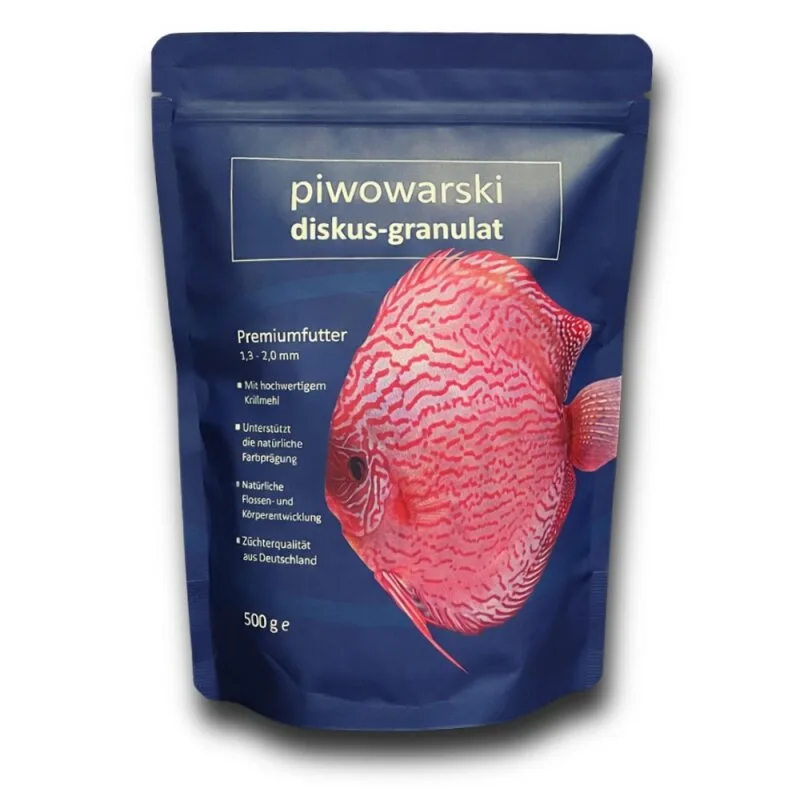
Recommendations are selected from the discus.ro shop based on this guide's topic. Availability and prices may vary.