Gill Flukes and Skin Monogeneans in Discus: Signs, Diagnosis and Treatment
Gill and skin flukes are monogeneans, microscopic flatworms. Learn the signs they cause in discus, why only a microscope confirms them, how praziquantel is used and how quarantine prevents them.
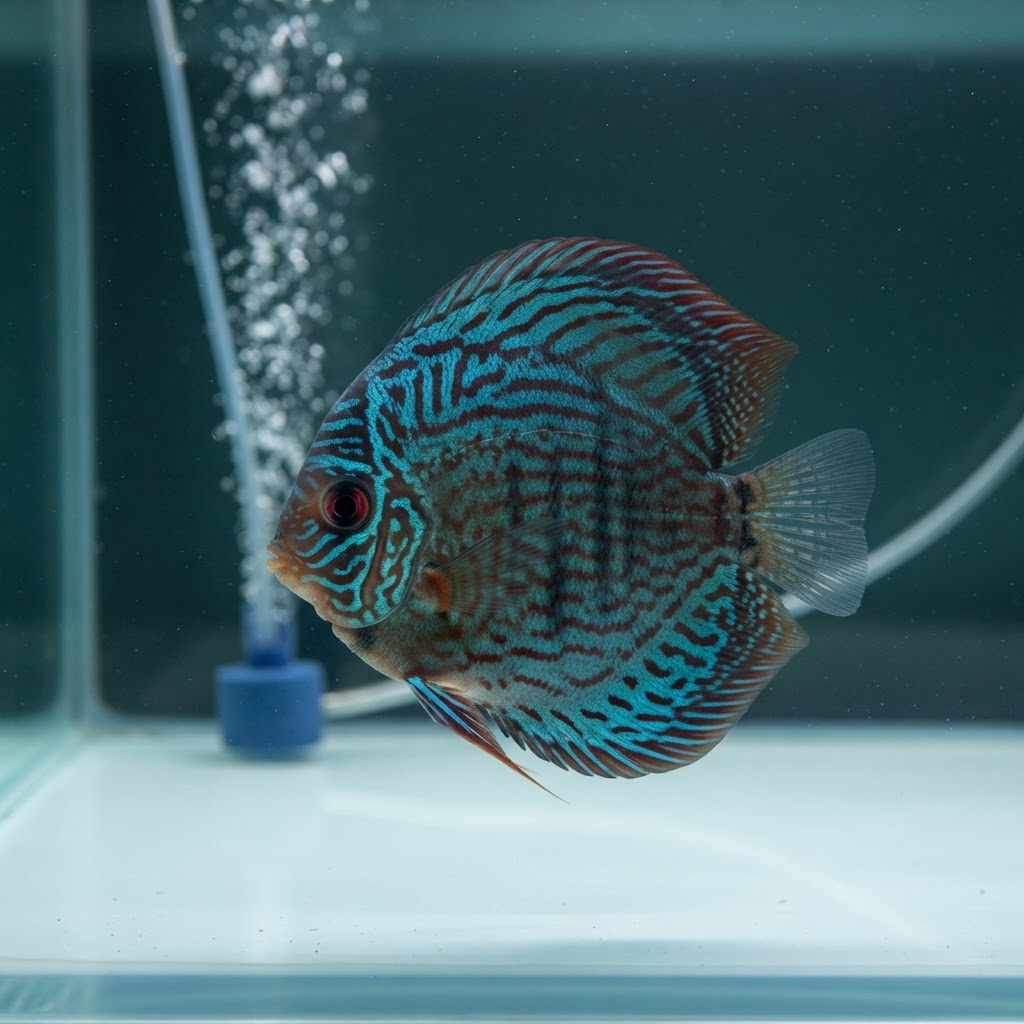
In short
- Gill flukes and skin flukes are monogeneans: parasitic flatworms, not bacteria or protozoa. Freshwater species are usually 0.1–0.8 mm long and are best seen under a microscope.
- The main signs are rapid breathing, flared gill covers, flashing against decor, excess mucus and fading colour. None of them is specific: ammonia, nitrite, low oxygen or other parasites can look the same.
- Diagnosis is confirmed by microscopic examination of skin mucus, fin or gill tissue, done by a vet or a trained person.
- Gill monogeneans (ancyrocephalids, dactylogyrids) lay eggs, and the eggs resist treatment. Gyrodactylids on the skin are mostly live-bearers and can multiply very fast.
- Praziquantel is the treatment of choice for monogeneans in ornamental fish. It does not treat Costia, Trichodina or Chilodonella.
- Prevention means quarantine, separate equipment, clean water and good oxygenation, not "preventive" medication without a diagnosis.
What are gill flukes and skin monogeneans?
Monogeneans are flatworms (Platyhelminthes) with a direct life cycle: they pass from fish to fish without intermediate hosts. They feed on mucus and cells of the skin, fins and gills. "Flukes" and "monogenetic trematodes" are common hobby names, but they are not accurate: monogeneans are not trematodes, the internal flatworms with indirect life cycles.
Their defining feature is the haptor, a posterior attachment organ armed with anchors and small hooks. The parasite uses it to hold on to the skin or the gill filaments.
| Group | Usual site | Reproduction | Under the microscope |
|---|---|---|---|
| Ancyrocephalids | Gills; not very host-selective | Egg-layers | Identifying details visible only microscopically |
| Dactylogyrids | Gills, especially in cyprinids (goldfish, koi, barbs) | Egg-layers | Two pairs of eye spots; about 330–390 µm |
| Gyrodactylids | Skin, fins, eyes; occasionally gills | Mostly live-bearers | No eye spots; embryo sometimes visible inside; about 0.3–1 mm |
Merck lists gyrodactylids and ancyrocephalids as the most common monogeneans in freshwater aquaria, and dactylogyrids as typical of cyprinids.
A note on names: Dactylogyrus is a well-known example, mainly in cyprinids. Not every gill infestation in discus is caused by Dactylogyrus. The exact genus and species can only be identified by examining the parasite under a microscope.
How do they get into the aquarium?
- Infested new fish. This is the main route. Merck's prevention advice is to avoid introducing infected fish.
- Fish-to-fish transfer. With a direct life cycle, free-swimming larvae and adults move easily between fish, especially in crowded tanks.
- Shared wet equipment (nets, buckets, hoses) between tanks. Transmission via objects is documented for some marine monogeneans; in freshwater it is a plausible route, which is why separate equipment is recommended.
- Stressors. Aggression, poor nutrition and poor water quality can weaken the fish's ability to keep the parasite in check.
In an aquarium the infestation can build up through continual reinfection, whereas wild fish usually carry only a few parasites. Quarantine reduces the risk but does not remove it: fish can carry monogeneans without visible signs. A survey of apparently healthy ornamental fish, including discus, found monogeneans in every species examined, with no obvious lesions.
Signs in discus
Gill parasites:
- faster breathing;
- abnormal gill cover movement, covers may stay flared;
- laboured breathing, the fish stays near the surface or the filter outlet;
- reduced appetite;
- lethargy, clamped fins;
- in heavy infestations, swollen, pale gills.
Skin parasites:
- flashing against decor, substrate or glass;
- excess mucus, a milky look to the skin;
- irritation and small localised haemorrhages or ulcers;
- faded colours, paleness;
- secondary lesions that bacteria can colonise.
These signs are non-specific. Rapid breathing also occurs with raised ammonia or nitrite, low oxygen, other parasites or bacterial gill infections. See also the general guide Discus breathing fast.
Differential diagnosis
| Problem | What suggests it | What appearance cannot confirm | How to check |
|---|---|---|---|
| Gill monogeneans | Rapid breathing, flared covers | Presence and type of parasite | Gill microscopy (vet) |
| Skin monogeneans | Flashing, mucus, paleness | Difference from protozoa | Skin scrape, fin clip |
| Costia (Ichthyobodo) | Heavy mucus, greyish sheen | The organism, which is tiny | High-power microscopy |
| Trichodina, Chilodonella | Flashing, mucus, rapid breathing | Which parasite it is | Mucus and gill microscopy |
| Ich | Visible white spots | Gills may be the only site | Skin, fin and gill microscopy |
| Velvet | Fine golden dust, lethargy | No spots if only on gills | Microscopy |
| Water quality | Several fish affected suddenly | The exact cause | Ammonia, nitrite, oxygen, temperature tests |
| Bacterial gill infection | Laboured breathing, altered gills | The causative agent | Vet exam, microscopy, culture |
How is the diagnosis confirmed?
Diagnosis is made on fresh wet mounts examined straight away: skin mucus, a small piece of fin and, when justified, gill filaments. Monogeneans are recognised by the haptor with anchors and hooks. Dactylogyrids may show eye spots, gyrodactylids sometimes an embryo inside, and eggs may be seen near gill tissue.
Limits of identification:
- Genus and species depend on fine details of the anchors and hooks, visible only at high magnification.
- A few parasites on a fish without signs do not automatically mean disease. Numbers and the clinical picture matter.
- Several parasites can occur together (for example monogeneans and protozoa), which changes the treatment.
Gill sampling and handling a fish in respiratory distress should be done by a vet or a trained person. An already oxygen-starved discus can collapse during handling.
What to do right away if you suspect gill flukes
- Test the water: ammonia, nitrite, nitrate and temperature. Fix any toxic reading first.
- Increase aeration (air stone, surface agitation). At 28–30 °C water holds less oxygen.
- Reduce stress: dimmer light, no unnecessary moves, less food if the fish are not eating.
- Check the whole group: how many fish breathe fast, flash or hang at the surface.
- Isolate only if you have a ready quarantine tank with a mature filter and aeration. A makeshift tank can do more harm.
- Get a microscopic diagnosis before treating. The diagnostic tool can help you start.
Act the same day if: fish are gasping at the surface, several fish are affected, fish are dying, or things get worse within hours.
Treating monogeneans
Praziquantel
Praziquantel acts selectively on flatworms and is used against tapeworms and external monogeneans. Merck describes it as the treatment of choice for monogeneans in ornamental fish, freshwater and marine, as a 5 mg/L prolonged bath. A short bath of 10 mg/L for 3 hours is also described.
These are general protocols for ornamental fish, not regimens validated specifically for discus. The sources consulted contain no dose studies in Symphysodon.
What you need to know:
- Eggs vs live young. Eggs of gill monogeneans resist chemical treatment. Parasites hatching after a treatment can reinfest the fish, so egg-laying forms may need a repeat treatment. Gyrodactylids have no resistant egg stage, but they multiply quickly.
- Repeat interval. Merck recommends repeated treatments at weekly intervals when formalin is used against egg-laying monogeneans. For praziquantel, the sources consulted give no validated interval for discus: follow the product label or your vet.
- Commercial products. Real concentrations differ between products. Dose by the actual water volume and the label, not by products meant for other animals.
- Activated carbon removes the drug. Merck recommends running treated water through activated carbon before discharge, which means carbon comes out of the filter during treatment.
- Monitoring: breathing, behaviour, appetite, ammonia and nitrite. Keep aeration strong.
Formalin
Formalin (37% formaldehyde solution, not the 10% formalin used in labs) is used as a prolonged bath at 15–25 mg/L, and vigorous aeration is essential. Formalin reduces available oxygen, and a discus with damaged gills already has little respiratory reserve. It is also toxic to people: handle it with gloves in a ventilated space. Do not use it on fish in severe respiratory distress without veterinary advice.
What is not recommended
- Organophosphates were used in the past, but praziquantel is considered more effective, and organophosphates should be avoided in some characins and cichlids.
- Automatic combination treatments "to cover everything". They add toxicity without improving the diagnosis.
- Praziquantel for protozoa. It has no effect on Costia, Trichodina or Chilodonella.
Whole tank or only the affected fish? Because monogeneans pass directly from fish to fish, once one fish has a confirmed diagnosis, all fish in the same system have usually been exposed. Whether to treat the whole tank or the group in a separate tank depends on the diagnosis, the number of fish and any invertebrates present.
When treatment does not work
- Wrong diagnosis: the problem was water quality, another parasite or a bacterial infection.
- Mixed infestation: monogeneans and protozoa at the same time.
- Surviving eggs that reinfested the fish.
- Reinfestation from another tank, shared equipment or new fish.
- Uncorrected water problems: ammonia, nitrite, low oxygen, overcrowding.
- Already damaged gills, which take time to recover and can be colonised by bacteria.
The answer is to reassess, ideally with a new microscopic exam, not to escalate automatically to stronger drugs.
Prevention and quarantine
- Quarantine new fish for at least 30 days, longer if signs appear. Details are in the discus quarantine protocol.
- Separate equipment for quarantine and for each tank, with the quarantine tank serviced last.
- A filter matured beforehand in a healthy tank.
- Good oxygenation and reasonable stocking.
- Monitoring: breathing, behaviour, appetite, feces.
- No preventive treatments. Merck strongly discourages prophylactic medication without diagnostic testing.
Common mistakes
- Treating without a diagnosis, based on rapid breathing alone.
- Confusing gill flukes with intestinal worms, which are treated differently.
- Stopping after a single treatment for egg-laying forms, or repeating it for no reason.
- Combining several medicines.
- Ignoring oxygen levels during treatment.
When do you need a vet?
- Fish gasping at the surface or not responding normally.
- Fish losses.
- No improvement after a correct treatment.
- A gill sample is needed for diagnosis.
- Treating a valuable group or fry.
Quick checklist
- I tested ammonia, nitrite and temperature.
- I increased aeration.
- I checked how many fish are affected.
- I arranged or performed a microscopic exam.
- I treat only after diagnosis, by the label, with carbon removed.
- I monitor breathing and water over the next days.
- I planned a possible repeat for egg-laying forms.
Conclusion
Gill and skin flukes are common and treatable, but their signs look like many other problems. Test the water, oxygenate, confirm under the microscope and only then treat in a targeted way. For a broader view of medicines, see the aquarist's pharmacy.
Sources
- Merck Veterinary Manual – Parasitic Diseases of Fish
- Merck Veterinary Manual – Management of Aquarium Fish
- UF/IFAS – Monogenean Parasites of Fish (FA033)
- UF/IFAS – Common Freshwater Fish Parasites Pictorial Guide: Monogeneans (FA111)
- Adel M. et al. (2015). Survey of parasitic fauna of different ornamental freshwater fish species in Iran. Vet Res Forum 6(1):75–78
Save your tank, log water parameters and get email reminders for care tasks — for free.
Recommended products
Picked from the shop based on what you just read
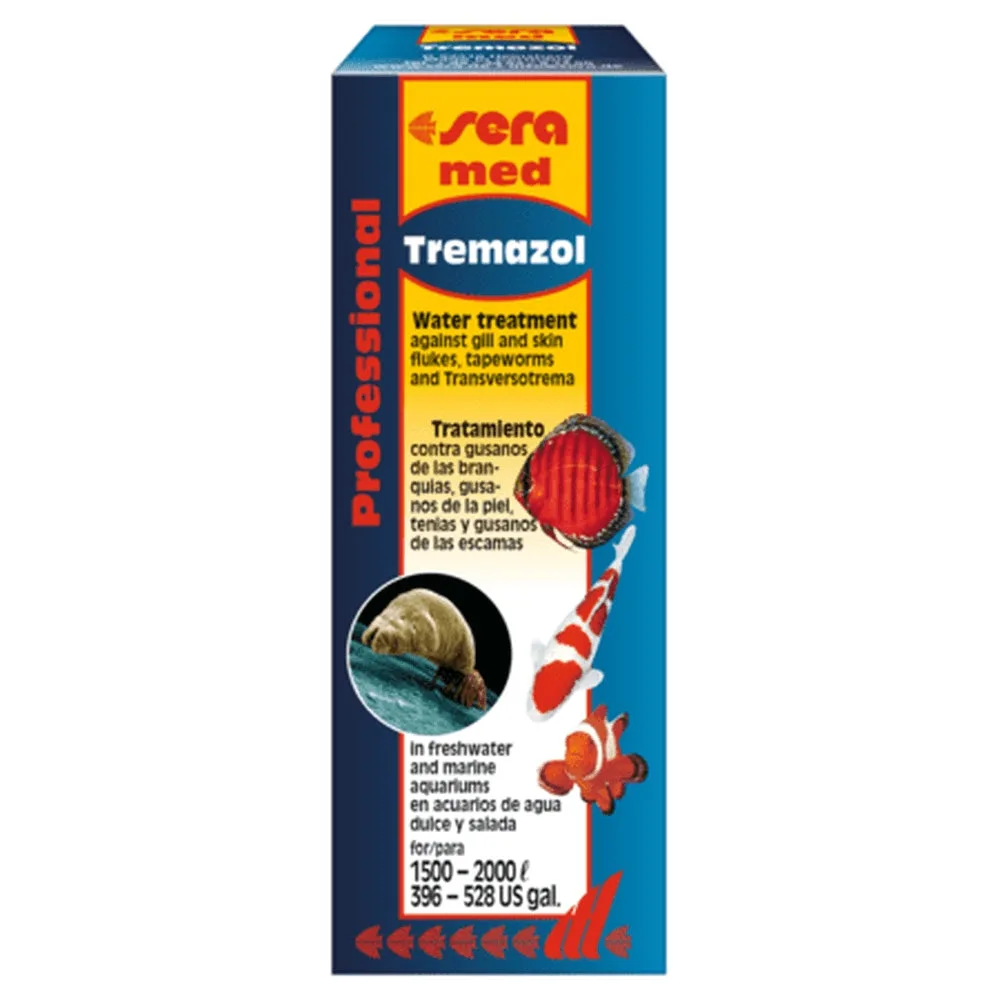
Recommendations are selected from the discus.ro shop based on this guide's topic. Availability and prices may vary.
Frequently asked questions
Put what you just read into practice
One account brings together everything you need to keep your tank on track:
Water parameters, inhabitants, photos and the full history of every change — our most used tool.
Water changes, cleaning and feeding, on your own dates.
See at a glance which values fall outside the safe discus range.
The guides, products and listings you follow, saved in one place.