The aquarist's pharmacy for discus: what to keep at home and how to use it safely
What a sensible discus medicine cabinet really contains: test kits, dechlorinator, quarantine equipment and a few products for confirmed problems. It also covers how to move from a sign to a diagnosis, and why antibiotics come only through a vet.

In short
- A discus "pharmacy" starts with a water test kit, a dechlorinator/detoxifier (e.g. Seachem Prime), dedicated nets and buckets, and a quarantine/hospital tank, not with antibiotics.
- Sign observed → suspicion → confirmed diagnosis. Many signs are nonspecific. Parasites are confirmed by microscopy (mucus, gills, feces) and bacteria by culture. Dead fish are worth sending for necropsy.
- Don't keep antibiotics "just in case" or use them preventively. In the EU they are prescription veterinary medicines.
- General rules: remove activated carbon during treatment, aerate well, read the label of the product you bought, and don't combine medicines without a reason.
- Storage: dry, dark and cool. Check expiry dates regularly.
- Buying: RO/EU aquarium retailers. Veterinary medicines come through a vet and a veterinary pharmacy.
Introduction
Prevention matters more than any medicine: good water, good food, hygiene and quarantine. Dedicated guides: Hexamita / Spironucleus, internal worms, Columnaris, bacterial gill infections, Ich. Doses depend on the diagnosis and the specific product. The active ingredient matters, not the brand. Prices vary, so check locally.
Kits
| Kit | For whom | Contents |
|---|---|---|
| Basic | 1 tank | Liquid test kit (NH₃/NH₄, NO₂, NO₃, pH), Prime, thermometer, spare heater, air pump, non-iodized salt, food vitamins, gloves |
| Standard | 2+ tanks | + quarantine tank with a sponge filter matured in a healthy tank, dedicated nets/siphon/buckets, catappa leaves, possibly a basic microscope |
| Breeder | Multi-tank | + a fish vet, lab access (microscopy, culture, necropsy) |
🐠 Tip: if a fish is gasping, test the water and add aeration first, before any medication.
Buy specific medicines only when you have a concrete suspicion. Antibiotics come only through a vet.
Medication categories
1. Internal antiparasitics
Metronidazole for Hexamita / Spironucleus
- Many "Hexamita" are actually Spironucleus. Cichlids are highly susceptible.
- Treat if the fish is losing condition or there are more than 15 organisms per low-power field in a wet mount of intestinal contents. Medicated food is preferred. Use a bath if fish aren't eating.
- Bath: ~7 mg/L (~250 mg per 38 L), once daily for 5 days, with a water change a few hours after each treatment.
- Medicated food: 50 mg/kg body weight per day for 5 days.
- Caution:
- Cryptobia iubilans causes granulomatous gastritis in discus and doesn't respond to metronidazole.
- Heavy Capillaria infections are linked to poor growth.
- Mycobacteriosis causes progressive wasting and has no effective treatment.
- Commercial metronidazole products (e.g. Seachem MetroPlex): follow the label.
Nematode dewormers (Camallanus, Capillaria)
- Camallanus shows as red worms protruding from the vent. Copepods (Cyclops, Daphnia) are intermediate hosts.
- Efficacy and safety are unknown for many species.
- Fenbendazole: 25 mg/kg in food for 3–5 days, never as a bath (high mortality).
- Levamisole: 2 mg/L bath, used by some clinicians.
- Avoid ivermectin: it has a narrow safety margin.
- Use combination products (e.g. eSHa NDX) strictly per label.
Praziquantel for flatworms
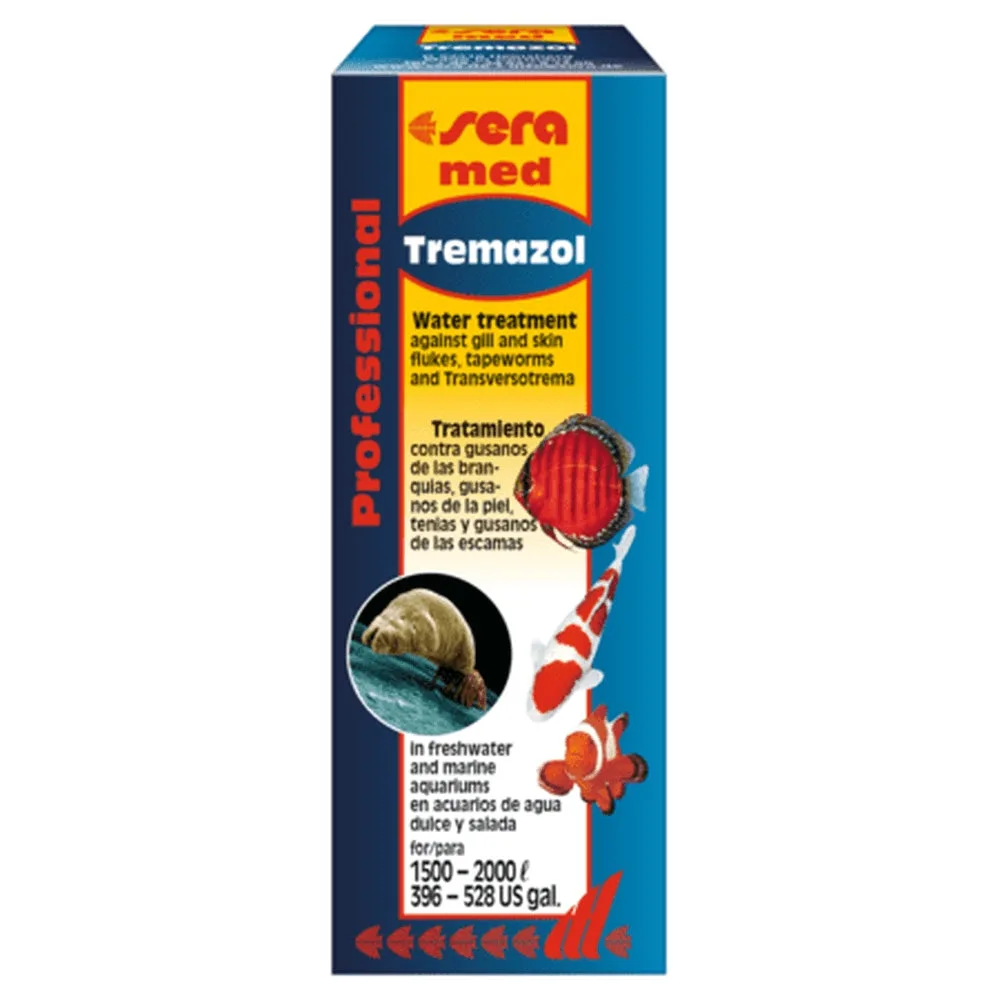
- Works only against flatworms (flukes, tapeworms), not nematodes.
- Monogeneans (confirm by gill/skin biopsy):
- Treatment of choice in freshwater ornamental fish: prolonged bath at 5 mg/L.
- Alternative: short bath at 10 mg/L for 3 h.
- Egg-laying gill flukes may need repeat treatment.
- Tapeworms: 35–125 mg/kg in feed for up to 3 days.
2. Antibiotics: only with a diagnosis and a prescription
- Bacterial outbreaks usually follow poor water, high organic load, transport, temperature swings, low oxygen or stress.
- Control means removing these factors. Antimicrobials are for when they are warranted (e.g. fish are dying), ideally chosen by culture and sensitivity testing.
- In the EU, antibiotics are prescription-only and not for prophylaxis. No product "covers most cases".
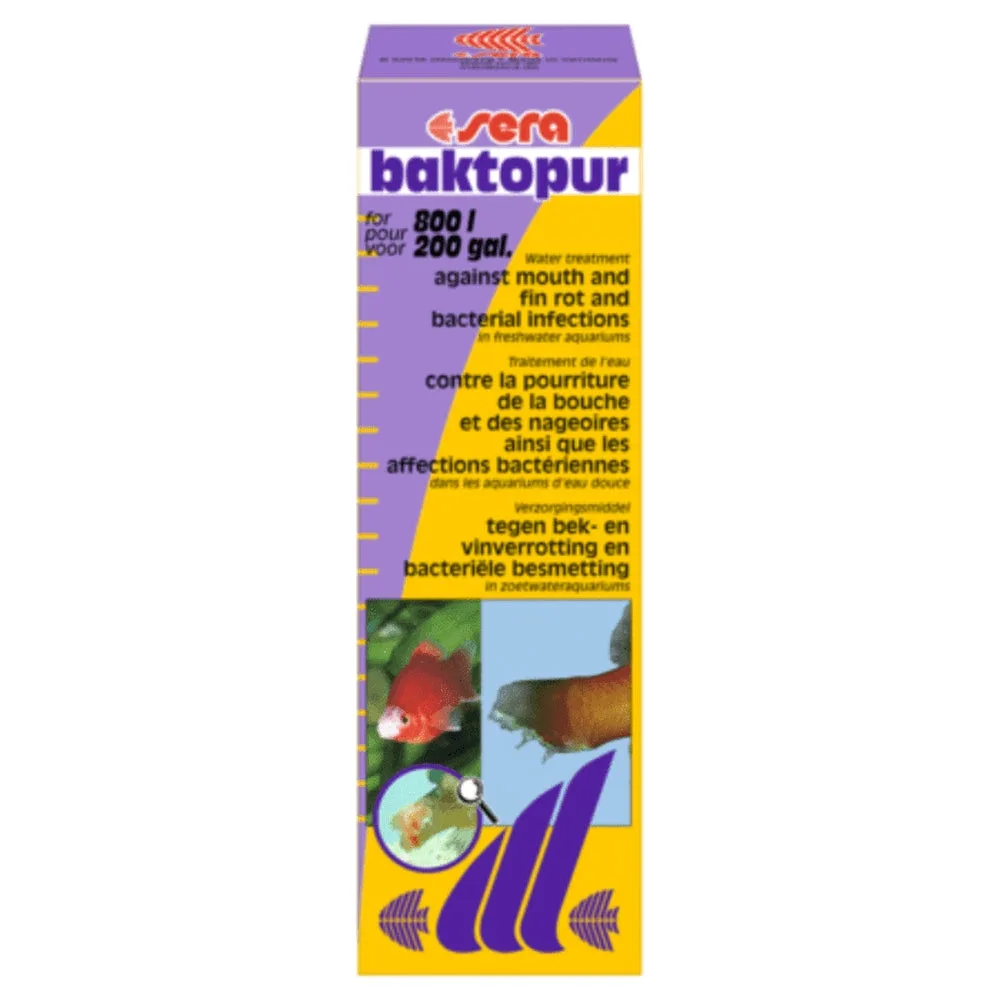
- Antibacterial aquarium products (eSHa 2000, JBL Ektol Bac Plus, Sera Baktopur Direct, Waterlife Myxazin):
- Use them per label for a reasoned suspicion, e.g. Columnaris or Fin Rot.
- Don't use them for one nonspecific sign.
- Kanamycin and other true antibiotics are for vet use only.
- Dropsy is a sign, not a disease. Causes include bacterial, mycobacterial and parasitic infections and organ failure. There is no universal protocol.
3. Saprolegnia ("fungus")
- An oomycete, usually secondary to wounds, dirty water, excessive chemical treatment or decaying organics.
- After correcting the environment, a single treatment is often enough: potassium permanganate, formalin or hydrogen peroxide. Take the dose from the label or your vet.
- JBL Fungol and Sera Mycopur: per label.
- Methylene blue is mainly used on eggs (hobby observation).
4. External antiparasitics
Ich
- White spots aren't the only criterion. Gill-only infections may show no spots, so microscopy confirms.
- Only the free-swimming theront stage is susceptible. Above 26 °C, treat daily; 3–7 treatments may be needed.
- Siphoning removes cysts.
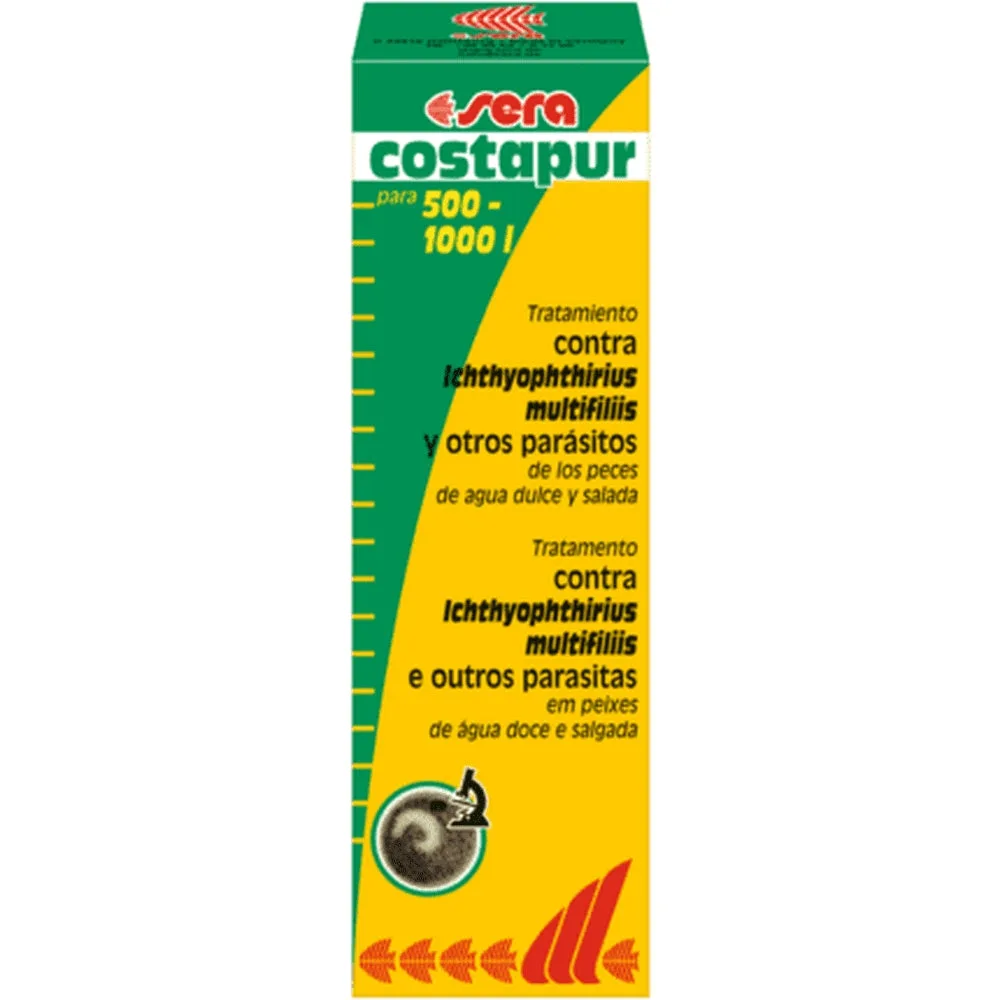
- Malachite green + formalin products (JBL Punktol, eSHa Exit, Sera Costapur) are effective but carry regulatory concerns.
- Raising the temperature is not a treatment.
Formalin
- Prolonged bath at 15–25 mg/L, only with 37% formaldehyde and vigorous aeration.
Velvet / Oodinium
- Prognosis is guarded. Copper sulfate with repeated treatments.
- There is no hobby dose. Use copper only with a copper test, known alkalinity and a vet.
5. Support
- Seachem Prime: dechlorinates and temporarily binds ammonia/nitrite, per label. It doesn't replace water changes or testing.
- Vitamins (e.g. JBL Atvitol): food supplement, per label.
- Non-iodized salt:
- Transport: 3–5 g/L, tolerated by most species for hours to days.
- Ich: 5 g/L for one week at ≥24 °C if the species tolerates it.
- Discus tolerance is poorly documented, so be cautious.
- Epsom salt: used in the hobby for constipation (hobby observation). There is no validated dose in our sources, and it doesn't treat the underlying cause of dropsy.
- Garlic, Garlic Guard: may stimulate appetite (hobby observation). They are not proven antiparasitics.
- Catappa leaves: mildly acidify and add tannins. Any "antibacterial" effect is a hobby observation.
Sign → suspicion → confirmation
| Sign | Suspect | Confirm | Direction |
|---|---|---|---|
| Salt-like white spots | Ich | Mucus/gill microscopy | Repeated treatments + siphoning |
| White feces + weight loss | Spironucleus, Cryptobia, Capillaria | Fecal/gut microscopy, necropsy | Metronidazole only if flagellates confirmed |
| Red worms at vent | Camallanus | Visual + microscopy | Nematode dewormer, not praziquantel |
| White-yellow patches, mouth lesions | Columnaris | Wet mount ("haystacks"), culture, sensitivity | Fix water; vet if fish are dying |
| Fast breathing, pale gills | Bacterial gill infections, flukes, poor water | Water test + gill biopsy | Aeration, water; treat by cause |
| "Pine cone" scales | Dropsy | Vet, imaging, necropsy | Isolate, see a vet |
| Cotton-like fluff on wound | Saprolegnia | Microscopy (nonseptate filaments) | Fix environment + one treatment |
| Frayed fins, red edges | Fin Rot | Culture if progressing | Clean water first |
| Flashing, excess slime | Costia, Trichodina, flukes | Mucus microscopy | Treat the parasite found |
🧮 Net water volume for label dosing: treatment calculator.
Where to buy
- Online (EU shipping):
- Aquasabi (DE): wide range, good prices.
- Garnelio (DE): shrimp and discus.
- Aquatic Pets (UK): Waterlife products.
- Local online retailers: eSHa, JBL, Sera.
- Local stores: you can see the product and ask questions, but stock is limited and prices are sometimes higher. Always read the label.
- Fish vet / veterinary pharmacy:
- Antibiotics are prescription veterinary medicines in the EU. Don't try to get them without a prescription.
- Generic antiparasitics (metronidazole, levamisole, praziquantel) only make sense after a probable or confirmed diagnosis. The vet chooses the product and dose.
- A vet can examine mucus, gill and fecal samples, run cultures with sensitivity testing, and perform necropsies. That is often worth more than any product on the shelf.
- Human pharmacies: Epsom salt (magnesium sulfate), clove oil, calcium gluconate. Buy them only for a clear purpose.
Rules of use
✅ Diagnosis first. Use microscopy, culture, necropsy or a fish vet. Dead or moribund fish give the most reliable diagnosis. ✅ Check the water first. Test ammonia, nitrite, nitrate, pH and temperature (28–30 °C for discus), and correct any problems. Poor water, organic load and low oxygen predispose fish to bacterial outbreaks. ✅ Remove activated carbon (it binds medications). Keep the biological media running. ✅ Aerate well. This is essential with formalin. ✅ Read the whole label and dose on the real volume, including the sump. ✅ Don't combine medications without a reason. Toxicity can add up. Do a large water change between treatments. ✅ Isolate sick fish in a hospital tank with mature filtration, and finish the course. ✅ Watch the biofilter. Copper especially harms nitrifying bacteria. Test ammonia and nitrite daily. ✅ Keep notes of products, doses and dates. ✅ Don't raise the temperature automatically. Warmth speeds up some parasite life cycles and lowers oxygen.
What to AVOID
❌ Antibiotics "just in case" or for a single nonspecific sign. This drives resistance and is not allowed as routine prophylaxis in the EU. ❌ Self-prescribed human antibiotics (amoxicillin, ciprofloxacin, etc.). The doses are wrong for fish and they add to resistance. ❌ Copper without calculation and testing. You need the total alkalinity and a copper test kit. Copper is extremely toxic to plants and invertebrates and damages the biofilter. ❌ Pure malachite green powder. Use only commercial products, per label. It carries regulatory concerns. ❌ Methylene blue in the main tank. It stains silicone and decor and can affect the filter. ❌ Ivermectin (very low safety margin) and fenbendazole as a bath (high mortality). ❌ "Miracle" remedies (homeopathy, aloe vera) instead of a diagnosis.
Storage
- Keep medicines in a closed cabinet, away from children and pets.
- Store them cool (not near the aquarium or a radiator), dark and dry.
- Keep them in the original packaging with visible labels.
- Store liquids apart from powders. Keep bleach apart from acids and ammonia-containing products.
- Keep an inventory with purchase and expiry dates.
- Shelf life is what the pack says. After opening, follow the manufacturer.
- Discard products that change colour, smell unusual or have caked.
Prevention and relapse
Quarantine new fish for at least 30 days, longer if signs appear or a vet advises it:
- Use a separate tank with a sponge filter seeded in a healthy established tank.
- Provide aeration, a heater and a stable temperature.
- Keep dedicated nets, siphons and buckets, and service quarantine last.
- Monitor ammonia, nitrite, behaviour, breathing, appetite and feces.
- Treat only on clinical signs and a probable or confirmed diagnosis.
- Large water changes correct ammonia/nitrite but don't replace mature biofiltration.
- Quarantine can't detect mycobacteria, many viruses or microsporidia.
Disinfect tanks and equipment:
- Clean off organic matter.
- Disinfect with diluted bleach (check the concentration on the label).
- Neutralise with sodium thiosulfate and rinse thoroughly.
- Bleach doesn't kill mycobacteria, so follow with 70% ethanol or phenolic compounds.
- Re-cycle the filter afterwards.
Wear gloves, especially if you have cuts. Mycobacteria and Streptococcus iniae can infect people.
Hobby observation: beginners often buy many medicines but no test kit. Get test kits and equipment first, and medicines only when needed.
Checklist:
- ☐ Liquid test kit and dechlorinator
- ☐ Matured sponge filter for quarantine
- ☐ Dedicated equipment
- ☐ Fish vet contact details
- ☐ Products labelled with purchase and expiry dates
- ☐ Stock checked periodically
What to do next
📚 Continue learning:
- Hexamita and HITH: intestinal flagellates; HITH has multiple causes
- Ich (white spot): the life cycle and why treatments are repeated
- Oodinium (Velvet): diagnosis and the risks of copper
- Columnaris: how to tell it from fungus
- Saprolegnia (fungus): causes and fixing the environment
- Constipation / swim bladder: signs with several possible causes
- Internal worms: nematodes and tapeworms need different treatments
🔧 Practical resources:
- Treatment dosage calculator: use it with the label of the product you bought
- Aquarium volume calculator: the true volume for dosing
- Visual diagnosis: a starting point for a suspicion, not a final diagnosis
Sources
- Merck Veterinary Manual – Parasitic Diseases of Fish
- Merck Veterinary Manual – Bacterial Diseases of Fish
- Merck Veterinary Manual – Management of Aquarium Fish
- Merck Veterinary Manual – Routine Health Care of Fish
- UF/IFAS – Ichthyophthirius multifiliis (White Spot)
- WOAH – Methods for disinfection of aquaculture establishments
- Regulation (EU) 2019/6 on veterinary medicinal products
Save your tank, log water parameters and get email reminders for care tasks — for free.
Recommended products
Picked from the shop based on what you just read

Recommendations are selected from the discus.ro shop based on this guide's topic. Availability and prices may vary.
Frequently asked questions
Put what you just read into practice
One account brings together everything you need to keep your tank on track:
Water parameters, inhabitants, photos and the full history of every change — our most used tool.
Water changes, cleaning and feeding, on your own dates.
See at a glance which values fall outside the safe discus range.
The guides, products and listings you follow, saved in one place.