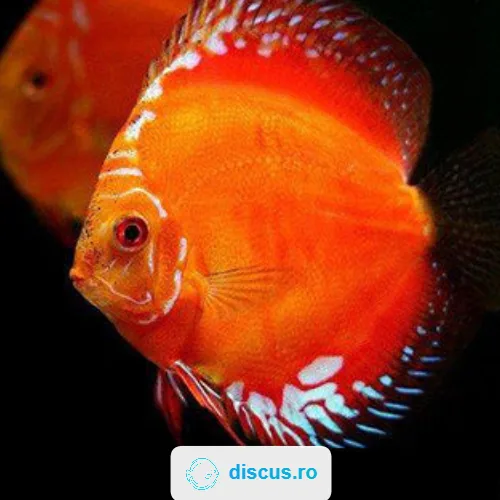
Marlboro Red
Symphysodon sp.
Description
Marlboro Red is one of the most appreciated discus varieties, recognized for its uniform and intense orange-red coloration covering almost the entire body. This solid specimen, lacking the typical vertical pattern of wild fish, impresses with its liveliness and clean chromatic appearance. It is highly sought after by aquarists worldwide due to the strong visual impact it provides in planted aquariums. Its calm personality and vibrant coloring make it a true focal point in any well-maintained discus community.
🌍 Origin & History
The Marlboro Red variety was developed through rigorous selection starting from the Pigeon Blood genetic line. Originating from specialized breeding farms in Southeast Asia, it emerged from breeders' desire to obtain a solid chromatic form, without vertical stripes, that highlights warm tones of red and orange. Its name evokes the chromatic intensity of famous cigarette brand packaging, becoming a standard in modern selective fish keeping.
Appearance
Marlboro Red displays a round, harmonious body, completely covered in a warm shade of red-orange. High-quality specimens are distinguished by the total absence of vertical bars and non-existent black 'pepper'. The eyes are intense red, well-defined, contrasting nicely with the rest of the body. The dorsal and anal fins are finely edged, maintaining the chromatic continuity of the body. The general appearance is that of a massive discus with solid, uniform pigmentation, emanating vitality and health under optimal lighting conditions.
🧬 Genetic background
Genetically, Marlboro Red inherits the dominant Pigeon Blood gene, resulting from successive crosses with varieties like Red Melon. The primary goal of selection was to minimize black spots, known as 'pepper', and to eliminate vertical bars. Through line breeding, breeders have managed to stabilize the intense red color, achieving a homogeneous and very stable phenotype in subsequent generations of reproduction.
Recommended water parameters
Care
Care requires water with a pH between 6 and 7, at a constant temperature of 28-31°C. Weekly partial water changes are mandatory to maintain health. The diet must include food rich in carotenoids (krill, brine shrimp, astaxanthin) to maintain red intensity. They are schooling fish, requiring a group of at least 5-6 to reduce stress. They are compatible with Corydoras and peaceful tetras, requiring a mature, spacious aquarium with high-performance biological filtration and moderate water currents.
Breeding
Breeding is relatively easy if compatible pairs and optimal conditions are ensured. Since they inherit the dominant Pigeon Blood gene, the fry will exhibit traits similar to the parents. Using a dedicated breeding aquarium with strict water quality management is recommended. Parents are usually attentive caretakers. Selection of breeding specimens must be done rigorously, choosing fish with the least black pigmentation to ensure the aesthetic quality of future fry generations.
💡 Practical tips
- →Use astaxanthin-rich food for red intensification.
- →Maintain constant temperature to avoid stress.
- →Perform regular water changes for vitality.
- →Avoid crossing with striped varieties.
- →Ensure a group of at least 5 individuals.
- →Monitor water quality weekly.
Related guides
Articles relevant to you
Useful tools
Quick aquarium calculators
Other varieties in the Orange group
Products for this variety
Filters, food, tests and treatments for discus
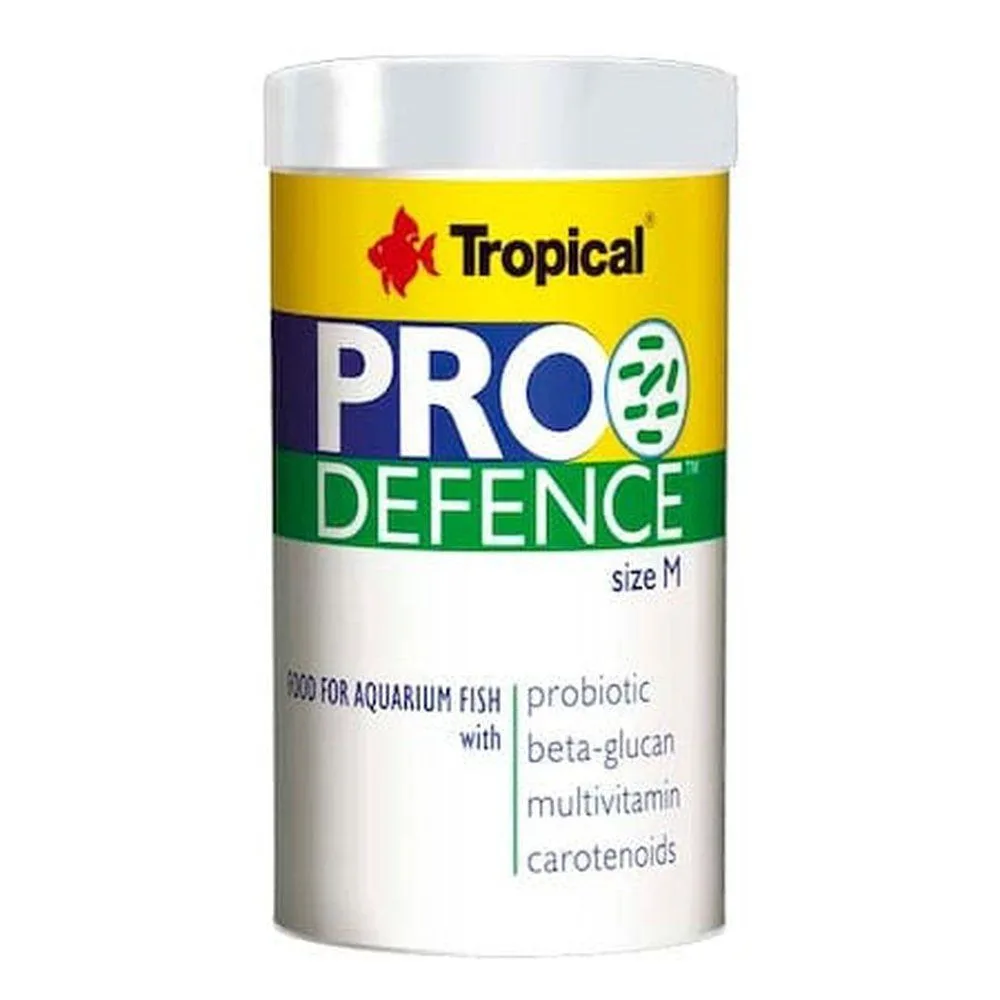
Granulated Probiotic Food for Freshwater Fish, Tropical ProDefence M, 44g/100 ml
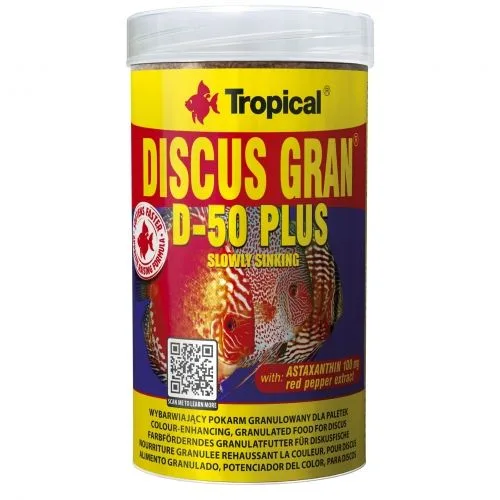
Granulated Food for Discus, Tropical, Discus Gran D-50 Plus, 44 g/100 ml
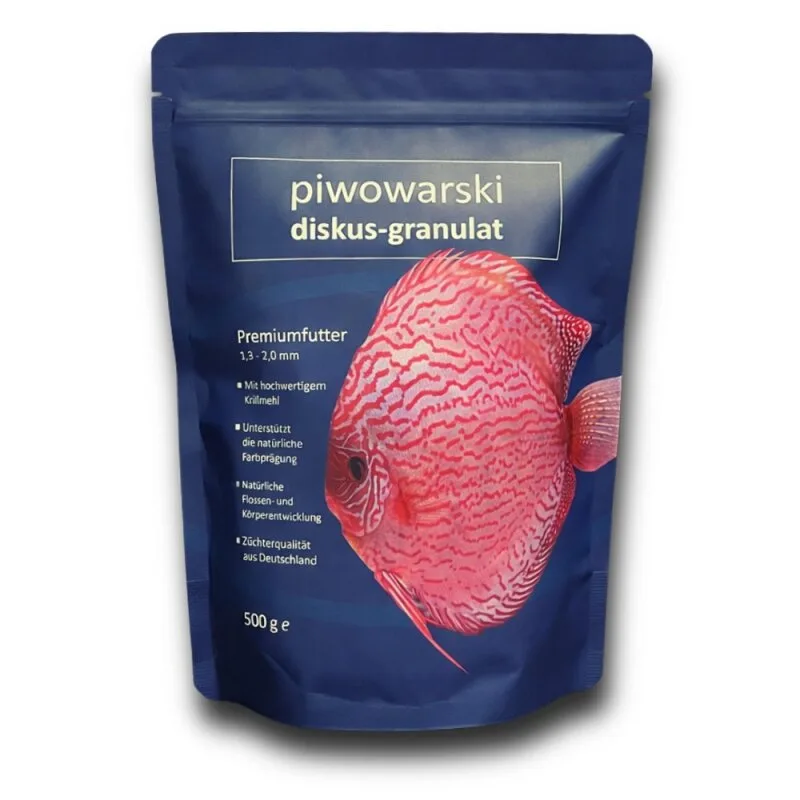
Discus Fish Granules - Piwo - granules 1.3–2 mm - 500g

Hikari Discus Bio Gold 80 g
Catappa Leaves, Sera Catappa Leaves - M

Bacteria Culture Additive, Seachem Stability, 1 L

Aqua Medic Premium Line Reverse Osmosis System

ARKA AQUATICS myAQUA 1900 Reverse Osmosis System

ARKA myAqua380 Reverse Osmosis System

Seachem Stability - Aquarium Biological Stabilizer 250 ml