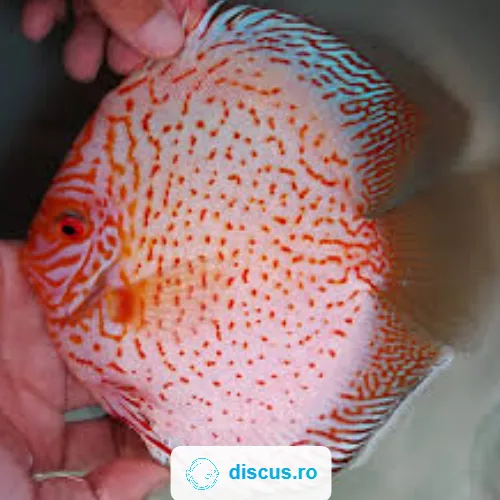
Pigeon Spotted
Symphysodon sp.
Description
The Pigeon Spotted variety represents a spectacular aesthetic evolution of the Pigeon Blood line, combining the warm color foundation typical of this family with a distinct and elegant pattern of spots distributed uniformly across the body surface. This discus is highly prized by breeders for its vibrant color contrast and design complexity. Due to its unique appearance, this variety has become a focal point in display aquariums, demonstrating the success of genetic selection aimed at creating a specimen that blends the elegance of solid colors with the complexity of spotted patterns.
🌍 Origin & History
This variety is the result of complex hybridization between high-quality Pigeon Blood specimens and Leopard or Red Spotted Green lines. Through these crosses, breeders aimed to fix the gene determining specific spots onto a background carrying the Pigeon Blood gene. The selection project focused on reducing characteristic vertical bars, consolidating a stable phenotype that combines the parental traits regarding the orange-red coloration and the distinctive spotted pattern.
Appearance
Mature specimens feature a robust, orange-yellow body marked by red-brown or dark spots distributed irregularly. A distinctive element is the occasional presence of black spots (pepper) on the snout, caused by the PB gene. This variety does not display vertical bars, a trait specific to this range, and the eyes are a deep red, offering a pleasant contrast to the body color. Sizes reach 13–17 cm, with a rounded profile and well-developed fins that highlight the intensity of the spots distributed across the body, dorsal, and anal fins.
🧬 Genetic background
The genetics of the Pigeon Spotted variety are based on the interaction between the dominant Pigeon Blood gene and the recessive or polygenic genes responsible for the spotted pattern. The orange-yellow background comes from the PB line, while the red-brown spots are inherited from Leopard or Red Spotted Green varieties. Because the pattern manifestation is polygenic, fry can show significant variations, requiring rigorous selection of specimens to maintain the clarity and density of the spots in future generations.
Recommended water parameters
Care
Care requires increased attention to water quality, maintaining a pH between 5.8 and 6.8 and a temperature of 29-31°C. Partial water changes of 30% twice a week are essential to prevent nitrate buildup. They are schooling fish, preferring groups of at least 6 specimens. Feeding must be varied, including quality pellets, brine shrimp, and beef heart mixes. They are compatible with small species, such as tetras, in well-planted aquariums, requiring a quiet environment without strong water currents.
Breeding
Breeding requires optimal isolation conditions and a rich diet to stimulate the pair. The fry exhibit high genetic variability regarding the density and clarity of the spots. It is crucial to perform strict selection (culling) to eliminate specimens that show insufficient pattern definition or excessive pepper. Mature pairs tend to be dedicated parents, providing necessary care to fry during the first weeks of life, provided that water parameters are kept stable throughout the entire process.
💡 Practical tips
- →Keep temperature constant to avoid stress.
- →Provide a varied diet for vibrant colors.
- →Perform regular water changes and substrate siphoning.
- →Observe pattern clarity after 8-12 months.
- →Avoid cohabitation with aggressive or territorial species.
- →Monitor fish behavior to detect diseases.
Related guides
Articles relevant to you
Useful tools
Quick aquarium calculators
Other varieties in the Orange group
Products for this variety
Filters, food, tests and treatments for discus
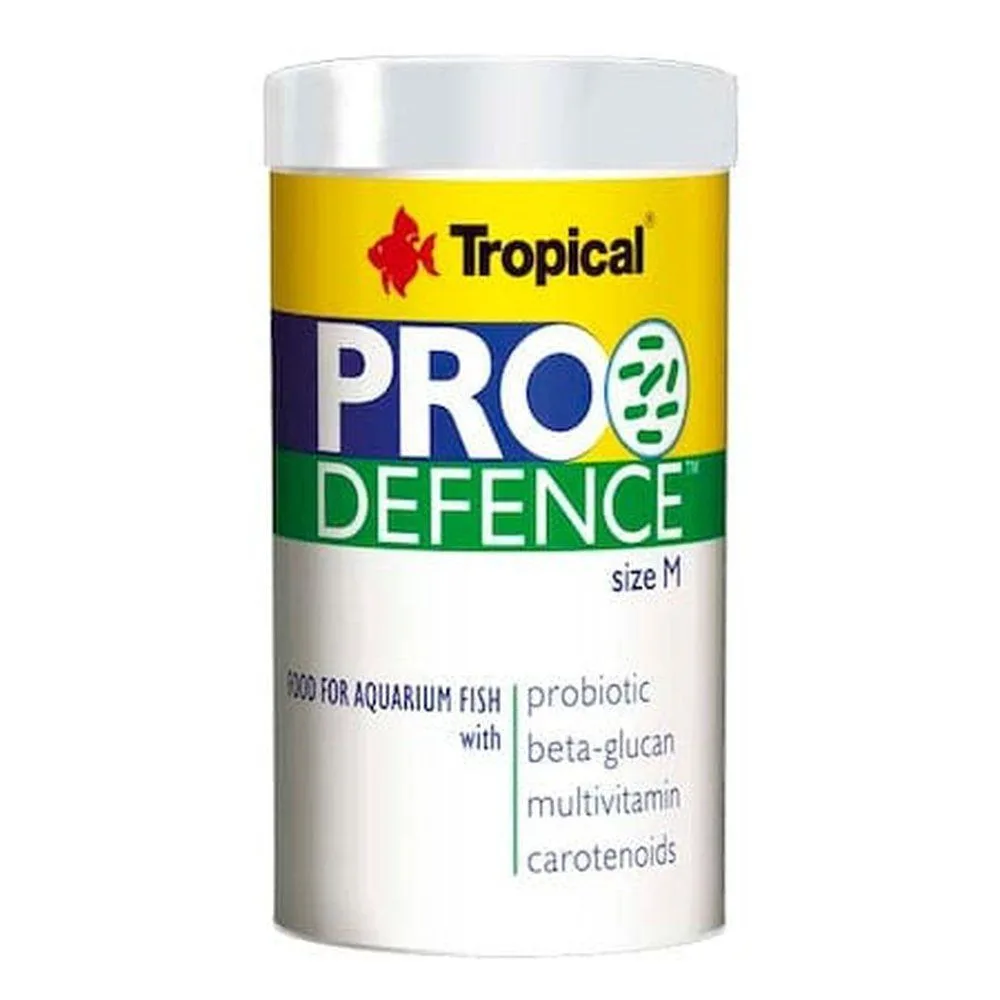
Granulated Probiotic Food for Freshwater Fish, Tropical ProDefence M, 44g/100 ml
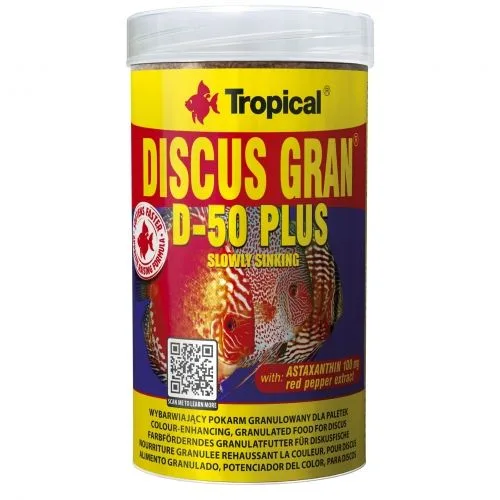
Granulated Food for Discus, Tropical, Discus Gran D-50 Plus, 44 g/100 ml
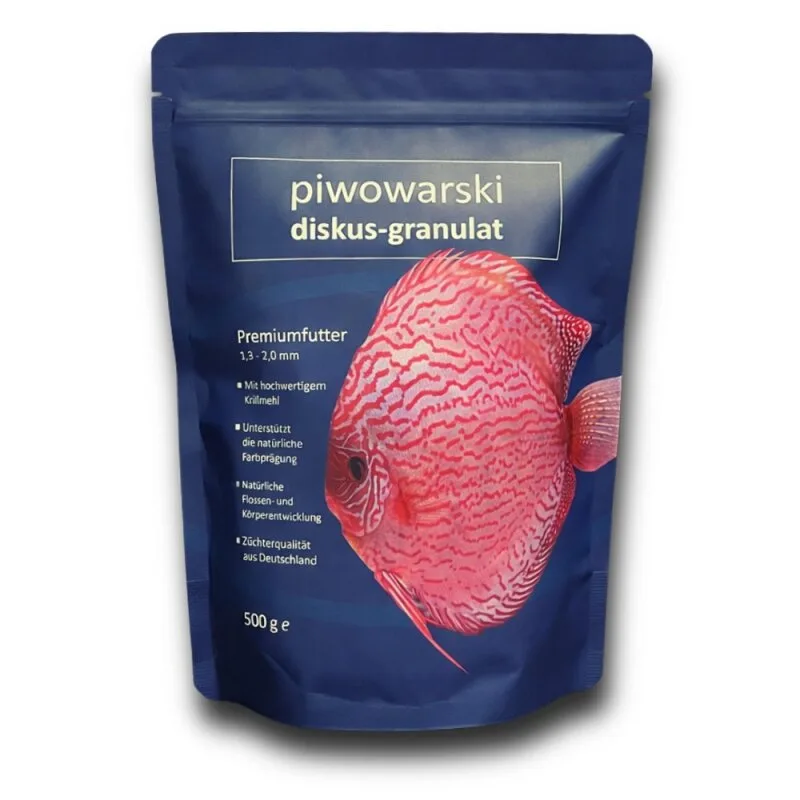
Discus Fish Granules - Piwo - granules 1.3–2 mm - 500g

Hikari Discus Bio Gold 80 g
Catappa Leaves, Sera Catappa Leaves - M

Bacteria Culture Additive, Seachem Stability, 1 L

Aqua Medic Premium Line Reverse Osmosis System

ARKA AQUATICS myAQUA 1900 Reverse Osmosis System

ARKA myAqua380 Reverse Osmosis System

Seachem Stability - Aquarium Biological Stabilizer 250 ml