Cross-contamination between aquariums: complete guide for discus
How to stop diseases spreading between tanks: why it happens, separate equipment, work order, hand hygiene, disinfection, plants and live food. A practical protocol for discus.
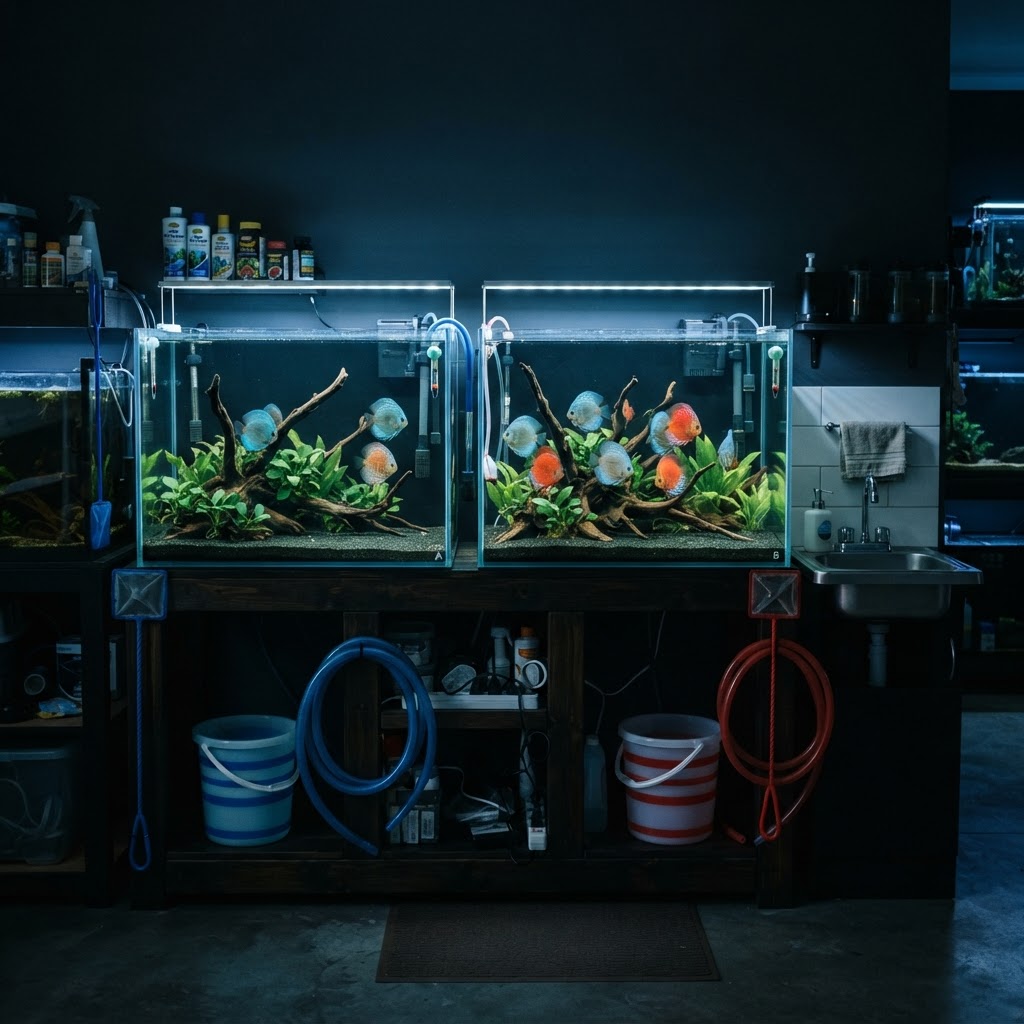
Quick summary
- Cross-contamination = moving pathogens from one tank to another via nets, hoses, buckets, hands, water, food or plants.
- Golden rule: every tank (especially quarantine) gets its own equipment, color-coded.
- Work order: always healthy → quarantine → sick, never the other way round.
- One drop is enough: Ich, Velvet, flukes, Columnaris and Mycobacterium spread through tiny amounts of water.
- Disinfect with diluted bleach, potassium permanganate or Virkon S, then rinse and dry completely.
Why it happens
Cross-contamination happens because pathogens live in the water, in fish slime and in the biofilm on objects, not just on the fish. Specifically:
- Asymptomatic carriers: new discus (even from good breeders) can carry Hexamita, flukes, Capillaria or Mycobacterium with no visible signs. Transport stress activates them within 1–3 weeks.
- Free-swimming parasite stages: Ich and Velvet have stages that swim freely in the water (tomites, dinospores). A single drop on a net can hold hundreds.
- Biofilm: bacteria (Aeromonas, Columnaris, Mycobacterium) stick to nets, hoses and sponges and survive for hours or days while the object stays wet.
- Shared equipment out of convenience: most hobbyists own one net and one hose and just "rinse" them between tanks. Rinsing kills nothing.
- Resistant eggs and cysts: internal worm eggs and some cysts survive in substrate, plants and decor for weeks.
- Different immunity: your fish have never met the breeder's strains. A pathogen harmless to the new discus can be serious for yours.
In short: the fish doesn't carry the disease straight into your display tank. You move it, through objects, water and hands.
Solutions at a glance
| Problem | Solution |
|---|---|
| One net/hose for everything | Separate color-coded set for quarantine and hospital |
| Wrong work order | Always healthy → quarantine → sick |
| Hands between tanks | Wash with soap + rinse well, gloves for the hospital tank |
| Bag water | Move only the fish, discard the water |
| Moving sponges/filter media | Only from healthy toward quarantine |
| Plants, decor, live food | Disinfect, quarantine plants, use gamma-irradiated frozen food |
| Wet equipment | Disinfect + dry fully for 24–48 h |
Main transmission routes
| Source | What it spreads | Risk |
|---|---|---|
| Nets | Parasites, bacteria, worm eggs | Very high |
| Siphon hose and buckets | Contaminated water, slime, feces | Very high |
| Hands and arms | Bacteria, Mycobacterium | High |
| Moved sponges/filter media | Everything living in the source tank | Very high |
| Transport bag water | The breeder's pathogens | High |
| Plants and decor | Snails, planaria, parasites, eggs | Medium |
| Live food (tubifex, worms) | Bacteria, internal worms | Medium-high |
| Aerosols from air stones | Droplets between very close tanks | Low |
| Test kits, thermometers, magnets | Residual water | Medium |
Separate equipment: what you need
For each quarantine or treatment tank:
- its own net
- its own siphon hose
- its own bucket
- its own sponge/glass magnet
- its own test tubes (or rinse them right away)
Color system: for example blue = display tank, red = quarantine/hospital. Put colored tape on each item and store the sets apart, never in the same bucket.
A full quarantine set costs roughly €15–30, far less than a single lost discus.
The correct work order
- Display tank (healthy fish)
- Grow-out/fry tanks
- Quarantine (new fish)
- Hospital tank (sick fish)
- Wash your hands and disinfect equipment at the end
If you must go back to a "clean" tank after quarantine, wash your hands and forearms and switch equipment.
12 things to check before buying a discus
Eyes, breathing, feces, price and how it is packed. Tick them one by one in five minutes, before you pay.
Hand hygiene
- Wash hands and forearms with soap before and after every tank with quarantined or sick fish.
- Rinse very thoroughly: soap left on skin is toxic to fish.
- Use long gloves for the hospital tank.
- Don't put your hands in the water if you have open cuts: Mycobacterium marinum can also infect humans.
Water: the most underestimated route
- Never pour transport bag water into your tank. Move the fish with a net or by hand.
- Don't use water from one tank to fill another.
- Never move filter sponge from a problem tank into a healthy one. To cycle quarantine, take sponge from the display tank (healthy → quarantine), not the reverse.
- Droplets on a net or hose are enough for Ich and Velvet.
Disinfecting equipment
| Disinfectant | Concentration | Contact time | Notes |
|---|---|---|---|
| Bleach (unscented) | 1 part to 20 parts water | 10–15 min | Rinse well + dechlorinator; dry fully |
| Potassium permanganate | strong pink-purple solution | 30 min | Good for nets and decor |
| Virkon S | 1% | 10 min | Effective on bacteria and viruses |
| Isopropyl alcohol 70% | neat | until dry | For testers, thermometers, small items |
| Full drying | — | 24–48 h | Kills many parasites (not Mycobacterium) |
Warning: Mycobacterium resists many common disinfectants. If you've had fish TB, use 70% alcohol or Virkon S with long contact times, or replace the equipment.
Plants, decor and food
- New plants: 2–3 minute dip in 1:20 bleach (hardy plants only: Anubias, Java fern), then rinse well. Alternatively, quarantine them 2–3 weeks without fish.
- Second-hand decor: fully disinfect or boil (wood, stones).
- Live food: tubifex and worms from dirty water are common carriers. Prefer gamma-irradiated frozen food or home-cultured worms.
- Snails and shrimp need quarantine too, just like fish.
Common situations and what to do
Only one set of equipment? Work in the display tank first, then quarantine, then disinfect everything and let it dry 24 h.
Tanks on one rack or a central system? A shared filtration system (central sump) means one body of water. Quarantine must be fully separate from it.
Lost a fish to disease? Disinfect the net, hose and bucket, don't reuse filter media from the hospital tank, and treat or closely monitor the remaining fish.
Visiting other breeders or shops? Don't touch their water with bare hands, and wash up at home before working on your tanks.
Common mistakes
- One net for all tanks, "just rinsed".
- Pouring bag water into the tank.
- Siphoning quarantine before the display tank.
- Moving filter sponge out of a sick tank.
- Drying items together so they touch.
- Feeding unknown live food straight to valuable fish.
Daily checklist
- Equipment labeled and kept separate for each tank
- Order: healthy → quarantine → sick
- Hands washed between tanks
- No water moved between tanks
- Quarantine equipment disinfected weekly
- Plants and live food checked before use
Recommended products
Picked from the shop based on what you just read
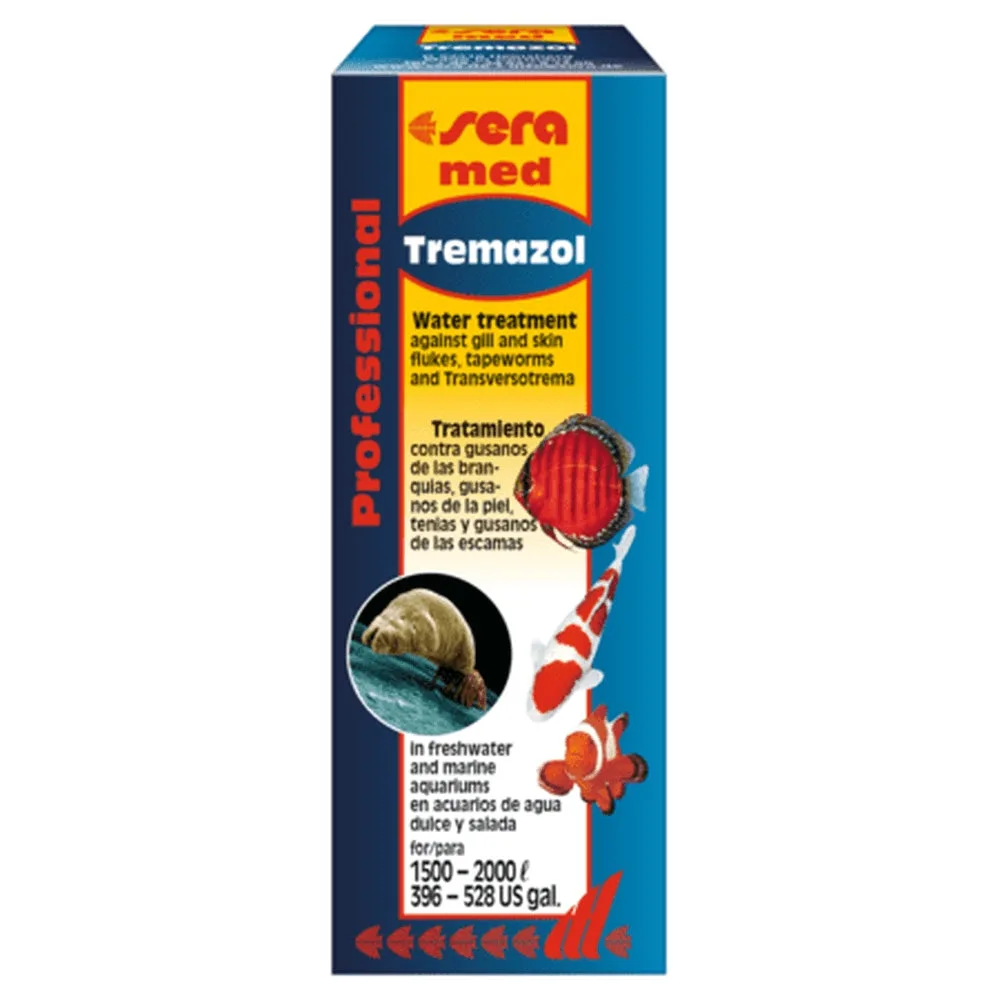
Recommendations are selected from the discus.ro shop based on this guide's topic. Availability and prices may vary.
Frequently asked questions
Put what you just read into practice
One account brings together everything you need to keep your tank on track:
Water parameters, inhabitants, photos and the full history of every change — our most used tool.
Water changes, cleaning and feeding, on your own dates.
See at a glance which values fall outside the safe discus range.
The guides, products and listings you follow, saved in one place.