Beef heart for discus: store-bought vs homemade — a comparison
A detailed comparison between store-bought beef heart and the homemade recipe — price (a 5–8× difference), quality, time invested, and when each option is worth it.

Quick summary
- Cost: homemade is far cheaper than store-bought — roughly a 5–8× difference per kg.
- Nutritional quality: a premium store-bought mix ≈ a well-made homemade one. Cheap generic brands = mediocre.
- Time: store-bought = 0 min/month. Homemade = ~60 min every 4 weeks.
- Ingredient control: only homemade — with store-bought you know the label, NOT the real proportions.
- For beginners / 1–2 discus / vacation: store-bought = fine.
- For 6+ discus / breeders / the long term: homemade wins clearly on cost.
- Compromise: buy 2–3 premium boxes at first (to test acceptance), then switch to homemade.
In short
- Cost: homemade is far cheaper than store-bought — roughly a 5–8× difference per kg.
- Nutritional quality: a premium store-bought mix ≈ a well-made homemade one. Cheap generic brands = mediocre.
- Time: store-bought = 0 min/month. Homemade = ~60 min every 4 weeks.
- Ingredient control: only homemade — with store-bought you know the label, NOT the real proportions.
- For beginners / 1–2 discus / vacation: store-bought = fine.
- For 6+ discus / breeders / the long term: homemade wins clearly on cost.
- Compromise: buy 2–3 premium boxes at first (to test acceptance), then switch to homemade.
💱 Prices vary a lot by country. Where figures appear, they're labelled as a RO estimate (2026) in approximate EUR — use your local market and the products available where you live.
What you'll learn
Store-bought vs homemade beef heart is one of the most concrete budget decisions for a discus keeper. The annual difference for a group of 6 adults is significant — money that can go into the tank, supplements or new fish. This guide gives you the objective comparison between the two options, when each is worth it, and a simple break-even view for investing in a meat grinder.
For the detailed homemade recipe, see the master guide Beef heart mix recipe step by step.
Direct comparison — 10 criteria
| Criterion | Store-bought (premium) | Homemade |
|---|---|---|
| Relative cost / kg | High (baseline) | ~5–8× cheaper |
| Time / month | 0 min | ~60 min (1 batch) |
| Initial investment | None | A meat grinder + accessories |
| Ingredient control | ❌ Label, not proportions | ✅ 100% |
| Customization (juveniles / breeders) | ❌ Fixed quantities | ✅ 3+ variants |
| Sterilization | ✅ Industrial -25 °C (-13 °F) | ⚠️ Home -18 °C (0 °F), 24 h min |
| Bacteria risk during prep | ✅ Zero | ⚠️ Exists if the heart isn't fresh |
| Small quantities (1–2 discus) | ✅ 100 g blister | ❌ 1 kg minimum batch = waste |
| Vacation / no time | ✅ Open & feed | ❌ Needs prep |
Store-bought beef heart brands
Premium discus beef heart blends are sold internationally by several established aquatics brands (well-known examples include Ruto Discus Mix, Ocean Nutrition Discus X-Protein, Sera FrikaDelta Discus, JBL ProDiscus). A few generic frozen "beef heart" blocks exist too, but they're often diluted with water and have unclear ingredients — avoid them.
| Type | Format | Quality |
|---|---|---|
| Premium discus mix (e.g. Ruto, Ocean Nutrition) | Blister 100 g cubes | ⭐⭐⭐⭐⭐ Premium |
| Balanced discus blend (e.g. Sera, JBL) | Blister / frozen jar | ⭐⭐⭐⭐ Very good |
| Generic frozen beef heart | Blister 100 g | ⭐⭐ Generic — often diluted |
| Local breeder (bulk) | 250–500 g bag | ⭐⭐–⭐⭐⭐⭐ Variable — ask for the ingredient list |
🇷🇴 RO estimate (2026): premium blisters ~€5–8/100 g (≈€47–75/kg); generic ~€2.5–3.5/100 g; local breeder bulk ~€9–17/kg. Homemade works out to ~€7–9/kg.
Real annual cost — 6 adult discus
Typical consumption: ~250–300 g beef heart / month = 3–3.6 kg / year.
| Source | Relative annual cost |
|---|---|
| Premium store-bought (e.g. Ruto / Ocean Nutrition) | Baseline (highest) |
| Balanced store-bought (e.g. Sera) | Slightly lower |
| Local breeder bulk | Much lower |
| Homemade | Lowest (~85% less than premium) |
🇷🇴 RO estimate (2026): premium ~€170–204/year vs homemade ~€25–30/year — a saving of
€140–170. A meat grinder (€57) pays for itself in ~4–5 months.
Nutritional quality compared
Premium store-bought (e.g. Ruto / Ocean Nutrition / Sera)
✅ Protein ~16–20% on a wet-weight basis (~75–80% on a dry basis) ✅ Vitamins + minerals included (an optimized formula) ✅ Astaxanthin + spirulina integrated ✅ Industrially sterilized at -25 °C (-13 °F) → zero parasites ⚠️ Additives: sodium ascorbate (vitamin C), sometimes carrageenan (texture) — within legal limits ⚠️ The real ingredient proportions = a trade secret
Homemade (the master recipe)
✅ Protein ~16–20% on a wet-weight basis (identical to store-bought if cleaned well) ✅ Vitamins + spirulina ADDED in EXACTLY the amount you want ✅ 100% control of proportions (you can add 200 g of krill for intense red) ⚠️ Home sterilization at -18 °C (0 °F) for 24 h+ — effective, but less aggressive than industrial ⚠️ Bacteria risk IF the heart isn't fresh or prep is unhygienic
Conclusion: on nutritional quality, a well-made homemade mix ≈ a premium store-bought one. The real difference is in customization (homemade wins) and convenience (store-bought wins).
When STORE-BOUGHT is worth it
✅ Your first year with discus — you want to focus on water parameters + observation, not food prep.
✅ 1–2 discus at home — a 1 kg homemade batch lasts months → the vitamins degrade before you finish it.
✅ You live in an apartment with no space for a grinder + the prep mess.
✅ Frequent travel — buy 5 premium blisters and leave instructions for whoever feeds.
✅ An acceptance test — the first 2–3 boxes to see whether your discus eat beef heart before you invest.
✅ Time budget < money budget — if your time is worth more than the annual saving, buy.
When HOMEMADE is worth it
✅ 6+ discus — a meaningful annual saving, grinder break-even in <5 months.
✅ Active breeding — pairs in conditioning need a customized recipe (+krill, +wheat germ oil) you don't get store-bought.
✅ Juveniles 3–12 months — the version with integrated pellets + extra spirulina doesn't exist commercially.
✅ Multiple tanks — at 15+ discus, the annual difference becomes large.
✅ You want total control — you know exactly what your fish eat, with no additives.
✅ Access to a local butcher — fresh heart at a low price is the economic pre-condition.
The ideal compromise — a hybrid strategy
The most practical approach for most hobbyists:
- Months 1–2 with new discus → buy premium blisters (2–3) — test acceptance, focus on parameters.
- Month 3+ → invest in a grinder + make your first homemade batch (1 kg).
- A permanent backup → 2–3 premium blisters in the freezer for: weekends when you have no time, emergencies (the homemade batch spoiled), vacations.
- Breeding conditioning → exclusively homemade (the breeder variant with krill + wheat germ oil).
With the hybrid strategy, the average cost for 6 adults sits roughly midway between pure store-bought and pure homemade.
Common mistakes
❌ "I buy the cheap generic frozen beef heart" — a formula diluted with water + unclear ingredients. For nearly the same price as homemade, the quality is far lower.
❌ "Homemade from a kilo of heart without adding spirulina + vitamins" — pure protein without micronutrients = deficiencies after 2–3 months. "Equivalent to store-bought" means the complete recipe (see the master guide).
❌ "I bought 10 premium blisters for the whole month" — a home freezer's temperature fluctuations reduce the quality. Buy 2–3 blisters every 2 weeks.
❌ "I make homemade for 1 discus" — waste (a 1 kg batch = 4 months, the vitamins degrade). For 1–2 discus, store-bought is clearly better.
❌ "I buy local breeder bulk cheap without asking the ingredients" — extremely variable quality. Ask for the exact list (heart, shrimp, spinach, vitamins) before buying.
Decision checklist — store-bought vs homemade
Buy IF you tick 3+:
- ☐ Under 3 discus
- ☐ Your first year of experience
- ☐ Frequent travel (>1×/month)
- ☐ No space / interest for prep
- ☐ Time budget < money budget
- ☐ No access to a butcher for fresh heart
Go homemade IF you tick 3+:
- ☐ 6+ discus
- ☐ Active breeding or a plan to
- ☐ Juveniles 3–12 months growing
- ☐ Multiple tanks
- ☐ Access to a market with a butcher
- ☐ You want 100% ingredient control
- ☐ A meaningful annual saving matters
What to do next
📚 The complete homemade recipe: Beef heart mix recipe step by step (master).
📊 Pellets vs beef heart: Comparison + the 40-40-20 diet.
🍽️ The best food: Top 5 types + the ideal diet.
❤️ Breeder conditioning: A special beef heart recipe for pairs.
Want a clear schedule for your tank?
Generate a personalized plan for water changes, feeding, testing and maintenance — in just 2-3 minutes.
Generate care planSave your tank, log water parameters and get email reminders for care tasks — for free.
Recommended products
Picked from the shop based on what you just read
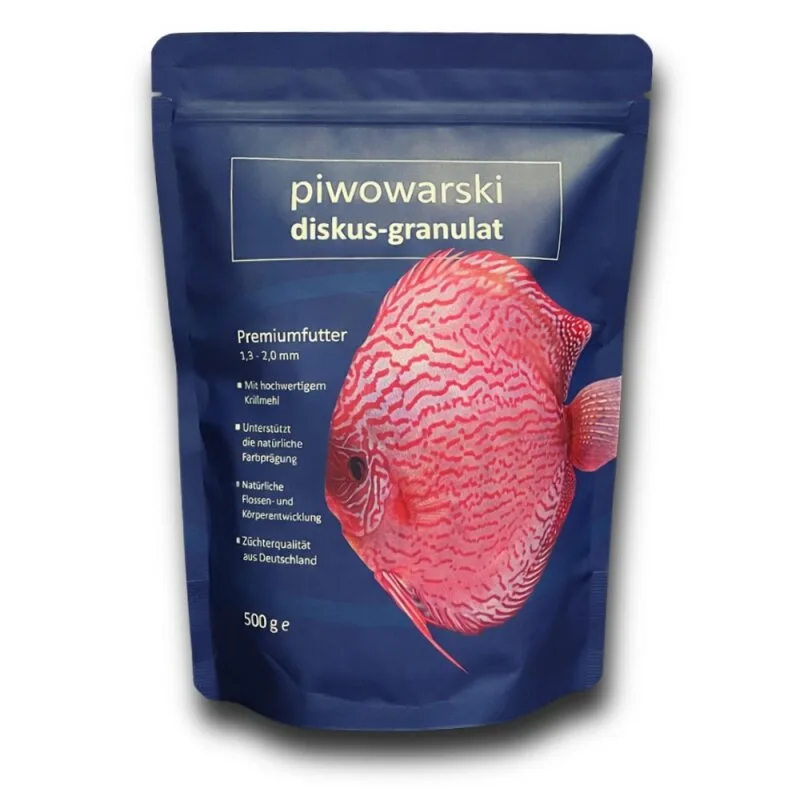
Recommendations are selected from the discus.ro shop based on this guide's topic. Availability and prices may vary.