The best food for discus: top 5 types + the ideal diet
The best food for discus — the top 5 types (beef heart, brine shrimp, premium pellets, krill, frozen bloodworms), a balanced weekly diet and what to avoid entirely.

Quick summary
- Discus are omnivores with a carnivorous leaning — they need a varied diet with 40–50% animal protein.
- Top 5 recommended foods: homemade beef heart mix, frozen/live brine shrimp, premium discus pellets, frozen krill, frozen bloodworms.
- The variety rule: at least 3 different types/week + 1 fasting day for digestion.
- Avoid ENTIRELY: live tubifex, pork/chicken meat, generic supermarket dry food.
- Beef heart for fry under 3 months (12 weeks): NO — too hard to digest, risk of intestinal blockage. Introduce finely minced only from 3 months, alongside brine shrimp + micro-pellets.
- Pellets: 30–40% of the diet; pick the right diameter (1.5–2 mm fry, 3–4 mm adults).
In short
- Discus are omnivores with a carnivorous leaning — they need a varied diet with 40–50% animal protein.
- Top 5 recommended foods: homemade beef heart mix, frozen/live brine shrimp, premium discus pellets, frozen krill, frozen bloodworms.
- The variety rule: at least 3 different types/week + 1 fasting day for digestion.
- Avoid ENTIRELY: live tubifex, pork/chicken meat, generic supermarket dry food.
- Beef heart for fry under 3 months (12 weeks): NO — too hard to digest, risk of intestinal blockage. Introduce finely minced only from 3 months, alongside brine shrimp + micro-pellets (see daily fry feeding).
- Pellets: 30–40% of the diet; pick the right diameter (1.5–2 mm / 0.06–0.08 in for fry, 3–4 mm / 0.12–0.16 in for adults).
💱 Prices vary a lot by country. Where figures appear, they're labelled as a RO estimate (2026) in approximate EUR — use your local market and the brands available where you live.
What you'll learn
The best food for discus (Symphysodon) is NOT a single magic brand, but a varied combination of animal proteins, premium pellets and natural supplements. Wild discus in the Rio Negro eat insect larvae (~40%), small crustaceans (~25%), zooplankton (~20%) and plant matter (~15%) — replicating this diversity in captivity is the difference between pale, thin fish and spectacular, robust specimens. This guide gives you the top 5 verified types, the exact weekly diet, and what to avoid entirely.
Top 5 foods for discus — the 2026 ranking
1. Beef heart mix (homemade) ⭐⭐⭐⭐⭐
The #1 food of professional European breeders. Finely grated beef heart + supplements.
| Aspect | Detail |
|---|---|
| Protein | 75–80% (lean animal protein) |
| Fat | 5–8% (controlled by you) |
| Frequency | 3–4×/week for adults; for fry only finely minced from weeks 5–8 |
| How to prepare | See Beef heart recipe |
Advantages:
- Spectacularly boosts growth and colors (especially reds)
- You control 100% of the ingredients
- Discus love it — they come to food FIRST
- Cost-effective for large groups
Disadvantages:
- Fouls the water quickly → needs 30% changes every 2–3 days
- Requires a freezer + 30–60 min prep
- NO native vitamins — they must be added (a vitamin supplement, spirulina)
🇷🇴 RO estimate (2026): ~€6–9 for 1 kg of mix (lasts ~3–4 weeks).
2. Brine shrimp (Artemia, live or frozen) ⭐⭐⭐⭐⭐
The safest and most universal live food. For fry and adults alike.
| Form | For whom |
|---|---|
| Brine shrimp eggs for hatching | Fry (hatched nauplii) |
| Live adult brine shrimp | Adults, juveniles |
| Frozen brine shrimp (blister) | Everyone, easy storage |
Benefits:
- Natural astaxanthin → intensifies red and orange
- Stimulates appetite (even in sick discus)
- Very low parasite risk
- ~47% protein
Frequency: 2–3×/week, mixed with other foods.
🇷🇴 RO estimate (2026): hatching eggs ~€15–28/100 g; live adult ~€3–5/100 g; frozen blister ~€2.5–4/100 g.
3. Premium pellets ⭐⭐⭐⭐⭐
30–40% of the daily diet — convenient, sterilized, balanced.
Choose a discus-specific pellet (sinking, ≥40% protein). Well-known options internationally include dedicated discus pellets from major aquatics brands (e.g. Tropical D-50 / D-Allio Plus, Hikari Discus Bio-Gold, Tetra Discus, Sera Discus). Garlic-enhanced versions can help appetite and act as a mild antiparasitic aid.
Why they're essential:
- Vitamins + minerals included (no need to add them)
- Sterilized — parasite risk = 0
- Don't foul the water like beef heart
- Easy to control the dose
Mind the diameter:
- Fry 3–5 cm (1.2–2 in): 0.5–1 mm (micro-pellets)
- Juveniles 5–8 cm (2–3 in): 1–2 mm
- Adults 8+ cm (3+ in): 2–4 mm
🇷🇴 RO estimate (2026): premium discus pellets ~€6–17 per pack depending on brand and size.
4. Frozen krill ⭐⭐⭐⭐
Powerful carotenoids for boosting red.
| Aspect | Detail |
|---|---|
| Astaxanthin | Very high (much more than brine shrimp) |
| Frequency | 1–2×/week |
| Caution | A chitinous shell → constipation if overfed |
Ideal combination: krill + brine shrimp in one meal = a maximum color boost.
🇷🇴 RO estimate (2026): ~€3–5/100 g frozen blister.
5. Bloodworms (mosquito larvae), frozen ⭐⭐⭐⭐
Loved by discus, but MUST be frozen (NOT live).
| Form | Recommendation |
|---|---|
| 🚨 Live | NO — risk of Hexamita, flukes, bacteria |
| ✅ Frozen | YES — sterilized, safe |
| ⚠️ Freeze-dried | OK occasionally, less nutritious |
Frequency: at most 1–2 meals/week (the chitinous shell causes constipation).
Why NOT live: Chironomus larvae collected from contaminated marshes are the #1 source of Hexamita outbreaks in discus tanks. Treatment is costly and can fail.
🇷🇴 RO estimate (2026): ~€2–3.5/100 g frozen blister.
SECONDARY food (useful, optional)
Frozen / live daphnia
For digestion and intestinal "detox." A mild laxative effect, prevents constipation.
- Frequency: 1×/week (after heavy beef heart meals)
Frozen mysis
A marine crustacean similar to krill but smaller. Excellent omega-3.
- Frequency: 1–2×/week
White worms (Enchytraeus) — your own culture
A SAFE alternative to tubifex. Grown at home in damp peat + bread.
- ~70% protein, no risks
Spirulina (powder or pellets)
A blue-green alga → phycobiliproteins intensify colors.
- Use: 1 tablespoon per kg of beef heart mix OR spirulina-containing pellets
Food to AVOID entirely
❌ Live tubifex — a source of parasites + heavy metals. NEVER for discus.
❌ Chicken / pork / fatty beef — saturated fats → fatty liver → a slow death.
❌ Generic supermarket dry food (generic flakes, dyes) — cheap plant protein + artificial colorings.
❌ Goldfish food (goldfish flakes) — the wrong formula, too much fiber.
❌ Bread, biscuits, pasta — no useful nutrients + indigestible starch.
❌ Expired / out-of-date food — oxidized vitamins, possible mold.
❌ Beef heart for fry under 3 months — too hard to digest → lethal intestinal blockage. Under 3 months: only brine shrimp nauplii + micro-pellets. From 3 months: a gradual introduction with a very fine paste, alongside brine shrimp.
The ideal weekly diet — an adult example
| Day | Morning | Evening | Notes |
|---|---|---|---|
| Mon | Premium pellets | Beef heart mix | Start of the week |
| Tue | Pellets | Frozen brine shrimp | Variety |
| Wed | Pellets | Beef heart mix | Repeat |
| Thu | Pellets | Frozen krill | Color boost |
| Fri | Pellets | Beef heart mix | |
| Sat | Pellets | Frozen bloodworms | A weekly treat |
| Sun | FAST | FAST | A mandatory digestive detox |
Total/week: 12 active meals + 2 fasting meals = healthy digestion.
Monthly budget 🇷🇴 RO estimate (2026) — for 6 adult discus
| Item | Monthly cost |
|---|---|
| Premium pellets (250 g lasts ~6 weeks) | ~€6 |
| Homemade beef heart mix (1 kg lasts ~4 weeks) | ~€8 |
| Frozen brine shrimp (200 g/month) | ~€5 |
| Frozen krill (100 g/month) | ~€4 |
| Frozen bloodworms (100 g/month) | ~€3 |
| Supplements (vitamins, spirulina) — amortized | ~€2 |
| MONTHLY TOTAL | ~€26 |
For 12–15 discus: ~€47–57/month. Use your local market.
Amount per meal — the 3–5 minute rule
The universal rule: as much as the discus eat in 3–5 minutes. The rest accumulates → ammonia.
| Age/size | Meals/day | Estimated amount |
|---|---|---|
| Fry 3–5 cm (1.2–2 in) | 5–6 | Very little, but often |
| Juveniles 5–8 cm (2–3 in) | 3–4 | As much as they eat in 3–5 min |
| Adults 8–12 cm (3–4.7 in) | 2–3 | As much as they eat in 3–5 min |
| Adults 12+ cm (4.7+ in) | 2 | As much as they eat in 5 min |
See the detailed feeding schedule and daily fry feeding.
Common diet mistakes
❌ "I'll just give pellets, it's easier" — vitamin deficiency + pale colors. Pellets are 30–40%, NOT 100%.
❌ "Bloodworms daily — they love them" — constipation + fatty liver. At most 1–2×/week.
❌ "Beef heart for a 1-month-old fry" — lethal intestinal blockage. Under 5 weeks: only brine shrimp nauplii + micro-pellets. From 5–8 weeks you can gradually introduce finely minced beef heart (paste).
❌ "Live tubifex for fast growth" — guaranteed Hexamita. NEVER.
❌ "Reheated frozen food = OK" — do NOT thaw and refreeze. Bacteria proliferate.
❌ "I feed little by little, all day long" — leftover food → ammonia → death. At most 2–3 controlled meals.
❌ "The same pellet brand for 3 years" — vitamins oxidize. Replace the container after 6 months at the most.
❌ "No fasting day" — discus don't need food every day. 1 day/week of fasting = healthy digestion.
Complete diet checklist
- ☐ Premium pellets 30–40% of the diet (correct diameter)
- ☐ Homemade beef heart mix 30–40% (NOT for fry under 3 months; from 3 months only a fine paste)
- ☐ Frozen or live brine shrimp 2–3×/week
- ☐ Krill / mysis 1–2×/week for colors
- ☐ Bloodworms at most 1–2×/week
- ☐ A weekly fasting day
- ☐ Spirulina + vitamins integrated into the beef heart
- ☐ Variety of at least 3 types/week
- ☐ NEVER live tubifex, pork/chicken meat
- ☐ Pellet diameter suited to the age
- ☐ 30% water changes after beef heart meals
- ☐ Check the pellet expiry date (max 6 months after opening)
What to do next
📚 Beef heart mix: The complete homemade recipe.
💰 Store-bought vs homemade beef heart: Price and quality comparison.
📊 Pellets vs beef heart: A detailed comparison + the 40-40-20 diet.
⏰ Feeding schedule: How many meals a day for each age.
🧊 Frozen food: Brands, thawing, storage.
🪱 Live food: Brine shrimp, tubifex, larvae — the complete guide.
🦐 Hatching brine shrimp at home: A DIY setup for fry and adults.
🐠 Discus refuse pellets? A 4-week transition protocol.
🎨 Intensifying colors: Carotenoids, krill, astaxanthin.
💊 Supplements: Vitamins, garlic, spirulina.
Want a clear schedule for your tank?
Generate a personalized plan for water changes, feeding, testing and maintenance — in just 2-3 minutes.
Generate care planSave your tank, log water parameters and get email reminders for care tasks — for free.
Recommended products
Picked from the shop based on what you just read
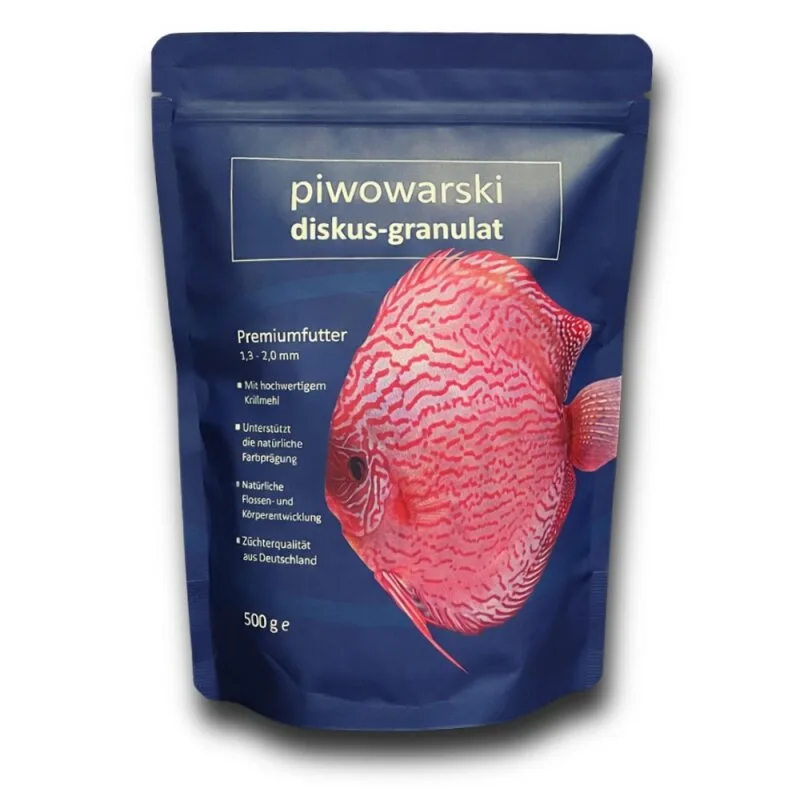
Recommendations are selected from the discus.ro shop based on this guide's topic. Availability and prices may vary.