How often to change discus water: a frequency and technique guide
Discus water-change frequency varies: 25–30% × 2/week as standard, 50% × 3/week for fast growth, 25% daily for fry. A complete guide with technique.

Quick summary
- Standard adults: 25–30% × 2/week (50–60% total).
- Intensive growth: 50% × 3/week.
- Fry under 3 months: 25% daily (or up to 80% daily for pros).
- Dechlorinated water (Seachem Prime) at the same temperature ±0.5°C / ±1°F.
- NEVER a 100% change — loses bacteria + parameter shock.
- Chloramine does NOT evaporate — a chemical dechlorinator is mandatory.
In short
- Standard adults: 25–30% × 2/week = ~50–60% total/week.
- Intensive growth: 50% × 3/week.
- Fry and breeding: 25% daily or 50% × 4/week.
- Bare-bottom: more frequent changes (up to daily) — no substrate bacteria.
- Heavily planted: 20% × 1/week may be enough.
- MANDATORY: water at the same temperature (±0.5°C / ±1°F) and dechlorinated.
What you'll learn
The water change is the single most important routine for discus — more important than premium food, an expensive filter or additives. Fresh water:
- Removes accumulated nitrate (NO₃ under 20 ppm = optimal growth)
- Replenishes consumed minerals (KH, GH, trace elements)
- Dilutes growth-inhibiting hormones (in fry)
- Stabilizes parameters (pH, TDS, KH)
This guide gives you the correct frequency by scenario, the step-by-step technique, and the 5 mistakes that kill discus through bad water changes.
Recommended frequency by scenario
| Scenario | Volume/change | Frequency | Total/week |
|---|---|---|---|
| 🟢 Standard adult keeping | 25–30% | 2×/week | 50–60% |
| 🚀 Intensive growth | 50% | 3×/week | 150% |
| 🐣 Fry 0–3 months | 25% | Daily | 175% |
| 🐟 Juveniles 3–6 months | 30–50% | 4×/week | 150% |
| 💕 Breeding | 25–30% | Daily | 200% |
| 🌿 Heavily planted + low stocking | 20% | 1×/week | 20% |
| 🏥 Hospital/treatment tank | 30% | Daily | 200% |
| 🏞 Bare-bottom adults | 50% | 3×/week | 150% |
💡 "Total/week 150%" = you've changed 1.5× the tank's volume over a week, split into several small doses.
Why discus need more frequent changes than other fish
| Discus trait | Consequence |
|---|---|
| Fast metabolism at 29°C / 84°F | More waste |
| Big appetite (up to 4 feedings/day for fry) | More NH₃, NO₃ |
| Sensitivity to growth hormones | Changes = growth |
| Sensitive gills | "Old" water = chronic stress |
| Immunity tied to water quality | Fresh water = fewer diseases |
The correct technique — step by step
Preparing change water (ideally the day before)
- Collect the water — tap, RO or a mix (see Mixing RO + tap water)
- Add a dechlorinator — Seachem Prime (1ml/40L), Tetra AquaSafe, JBL Biotopol
- Air pump on for 24h (to off-gas)
- Heat to 29°C / 84°F (±0.5°C of the tank temp)
- Check pH and TDS of the change water vs the tank
The change itself
- Turn off heaters and filter (safety)
- Siphon the substrate or clear debris (you also remove dirty water)
- Remove the target volume (25–50%) — measure with a marker on the glass
- Add fresh water SLOWLY (5–10 minutes) — pour against the glass or use a hose
- Restart the filter + heaters
- Test after 30 minutes (pH, NH₃ as a check)
- Feed normally 1–2 hours after the change
Useful equipment
| Equipment | Use |
|---|---|
| Manual siphon | Small changes |
| Electric siphon (e.g. Eheim Universal) ⭐ | Large changes + substrate cleaning |
| Python-style hose (connects to a tap) | Fast changes straight to the sink |
| 10–20 L buckets | Resting dechlorinated water |
| RO + remineralization reservoir | Continuous production |
"Mature" vs fresh water — the debate
Myth: "Old water is better, it has beneficial bacteria."
Reality: the beneficial bacteria are in the filter and substrate, NOT in the water column. "Old" water has more nitrate, growth hormones and opportunistic microbes. Frequent changes = healthier fish.
📊 Professional breeders run 50% × 3–7/week changes on juvenile tanks — not for cleanliness, but for maximum growth.
Growth hormones — why they matter for fry
Discus fry release growth-inhibiting hormones that build up in the water. These:
- Inhibit the growth of other fry
- Reduce appetite
- Cause "stunting" (small, thin fry)
The only solution: frequent (daily) large-volume changes. Elite breeders run up to 80% daily on fry under 2 months.
The 5 fatal mistakes
❌ Cold water (below 27°C / 81°F) → thermal shock, locked gills ❌ Chlorinated water (no dechlorinator) → destroys filter bacteria + burns gills ❌ A 100% water change → loss of water-column bacteria + parameter shock ❌ pH off by >0.3 → osmotic shock, acute stress ❌ Adding it abruptly (pouring straight from the bucket) → current + local swings
No water without a dechlorinator
Tap water typically contains:
- Chlorine (Cl₂) — evaporates in 24h with aeration
- Chloramine (NH₂Cl) — does NOT evaporate, needs a chemical neutralizer
Many municipal supplies now use chloramine, so always check yours and treat accordingly.
Recommended dechlorinators:
| Product | Dose | Neutralizes |
|---|---|---|
| Seachem Prime ⭐ | 1ml/40L | Cl, chloramine, NH₃, NO₂, metals |
| Tetra AquaSafe | 5ml/10L | Cl, chloramine, metals |
| JBL Biotopol | 10ml/40L | Cl, chloramine, metals |
| Sera Aquatan | 5ml/20L | Cl, chloramine, metals |
Small frequent vs large infrequent changes — pros/cons
| Aspect | Small frequent (25%) | Large infrequent (50%) |
|---|---|---|
| Fish stress | Minimal | Moderate |
| Parameter stability | ✅ Excellent | 🟡 Risk of swings |
| Nitrate removal | Good | Excellent |
| Growth hormones (fry) | Sufficient | Optimal |
| Time invested | Medium (2×/week) | Concentrated |
| Recommendation | Beginners + adults | Advanced + fry |
Water changes during a disease treatment
⚠️ Don't change the water during medication treatment unless the instructions require it. A change dilutes the medication → an ineffective treatment.
Exceptions:
- NH₃/NO₂ climbs above 0.25 ppm → a 30% change + re-dose the medication
- After the treatment ends: 25–30% changes daily for 3 days + activated carbon in the filter to remove residues
Weekly checklist
- ☐ 2 changes of 25–30% per week (minimum)
- ☐ Always dechlorinated water (Prime, AquaSafe)
- ☐ Identical temperature ±0.5°C / ±1°F
- ☐ Similar pH (±0.3)
- ☐ Water added SLOWLY (5–10 minutes)
- ☐ Substrate siphoned (or debris cleared in bare-bottom)
- ☐ Water tested 30 min after the change
- ☐ Nitrate tested before the change — check it's frequent enough
What to do next
📚 Learn more:
🧮 Calculate:
- Water-change calculator — optimal volume and frequency
🛒 Buy:
- Verified breeders and trusted stores for dechlorinators (Seachem Prime), siphons and cleaning gear.
Save your tank, log water parameters and get email reminders for care tasks — for free.
Recommended products
Picked from the shop based on what you just read


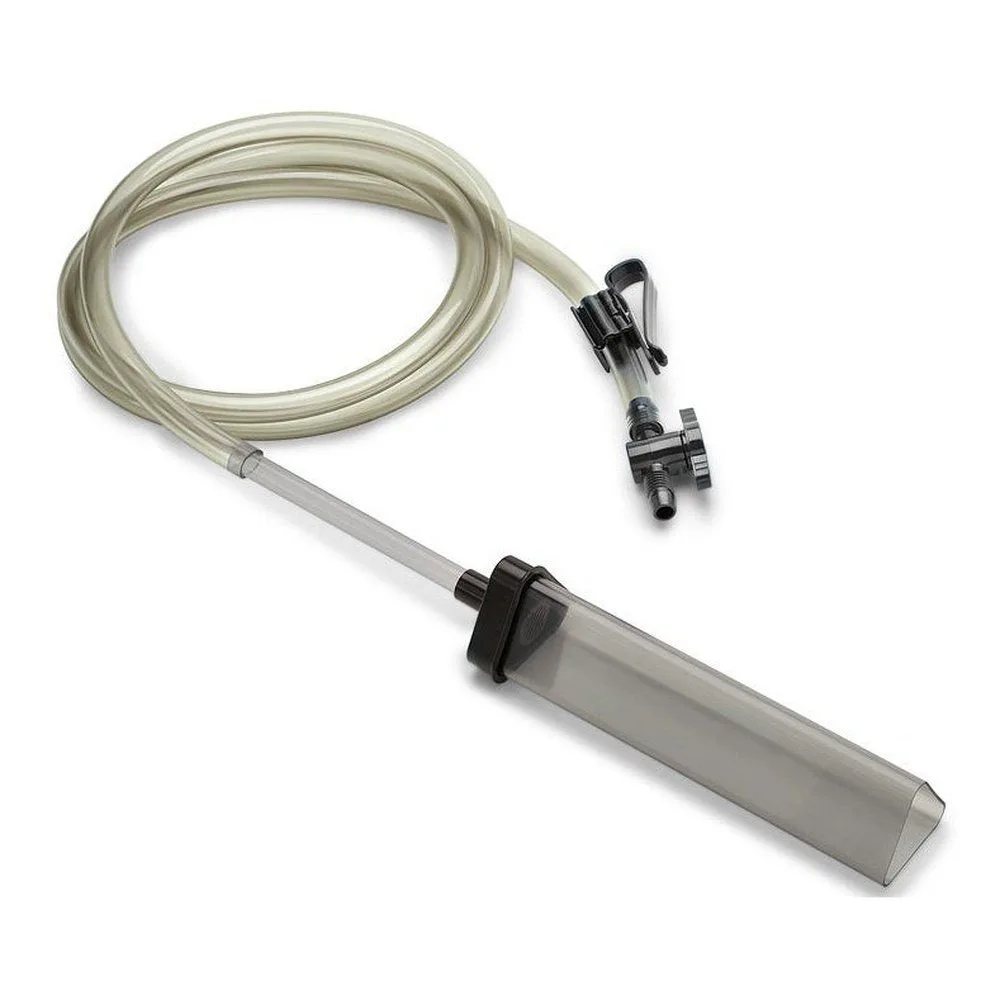
Recommendations are selected from the discus.ro shop based on this guide's topic. Availability and prices may vary.
Frequently asked questions
Put what you just read into practice
One account brings together everything you need to keep your tank on track:
Water parameters, inhabitants, photos and the full history of every change — our most used tool.
Water changes, cleaning and feeding, on your own dates.
See at a glance which values fall outside the safe discus range.
The guides, products and listings you follow, saved in one place.