The first 3 months with discus: a realistic weekly calendar
The first 3 months with discus — a realistic week-by-week plan: adaptation (1–2), stabilization (3–4), consolidation (months 2–3). What's normal, warning signs and concrete actions.

Quick summary
- Weeks 1–2 (adaptation): leave them be, dim lights, a 20% change every 3 days; refusing food is normal.
- Weeks 3–4 (stabilization): 2 feedings/day, 2–3 changes/week, a natural hierarchy forms.
- Month 2 (consolidation): gradually introduce varied food; vivid colors and normal behavior.
- Month 3 (routine): the discus are settled. You can add plants, new decor and richer food.
- Test the water weekly — ammonia, nitrite, pH.
- Do NOT add other fish in the first 30 days.
- 80% of problems appear in weeks 2–4 — watch closely.
In short
- Weeks 1–2 (adaptation): leave them be, dim lights, a 20% change every 3 days; refusing food is normal.
- Weeks 3–4 (stabilization): a routine of 2 feedings/day, 2–3 changes/week, a natural hierarchy forms.
- Month 2 (consolidation): gradually introduce varied food; vivid colors, normal behavior.
- Month 3 (routine): the discus are at home. You can add plants, new decor, richer food.
- Test the water weekly — ammonia, nitrite, pH.
- Do NOT add other fish in the first 30 days.
- 80% of beginner problems appear in weeks 2–4 — watch closely.
What you'll learn
The first 3 months are critical. Many beginners lose discus between week 2 and week 4 — the point where accumulated stress (transport + acclimation + a still-fragile bacterial colony) peaks. This guide gives you a realistic week-by-week plan: what to do, what to monitor, what's normal and when to act. By the end, you'll be ready for long-term keeping.
Weeks 1–2: the ADAPTATION phase
What's normal ✅
- The discus stay in tight groups, sometimes in a corner
- Pale or slightly darkened colors
- Refusing food for 2–5 days
- Hesitant swimming, slow movements
- Shying away when you approach
What to do
| When | Action |
|---|---|
| Daily | Watch for 5 min, check the temperature, offer a small feed (they may refuse) |
| Every 3 days | A 20% water change with conditioner, new water at ~31°C (88°F) |
| Every 7 days | A full water test (ammonia, nitrite, pH) |
Strict rules for weeks 1–2
- ❌ No visitors, no loud TV next to the tank
- ❌ No rearranging the decor
- ❌ No new fish
- ❌ No "preventive" treatments
- ✅ Lights at 30–50% for 6h/day
- ✅ One small feed a day, premium pellets
- ✅ Small water changes (20%) at the right temperature
Warning signs in weeks 1–2 🚨
| Sign | Action |
|---|---|
| Ammonia above 0 | A 50% change + a double dose of conditioner |
| Breathing >100/min | Check oxygen + gill parasites (guide) |
| Lying on its side on the bottom | Emergency — use the visual diagnostic tool or contact us |
| White spots on the body | Likely Ich → raise temp to 31°C (88°F) + aquarium salt ~1 g/L |
| All refusing food past 7 days | Check every water parameter |
Weeks 3–4: the STABILIZATION phase
What's normal ✅
- Colors return to normal and become vivid
- All feeding actively
- A hierarchy takes shape (alpha, beta, subordinates)
- Minor squabbles between dominant fish (lip-locking, short chases) — normal
- They explore the whole tank
What to do in weeks 3–4
| Aspect | Details |
|---|---|
| Feeding | 2 meals/day, start to vary (pellets + frozen brine shrimp) |
| Water changes | 2×/week, 25% |
| Water test | Weekly — ammonia/nitrite still at 0 |
| Lights | Normal (8h/day) |
| Observation | Who's dominant? Who's being intimidated? |
Warning signs in weeks 3–4
| Sign | Cause | Action |
|---|---|---|
| One fish always in a corner, losing weight | Bullying by the dominant fish | Separate temporarily or add plants/decor |
| The "alpha" hogs the food | Feed from 2 points at once | Spread food across 2 zones |
| White or stringy droppings | Possible hexamitiasis (internal parasites) | Consider metronidazole — see the Hexamita/HITH guide |
| Constantly dark colors | Unstable parameters or stress | Test the water + re-check the temperature |
Month 2: the CONSOLIDATION phase
What's normal ✅
- The discus recognize their owner, come to the glass
- Vivid, consistent colors
- Excellent appetite
- Full social behavior (a clear hierarchy, but without serious attacks)
- They eat from your hand (sometimes)
What to do in month 2
| Action | Details |
|---|---|
| Introduce beef heart? | Yes, gradually — 1×/week the first time |
| Water changes | 2×/week, 25–30% |
| Varied feeding | Pellets + brine shrimp + bloodworms + (optional) beef heart |
| Add plants? | Yes — Anubias, Echinodorus, Java Fern (tolerate 29°C / 84°F) |
| Add tank mates? | Only after week 6 + their own quarantine — see the best tank mates guide |
Watch the growth
If you bought juveniles (5–7 cm / 2–2.8 in), they should grow roughly 0.5 cm (0.2 in) per week. At 8 weeks, good juveniles are around 8–10 cm (3.1–3.9 in). For detailed growth rates, see the raising discus fry guide.
Month 3: the ROUTINE phase
What's normal ✅
- The discus are fully settled
- Clear individual personalities
- Active, social and looking their best
- Your routine is easy: ~15 min/day for observation + feeding, ~30 min/week for water changes
What to do in month 3
| Action | Note |
|---|---|
| A possible first spawning? | Yes, if you have 6+ adults. See the pair-bonding guide |
| Serious aquascaping | Yes — driftwood, hardscape — see the aquascaping styles guide |
| Tank mates | Yes, after a 4-week quarantine in a separate tank |
| Homemade food | Yes, try the homemade beef heart recipe |
Visual calendar — the first 90 days
| Week | Phase | Risk | Watch especially for |
|---|---|---|---|
| 1 | Adaptation | 🟡 Medium | Acclimation, the first 72h |
| 2 | Adaptation | 🔴 High | Accumulated stress, the first water-test cycle |
| 3 | Stabilization | 🔴 High | Hierarchy, possible hexamitiasis |
| 4 | Stabilization | 🟡 Medium | The routine settles, fish start to grow |
| 5–6 | Consolidation | 🟢 Low | Introducing food variety |
| 7–8 | Consolidation | 🟢 Low | Plants, decor |
| 9–12 | Routine | 🟢 Low | Tank mates, aquascaping, breeding |
Final checklist — at 90 days
Tick each one:
- ☐ All the discus are still alive
- ☐ All active, eating, vivid colors
- ☐ Stable water: ammonia 0, nitrite 0, temp 29°C (84°F)
- ☐ Your water-change routine is automatic
- ☐ You know each discus's name/personality
- ☐ You're comfortable testing the water
- ☐ No fish weak, isolated or with chronic problems
7/7: Congratulations 🎉 — you've passed the critical phase. You're a real keeper now. 5–6/7: Review the weeks that had problems — see 10 common beginner mistakes. ≤4/7: Read 10 common beginner mistakes and the visual diagnostic tool.
What to do next
📚 Level up: Discus body language — read their moods
🐠 Add tank mates: the best tank mates for discus
💕 Breeding? how pairs form
📅 Your monthly routine: Discus water changes for beginners
Want a clear schedule for your tank?
Generate a personalized plan for water changes, feeding, testing and maintenance — in just 2-3 minutes.
Generate care planSave your tank, log water parameters and get email reminders for care tasks — for free.
Products for the first 3 months
Picked from the shop based on what you just read
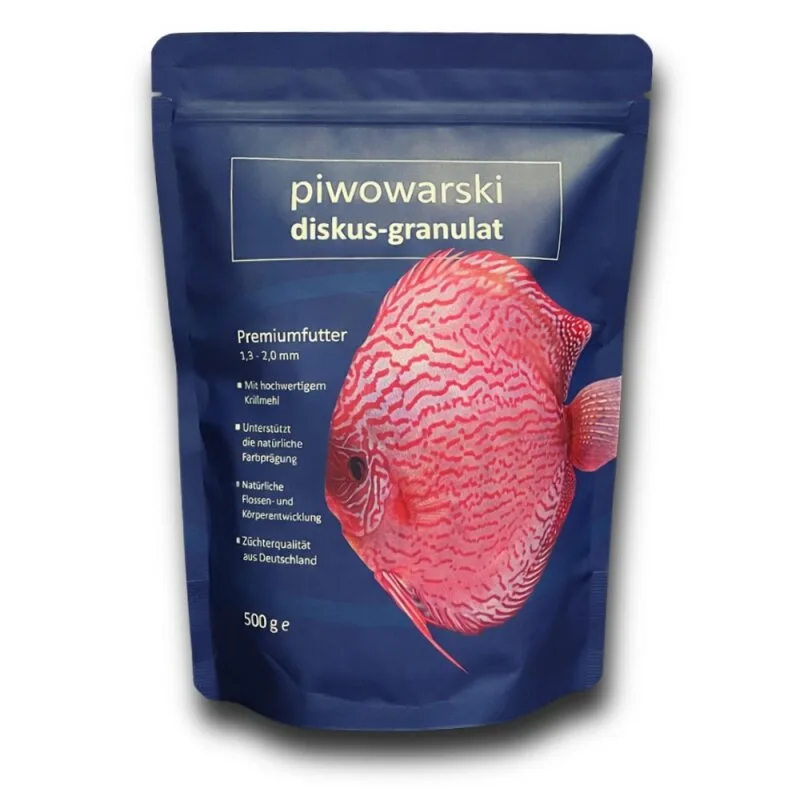
Recommendations are selected from the discus.ro shop based on this guide's topic. Availability and prices may vary.