When to separate discus fry from the parents: 3–4 vs 6–8 weeks
When to separate discus fry from the parents — 2 options (3–4 weeks for fast growth, 6–8 weeks for survival). A stress-free procedure, emergency signals and common mistakes.
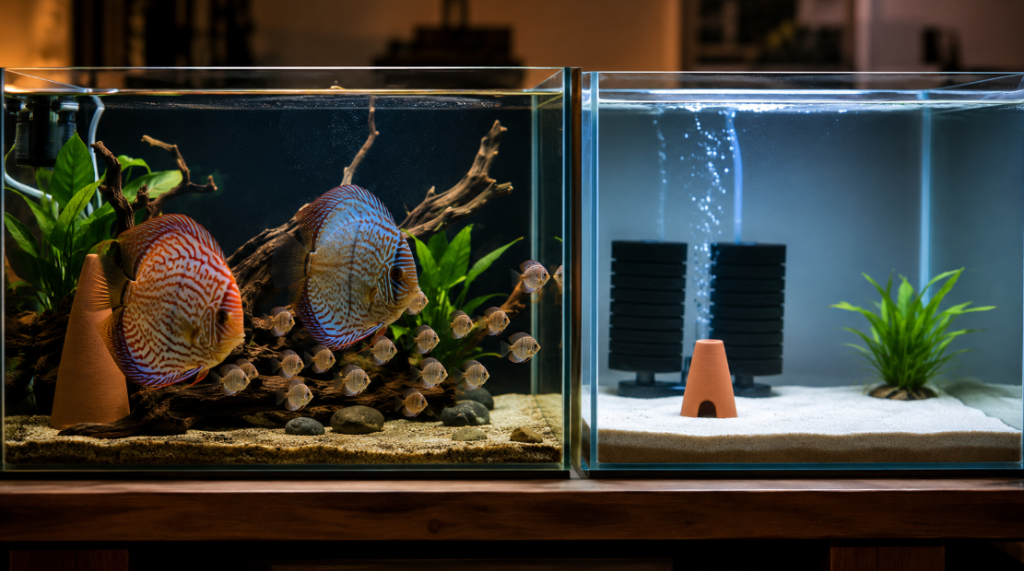
Quick summary
- Earliest: 3 weeks. Never sooner.
- Latest useful point: 8 weeks (the parents want to breed again).
- Safe option for beginners: 6–8 weeks (85–95% survival).
- Option for professionals: 3–4 weeks (more spawns/year).
- Emergency separation signals: parent aggression, attacks on the fry.
- Correct procedure: a prepared tank, identical water, transfer with a container.
When to separate discus fry from the parents — the critical decision
Separating discus fry (Symphysodon) from the parents is a decision that directly affects the survival and growth rate of the brood. There are 2 recommended moments: Option 1 — separation at 3–4 weeks (the fry eat brine shrimp well, the parents become aggressive as they prepare for the next spawn, suited to breeders who want to maximize the number of spawns per year) and Option 2 — separation at 6–8 weeks (more robust fry, a developed immune system, a higher survival rate — recommended for beginners). Never separate under 3 weeks — a high mortality risk. This guide shows you the correct, stress-free procedure.
In short — what you need to know
- Earliest: 3 weeks. Never sooner.
- Latest useful point: 8 weeks (the parents want to breed again).
- The safe option for beginners: 6–8 weeks (85–95% survival).
- The option for professionals: 3–4 weeks (more spawns/year).
- Emergency separation signals: parent aggression, attacks on the fry.
- The correct procedure: a prepared tank, identical water, transfer with a container.
The optimal moment to separate
Option 1 — Separation at 3–4 weeks
Advantages:
- The parents recover quickly and can breed again in 2–3 weeks.
- You maximize the number of spawns/year (4–6 vs 2–3).
- The fry grow more uniformly without parent/fry competition for food.
- More suited to commercial breeders.
Disadvantages:
- The fry are still fragile (1.5–2 cm / 0.6–0.8 in).
- Requires feeding 5–6 times/day with live brine shrimp.
- Daily 30% water changes.
- 70–85% survival (depends on experience).
- Not for beginners.
When to choose Option 1:
- The parents become visibly aggressive with each other (a signal they're preparing for the next spawn).
- The fry eat brine shrimp well and no longer depend on mucus.
- You have the infrastructure for intensive feeding (hatching brine shrimp daily).
Option 2 — Separation at 6–8 weeks
Advantages:
- The fry are robust (3–4 cm / 1.2–1.6 in), with a developed immune system.
- 85–95% survival.
- More relaxed feeding (4 times/day with pellets + brine shrimp).
- Recommended for beginners and hobby breeders.
Disadvantages:
- The parents get tired — they sometimes refuse a second spawn for 1–2 months.
- Fewer spawns/year (2–3).
- The parents can become aggressive with the fry toward weeks 6–7.
When to choose Option 2:
- Your first breeding run — maximum safety.
- You have a single grow-out tank and want a maximum survival percentage.
- The parents care for the brood well, with no signs of aggression.
When you should NOT separate
❌ Under 3 weeks — a 40–60% mortality risk; the fry still need occasional parental mucus.
❌ If the parents care for the brood well and aren't aggressive — let them do the job.
❌ If you can't provide live brine shrimp 5–6 times/day for fry separated early.
❌ If the grow-out tank isn't cycled and the water parameters aren't identical to the parent tank.
❌ If the temperature can't be maintained at 30°C (86°F) in the grow-out tank.
How to separate without stress — the correct procedure
-
Prepare the grow-out tank 1 week ahead:
- Cycled filtration (use sponges from the parent filter).
- Temperature 30°C (86°F).
- Water: 50% from the parent tank + 50% fresh water with identical parameters.
- Pre-test water changes (check that ammonia and nitrite are at 0).
-
Check the parameters of both tanks 24 hours ahead:
- pH ±0.2 units.
- Temperature ±0.5°C (±0.9°F).
- Similar KH, GH.
-
The actual transfer:
- Use a large container (a clear jug, 1–2 L / 0.3–0.5 US gal), not a net.
- Catch 5–10 fry at a time, transfer quickly.
- Lights off in both tanks during the transfer.
- Add water from both tanks gradually into the container (a 10-min acclimation).
-
Feed immediately after the transfer (within 1 hour): a small amount, but present — live or thawed brine shrimp.
-
A daily check for the first 7 days: behavior, feeding, signs of stress.
Normal behaviors after separation
- The fry stay grouped for 1–2 days (normal — they look for the parents).
- Reduced activity on the first day.
- Normal feeding from day 2–3.
- Colors may temporarily pale for 3–5 days (stress).
- More cautious swimming the first week.
Alarm signals (require intervention)
🚨 Total food refusal > 3 days — check the temperature and water parameters.
🚨 Floating at the surface, gasping — insufficient oxygen, increase the aeration.
🚨 White spots, excess mucus — Ich or extreme stress, see Ich / white spot in discus.
🚨 Mortality > 10% in the first 7 days — wrong water parameters or thermal shock.
🚨 Disoriented swimming, in spirals — toxins or parameters outside the norm.
The grow-out tank — minimum setup
- Volume: minimum 5 L (1.3 US gal) per fry — so 40 fry → 200 L (~53 US gal).
- Filtration: matured sponges + a weak internal filter (adjusted flow).
- Heater: 100W for 100L (26 US gal) (to maintain 30°C / 86°F).
- Lighting: dim, indirect (LED 5–10W).
- No substrate (bare-bottom) — easy cleaning.
- Oxygenated water — a continuous air stone.
See the full setup in Discus breeding tank — setup.
Common mistakes when separating
❌ An uncycled tank — a fatal ammonia spike within 48h.
❌ Cold water at transfer — thermal shock, massive mortality.
❌ A catch net — wounds on the fry's body, later infections.
❌ Too high a density after separation (over 1 fry / 3 L / 0.8 US gal) — food competition, runts.
❌ Feeding identical to the parents — the fry need smaller pellets and a higher frequency.
❌ Not checking the parents after separation — they can enter spawning in 2–3 weeks and need conditioning.
Checklist before separating
- Grow-out tank cycled for at least 7 days.
- Water parameters identical to the parent tank.
- Stable temperature 30°C (86°F).
- Food prepared (brine shrimp hatched in advance).
- A clear container for the transfer.
- Lights off in both tanks.
- Plan B: the option to return the fry if severe problems appear.
Frequently asked questions
Can I leave the fry with the parents permanently? No — at 8–10 weeks the parents become aggressive with the fry (attacks, bites). Massive mortality is possible if you don't separate.
How many fry can I put in a 200 L (53 US gal) tank after separation? 40 fry for optimal growth (1 fry / 5 L / 1.3 US gal). Over 50 → competition and stunted fry.
Do I need to separate the parents from each other after I take the fry? No — the formed pair stays together. Only if one becomes aggressive post-separation do you move it.
Can I separate only some of the fry (half)? Yes, useful if you have too many fry (>50) and don't want to stress the parents. Separate the largest, leave 15–20 with the parents.
What do I do if the fry refuse to eat after separation? Check the temperature (30°C / 86°F), the water parameters and try live brine shrimp (the thawed kind may be refused). If > 5 days, return them to the parents and wait another 1–2 weeks.
Is it normal for the parents to look for the fry after separation? Yes — for the first 2–3 days they patrol the tank with nervous movements. Then they calm down and start conditioning for the next spawn.
Recap
Separating discus fry is a strategic decision: at 3–4 weeks for speed (professionals, up to 6 spawns/year, 70–85% survival) or at 6–8 weeks for safety (beginners, 2–3 spawns/year, 85–95% survival). The procedure: a prepared tank, identical water, transfer with a container, immediate feeding. Never under 3 weeks.
See also Raising discus fry, The breeding process and Discus breeding tank — setup.
Recommended products
Picked from the shop based on what you just read
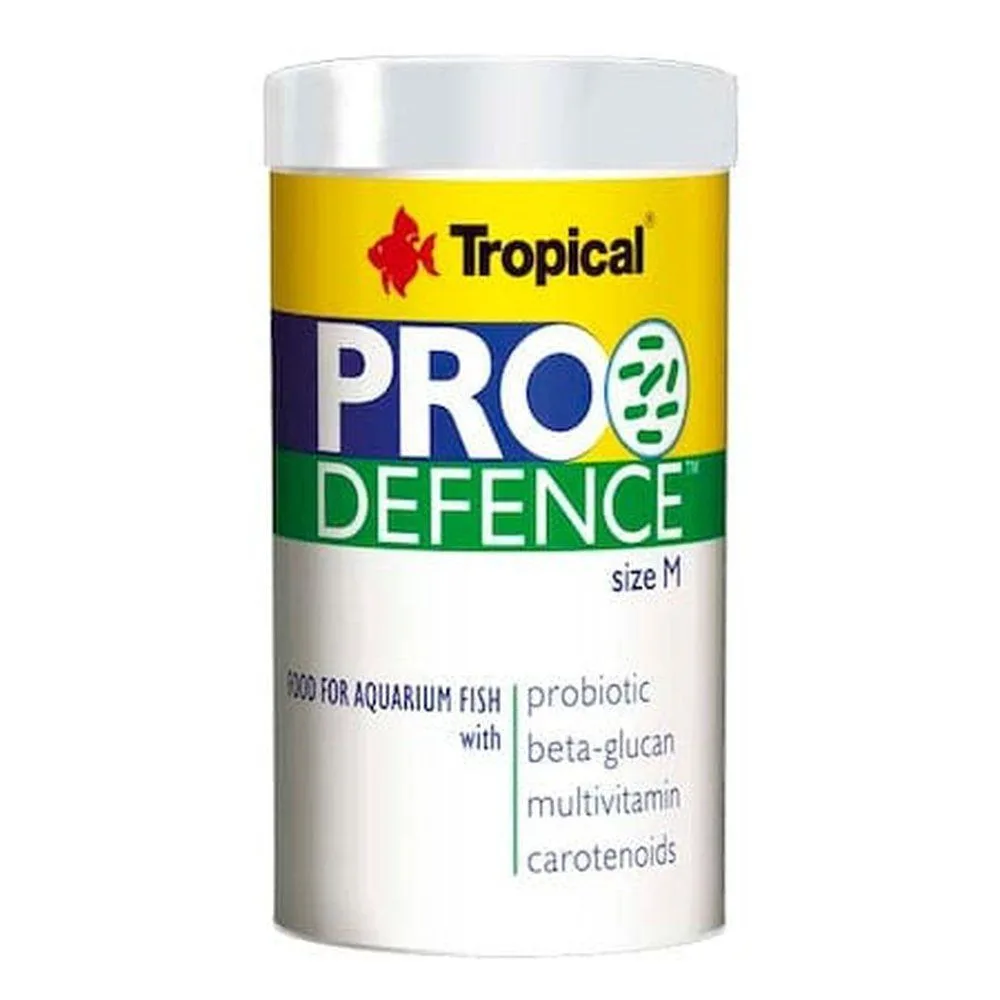
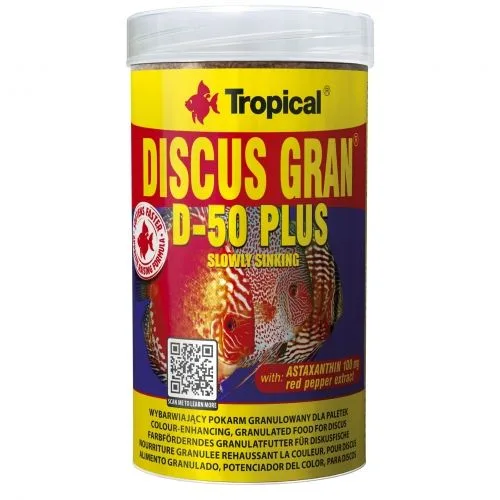
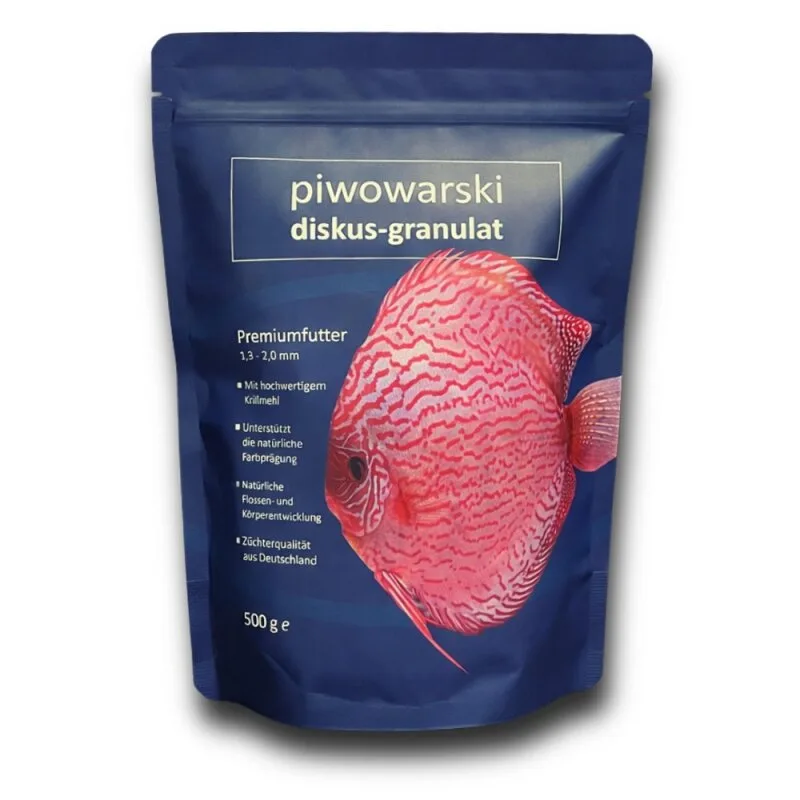

Recommendations are selected from the discus.ro shop based on this guide's topic. Availability and prices may vary.
Frequently asked questions
Put what you just read into practice
One account brings together everything you need to keep your tank on track:
Water parameters, inhabitants, photos and the full history of every change — our most used tool.
Water changes, cleaning and feeding, on your own dates.
See at a glance which values fall outside the safe discus range.
The guides, products and listings you follow, saved in one place.